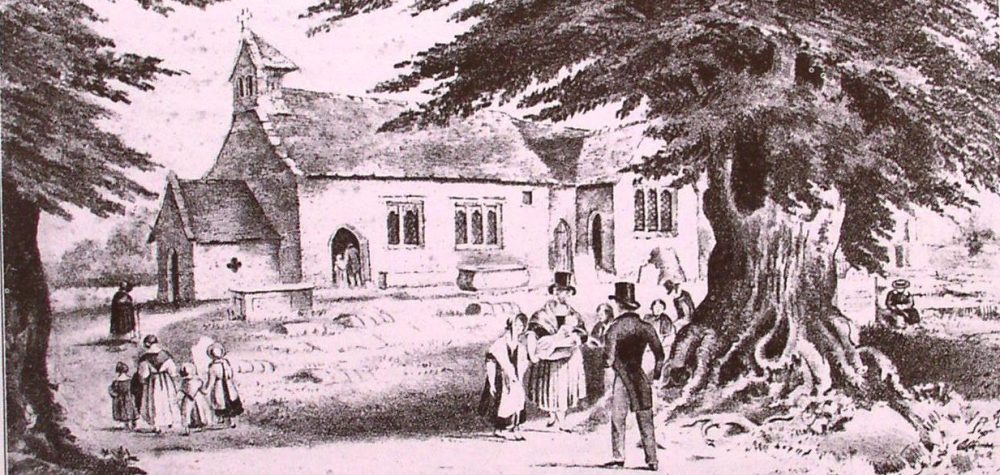
1818
Canterbury → Dover → Calais → Northern France → Belgium → Luxembourg → Rhine Valley → Schaffhausen → Lucerne → Interlaken → Berne → Geneva → Burgundy → Paris → Versailles → Beauvais → Calais → England
June 27th
Left Cant. by 20 mins before 6 – arrived at Dover 10 min past 8.
Much difficulty in getting the carriage on board. Breakfast at Dover. Intense heat.
Wrote to Merriott. Dined at Dover.
Embarked for Calais on board the King George at half past 4. (King George was a 60-70 ton sloop which began operating across the English Channel in 1814.) Not a breath of wind till about 7 o’clock when a breeze sprang and gradually increased till we came off Calais about 12 o’clock.
It being low water and no boats coming off we lay to, the wind continuing to blow very hard and reached Calais harbour at half past 5 on Sunday morning.
Past the Custom Houses without any difficulty. Came to Quillarg’s Hotel, breakfast.
Miss Parry dreadfully sick during the voyage. Mrs P. Ill but not sick, so myself, Eliz and Miss S. Most courageous, such a voyage I hope never to have again and I most hastily, and with all my energies thank God for his Gracious Preservation of us through what we conceived dangers.
Walked up to the Barracks, admired the sight very much, the pier head from the top fine and interesting.
The first thing that disgusted me on my entry into ? was the other shops and market and all the ordinary occasions of life and fellows without any awareness of the filthy conditions and of abstaining from all worldly callings.
Very much favoured with the accommodation starting at M. Emilloge.
Went into the church to see mass performed, this I don’t attempt to describe.
Saw Cpt. Harrison and his son who were very attentive and useful in getting money exchanged.
After dinner we walked on the Esplanade and I saw Napoleon’s Bridge over the canal, not at all fatigued with the days journey.
The weather has been particularly fine, very hot the whole day. In my private opinion the accommodations at the hotel in Calais are far more finer than those in England. The civility of the attendants is unprecedented than that of the persons.
The honey and hams are in every way inferior to that in England. The country abounds in corn and wood. The towns and villages are old. It being the Saturday/Sunday we saw the peasantry dressed in their best clothes.
I sincerely thank God for bringing us safely to the end of this day’s journey. I trust in God that my dearest wife and children are all comfortably and happily settled at home. May God in his infinite goodness guide and support them during my absence and bring me home to them.
At St Omer the ruins of the Jesuit College are very fine and beautiful.
? from Calais to Omer was not very particularly interesting nor indeed to Lille except that the ? of trees attract the eye and are extremely beautiful. We intended to pass through Orfel but the state of the bridge.
Lille is a very fine town. We went to the Hotel de Bourbon.
Mon June 30th
We left Lille at ¼ past 6. Breakfasted at Tournai, at the Hotel d’Jamril, not a very good house, before we set down to breakfast we walked to the Cathedral where the priest was holding mass. It is a very fine building. I was quite enamoured by the organ, which had a particularly strong body of tune and was played very well indeed.
The ride in ? was very uninteresting until we came to Eynheim from which we were obliged to come after being detained some time. When we had covered about 2 or 3 miles we met a carriage with 3 English ladies and a maid servant returning to England. We exchanged horses and came to a beautiful park, a pavilion by a pond wherein were cold fish and from which we can see from the pavilion the park extended indeed.
From Eynheim to Bethune was much as expected though it was too dark to see very much of the country having been detained at Eynheim ¾ of an hour for horses. We arrived at the hotel Vue at 11 o’clock at night /no dinner/.
We enter Belgium between Pont à Timfin and Jourain.
From Lille to Brusselles
À Pont à Turfin 1¾ hours, 9½ miles
In Tourai 1¾ 9½
À Leuze 2 11
À Ath 1½ 8¼
À Eyheim 2¼ 12¼
À Hal 1¾ 9½
À Brusselles 2½ 13¾
In two days we travelled 156¾ miles well and all. I thank God very well and in part. I think the Lewis’s very cheerful.
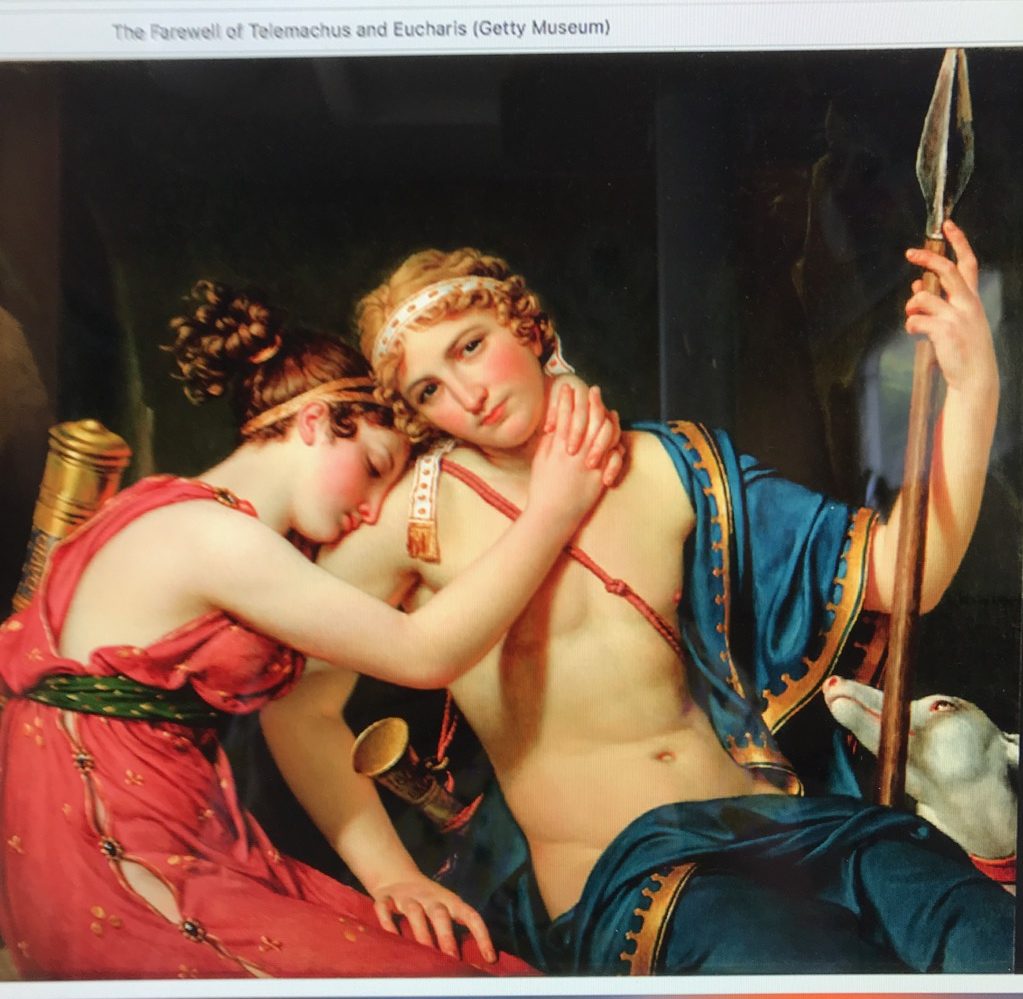
After breakfast the ladies went shopping for about 5 hours. We then went to the museum and the Cathedral. In the former were a great amount of very beautiful pictures, one in particular by D (Jacques-Louis David) Telemachus and Eucharis.
In the Cathedral is a very ancient pulpit and on the pillars in the rear of the church are very fine colourful statues of the apostles and in each chapel was a candle or a lamp burning. The effect of the furthest chapel was fine.
Dined at the Tulle d’ Late. Called in the Gweforg? And went to tea at the Palace of Laeken, the summer residence of the King of the Netherlands and was very much pleased particularly with the concert room which is a very fine circular building.
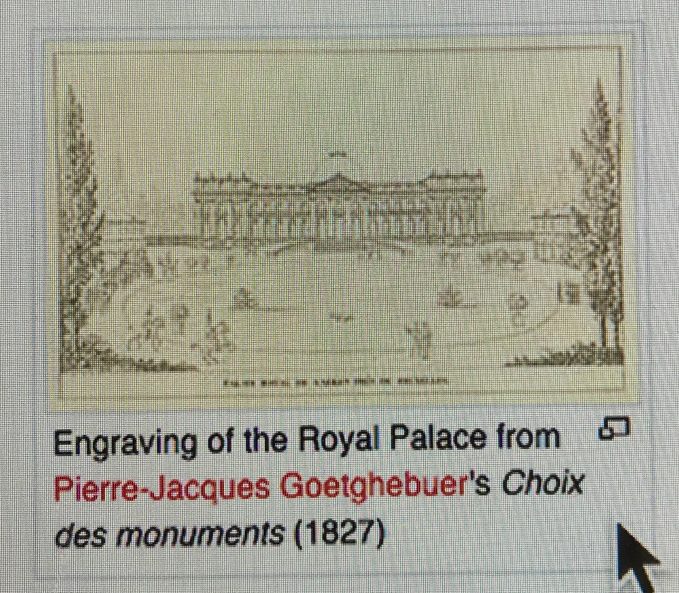
The entry very beautiful and the gardens laid out in the English manner. A stream of water running along the bottom. A fine view of Brussels on the front, very much // with the peasants singing and making merry.
The ride through Attey Seely was particularly interesting and beautiful.
Took a barge from Ghent up the canal which saw a beautiful night.
Thurs July 2nd – Johnnie birth-day
Friday, July 3rd – A mileage table headed roughly:
| Route | Miles |
| Templeuve to Genappe (?) | 22 |
| another stage | 11 |
| another stage | 13½ |
| Arras (?) | 22 |
| Total | about 68½ |
The narrative contains observations about Belgian and French farming.
Several readable remarks include:
There is a great deal of farm work going on and the roads are remarkably good the villages are also clean and neat. There is also a great deal of manufacturing along the roads with comments on church buildings and architecture.
-
July 4
- Lille
- Hotel
- Aire & Calonne (or Aire & Calais, uncertain)
Total shown: – £6 12s 0d
Saturday, July 5th
Arrived at La Chapelle or La Chapelle d’Armentières (the place-name is difficult).
For dinner breakfast and lodgings the amount now spent is £9 12s 0d
We had gained a beautiful view…the diary repeatedly praises:
church spires, public buildings, village layouts, cultivated fields, and roadside scenery and a chateau and saying how beautiful the landscape is.
Sunday, July 7th – A fresh mileage table begins. Places seem to include:
- Bonningues (possibly)
- Ruminghem (?)
- Andres (?)
- Colembert
Total approximately 53½ miles.
-
July 7 – Contains place names that appear to include:
- Sunday
- Templeuve
- Andresel (?) / Audreselles (possibly)
- Colembert
Total:
£9 7s 0d
July 8 – Places resembling:
- Bethune
- St Omer
- Hesdin
- Montreuil
Total:
£5 8s 10d
July 9 – Places apparently including:
- Fruges
- Fauquembergues
- Wormhout
- Hazebrouck
- Merris
Total:
£7 6s 0d
July 11, 1811 — Baden
The first opening appears to describe arrival at Baden (almost certainly Baden in present-day Belgium near Spa).
Fragments that can be read with reasonable confidence include:
Arrived at Baden at half past five, went into the Gardens the weather very hot and dusty we arrived back at the hotel after ten. The writer praises the public gardens and town layout and repeatedly remarks on the beauty of the scenery.
A mileage note at the bottom appears to indicate:
- Left about 8 a.m.
- Reached Baden around mid-afternoon.
- Total distance around 63½ miles.
July 12, 1811 — Baden
This is one of the most personal passages in the diary.
The writer does not travel far and instead spends the day in Baden.
Key readable sections:
“Did not rise very early today…”
“…called on one of Mary’s relations…”
The day’s activities include:
- walking through the town,
- visiting gardens,
- observing visitors and local life,
- sitting in the public promenade,
- talking with acquaintances.
A particularly interesting section reflects on personal conduct and temptation. The writer discusses a moral question and concludes:
“…I did not yield…”
and later:
“…that was not to do…”
The tone becomes surprisingly introspective for a travel journal.
Later the writer describes:
“…one of the finest promenades…”
“…many visitors…”
“…music…”
suggesting a fashionable spa town atmosphere.
Monday, July 15
The writer is still travelling along the Rhine Valley.
Key points discernible from the text:
- After breakfast they went to view scenery along the Rhine.
- The writer repeatedly comments on:
- the beauty of the river,
- steep hills and mountains,
- vineyards,
- towns beside the river,
- and castle ruins.
One passage can be summarized as:
The views became increasingly beautiful as the journey progressed, with mountains rising close to the river and numerous picturesque villages.
The writer appears particularly impressed by the scenery around Schaffhausen and the upper Rhine districts.
Tuesday, July 16
A clearly dated entry begins:
Tuesday July 16.
The party left Schaffhausen at approximately 7 o’clock.
A route list follows which includes several place names, though some are difficult to decipher.
The destination appears to have been an Alpine district near:
- Lucerne
- lake country
- mountain scenery
The writer records:
“The road itself was particularly good…”
and remarks on fine weather and excellent views.
One especially readable observation:
“…the lakes and mountains were very beautiful…”
The day’s journey ended around evening after travel through mountainous country.
Wednesday, July 17
This page is clearer.
The writer notes:
Left [town] after breakfast…
The journey included:
- river scenery,
- mountain roads,
- several villages and towns,
- views over a lake,
- passing through cultivated valleys.
A particularly readable section states:
“…the weather today was clear and much cooler among the mountains.”
The writer describes stopping beside a lake and observing reflections of mountains on the water.
Saturday, July 18
The writer leaves Interlaken after an early breakfast and travels toward Lucerne.
The entry mentions:
- passing through mountain districts,
- travelling beside lakes,
- numerous waterfalls,
- snow-covered peaks visible in the distance,
- excellent roads through the valleys.
One particularly clear theme is the writer’s admiration for the Swiss landscape:
“…the scenery was most delightful…”
and
“…great masses of mountains…”
The writer repeatedly notes changes in elevation and the contrast between lakes and mountain slopes.
Sunday, July 19
This entry appears largely devoted to sightseeing rather than long-distance travel.
The writer describes:
- church attendance,
- walks through the town,
- viewing mountain scenery,
- observation of visitors and tourists.
Several references seem to be to Lucerne and its surroundings.
There are repeated remarks about:
- lake views,
- promenades,
- church buildings,
- and the cleanliness and orderliness of the town.
The tone is reflective and appreciative.
Thursday, July 20th
Fine weather all day but very windy.
The writer records a visit to a church.
Several passages discuss:
- the church interior,
- stained or coloured glass,
- monuments,
- carved work,
- and memorials.
One paragraph appears to mention:
a monument erected to the memory of persons killed during the Revolution
though some words remain uncertain.
Friday, July 21st
The writer leaves a town early:
Left [town] at about 6.
The remainder describes:
- crossing open country,
- visiting another church,
- examining civic buildings,
“Breakfast at St Omer’s, but had not time to see the town…”
“…the accommodation at the inn at Calais. It was far superior to those in England. The civility of the attendants is unparalleled…”
| Place | Distance |
| Templeux | 13½ |
| Doullens | 11 |
| Abbeville | 8⅓ |
| Hesdin (?) | 12¼ |
| Amiens | 13¾ |
Total journey:
“13½ = 74¼”
Friday, July 26
The traveller appears to leave Geneva after breakfast.
A mileage table records a route through several French towns, including what appear to be:
- St. Julien
- Annemasse
- Cruseilles
- Frangy
- and other small Savoy settlements
Total distance appears to be about 64¼ miles.
The narrative comments on:
- unsettled weather,
- intermittent rain,
- attractive farming country,
- good roads despite the weather.
A particularly readable phrase is:
“The weather intensely hot and almost insufferable…”
followed later by remarks that conditions improved.
The writer notes difficulty obtaining rooms because of the number of travellers on the road.
Saturday, July 27
The party travelled from Dijon toward Auxerre.
The route table appears to total approximately 31¾ miles before midday, followed by additional travel.
Places that can be made out include:
- Dijon
- Genlis
- Auxonne
- St. Jean-de-Losne (likely)
- and surrounding Burgundy towns
Observations include:
- vineyards,
- extensive cultivation,
- prosperous-looking farms,
- good accommodation.
The writer remarks favourably on the Burgundy countryside and the excellent roads.
Sunday, July 28
A long mileage table occupies much of the page.
The traveller leaves Dijon and proceeds toward Paris by stages.
The place names are difficult but appear to include several Yonne and Seine districts.
The total shown at the bottom is approximately:
125½ miles
which suggests this may have been a full day’s coach or motor journey with multiple stages.
The narrative records:
- breakfast at a hotel,
- departure shortly after,
- arrival in Paris in the evening.
One line appears to read:
“…reached Paris about 6 o’clock…”
The writer comments on urban traffic after many days in rural districts.
Monday, July 29 – They leave Paris early.
The diary notes:
Left Paris at half past four and records travel northward.
The writer compares Paris with the rural regions seen earlier and remarks on:
- crowds,
- traffic,
- noise,
- and the contrast with the Swiss mountains.
There is also praise for parts of Paris, including public buildings and broad streets.
The Channel crossing itself is mentioned briefly and appears to have been smoother than the outward voyage.
Below that:
“Monday July 1st”
The writer describes travelling through attractive country:
“…the road runs through beautiful scenery…”
References include:
- villages,
- churches,
- public buildings,
- gardens,
- cultivated land,
- Protestant churches,
- architecture,
- market towns.
The diary reads like observations made during a coach or carriage journey across northern France.
-
At the top is a distance table. The place names are partly obscured, but appear to include:
- Aire
- Thérouanne
- Licques
Total approximately 48½ miles.
The narrative then records arrival at Licques:
We arrived at Licques about 5 o’clock.
The roads at any time but especially in the evening when the dust had settled looked exceedingly beautiful.The writer comments favourably on:
- the countryside,
- the cleanliness of the roads,
- cultivation of the land,
- and the farming.
A later sentence appears to read:
The corn looked very promising.
The page ends with:
Tuesday, July 22
The writer appears to leave Berne (Bern) after breakfast.
The entry records:
- a drive through attractive agricultural country,
- villages and farmhouses,
- travel beside lakes,
- continued admiration for Swiss roads and scenery.
A readable section suggests:
“…the road was exceedingly beautiful…”
The writer notes stopping for meals at roadside inns and comments several times on the quality of accommodation and hospitality.
There is also a reflective passage comparing travel comforts abroad with conditions at home.
Wednesday, July 23
This page is much clearer.
The route appears to involve travel toward Vevey and the eastern end of Lake Geneva (Lac Léman).
Notable observations include:
- mountain scenery descending dramatically toward the lake,
- vineyards on steep slopes,
- villages overlooking the water,
- exceptionally clear views.
The writer repeatedly comments on:
“…beautiful scenery…”
and
“…one of the most delightful drives…”
There are references to arriving in the evening and obtaining accommodation after a long day’s travel.
Thursday, July 24
The diary becomes almost entirely descriptive.
The writer describes:
- the lake surface,
- mountains reflected in the water,
- changing colours during the day,
- boats on the lake,
- villages along the shoreline.
One passage appears to say that no written account can adequately convey the beauty of the scene.
The author notes:
“…all were delighted…”
and repeatedly records feelings of gratitude for seeing such scenery.
Landscape Description
Several features recur throughout these pages:
Lake Geneva district
The diary appears to have reached the Lake Geneva region.
References include:
- lakeside roads,
- vineyards,
- terraces,
- mountain slopes descending to the water.
Swiss Villages
The writer praises:
- cleanliness,
- neat farmhouses,
- flowers,
- public buildings,
- church spires.
Roads
Again there are repeated remarks that:
the roads are excellent
and
travelling is comfortable.
This observation appears throughout the entire continental tour.
What Makes These Pages Interesting
These entries mark a noticeable transition in the diary.
Earlier sections concentrated on:
- mileage,
- routes,
July 9, 1811 — Rhine Journey
The final opening is especially important because it identifies the route.
Mileage Table
The route appears to include:
- Bingen
- Bacharach
- Oberwesel
- Boppard
- St. Goar
- possibly Mainz / Mayence
with a total near 60½ miles.
Narrative
The writer describes travel beside the Rhine:
“The road to Bingen was good…”
“Breakfast at Mayence…”
The account then becomes a long description of the Rhine scenery.
Readable passages include:
“…crossed the Rhine…”
“…many castles…”
“…vineyards…”
“…beautiful scenery…”
“…the Rhine running between high mountains…”
The traveler is plainly impressed:
“…the scenery continually beautiful…”
“…one of the most delightful drives…”
The writer notes:
- castle ruins,
- steep hillsides,
- vineyards running down to the river,
- river traffic,
- numerous villages,
- and church towers.
Arrival
A later section reads approximately:
“…Reached Mayence…”
Monday, July 20
This is one of the more legible entries.
After breakfast the party makes an excursion into the mountains.
The writer records views over a large lake and notes:
“…the lake was beautiful…”
and
“…the mountains reflected in the water…”
There are references to:
- high roads,
- wooded slopes,
- meadows,
- and villages scattered across the hillsides.
The writer remarks that no photograph or sketch could adequately capture the scene.
Tuesday, July 21
Travel resumes.
The diary notes:
- departure after breakfast,
- movement through mountain passes,
- villages with carved wooden houses,
- cattle grazing on steep slopes.
A significant feature seems to be a high viewpoint overlooking both valleys and lakes.
The writer repeatedly pauses to describe the panorama.
Expense Ledger (1811)
The middle image is largely an account of daily expenses and accommodation costs.
Legible headings include:
1811
- June 29
- July entries throughout the journey
Items recorded include:
- Hotel expenses
- Postage
- Tips
- Guides
- Meals
- Laundry
- Railway and carriage expenses
Several place names can still be identified:
- Calais
- Lille
- Dijon
- Templeuve
- Paris
- Versailles
- Geneva
- Vevey
- Lucerne
- Berne
Many amounts are written in pounds, shillings and pence.
This appears to be a retrospective accounting of costs incurred during the tour.
Wednesday, July 29
This page is comparatively clear.
The entry reads approximately:
Reached Versailles at 12 o’clock.
The writer visited:
- the town of Paris,
- the Château,
- the gardens,
- the Trianon.
A later sentence appears to read:
Returned to Paris at 6 o’clock.
The day was devoted largely to sightseeing around Versailles.
Thursday, July 30
Tuesday, July 30
This section appears to describe the final stages before crossing to England.
The traveller records:
- reaching the coast,
- hotel accommodation,
- arrangements for departure,
- weather conditions.
The writer travelled:
from Paris to Beauvais
Distance noted:
18½ miles
The entry appears to mention:
- the Cathedral of Beauvais,
- gardens,
- public walks,
- and time spent viewing the town.
Image 3 – Closing Entries
This page is the most historically interesting because it appears to conclude the journey.
Wednesday, July 29
Reasonably clear:
Reached Versailles at 12 o’clock.
The writer then records visits to:
- The town of Paris
- The Château
- The gardens
- The Trianons
and states:
Returned to Paris at 6 o’clock.
Thursday, July 30
A brief journey is recorded:
From Paris to Beauvais
Distance:
18½ miles
The writer mentions the cathedral and spending part of the day viewing the town.
Friday, July 31
The final dated diary entry.
Went to post office, Bank of England, and the Louvre…
What is clearer is that the day contains very little travel and reads more like a winding-down of the tour before departure.
Bottom-line total visible:
£41 5s 0d
The page is essentially a cost ledger accompanying the route described in the diary.
Only a short final note survives.
References include:
- Post Office
- Bank
- the Seine
and what appears to be the end of the journey.