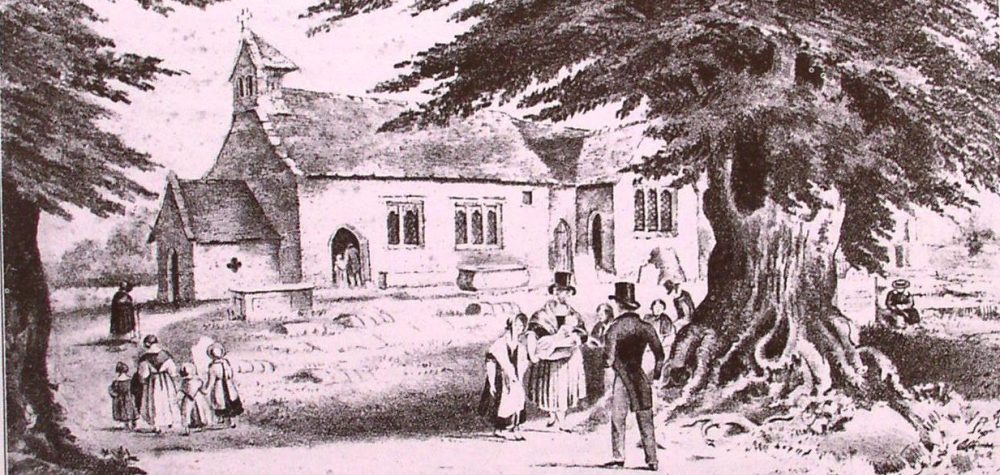
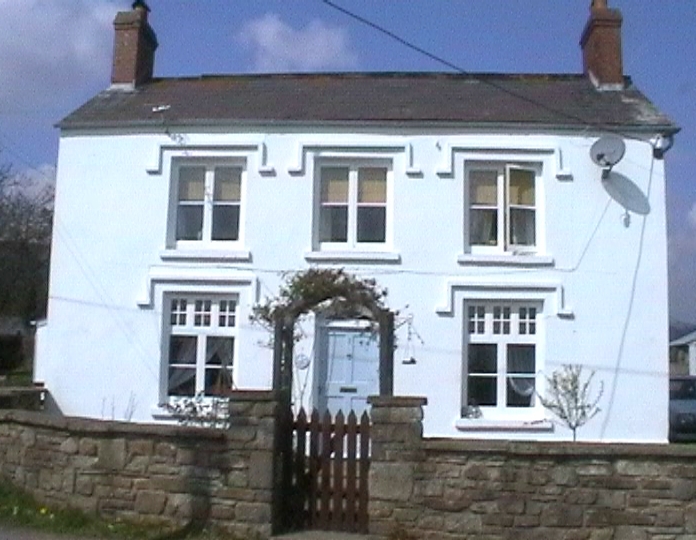
Few buildings in Goytre have a history as closely tied to one family as Pengroesoped Tavern. Built around 1852 by John Rosser of Pantglas Farm and Mill, the tavern stood on a field known as Cae Coed beside the turnpike road between Pontypool and Abergavenny. Research into the Rosser family suggests their connection with the locality extended back as far as 1635.
The construction of the tavern was financed through a loan of £100 obtained by John Rosser. By 1854 parish records already described him as both a farmer and innkeeper, demonstrating that the business quickly became established.
Around 1859, occupation passed to John Rosser Junior, who lived there with his wife Amy Rosser. Like many local residents, he signed the 1859 petition opposing taxation for the widening of Newport Bridge. The 1861 census records John, aged 35, as a publican, living with Amy and their children Ellen, Thomas, John and Margaret.
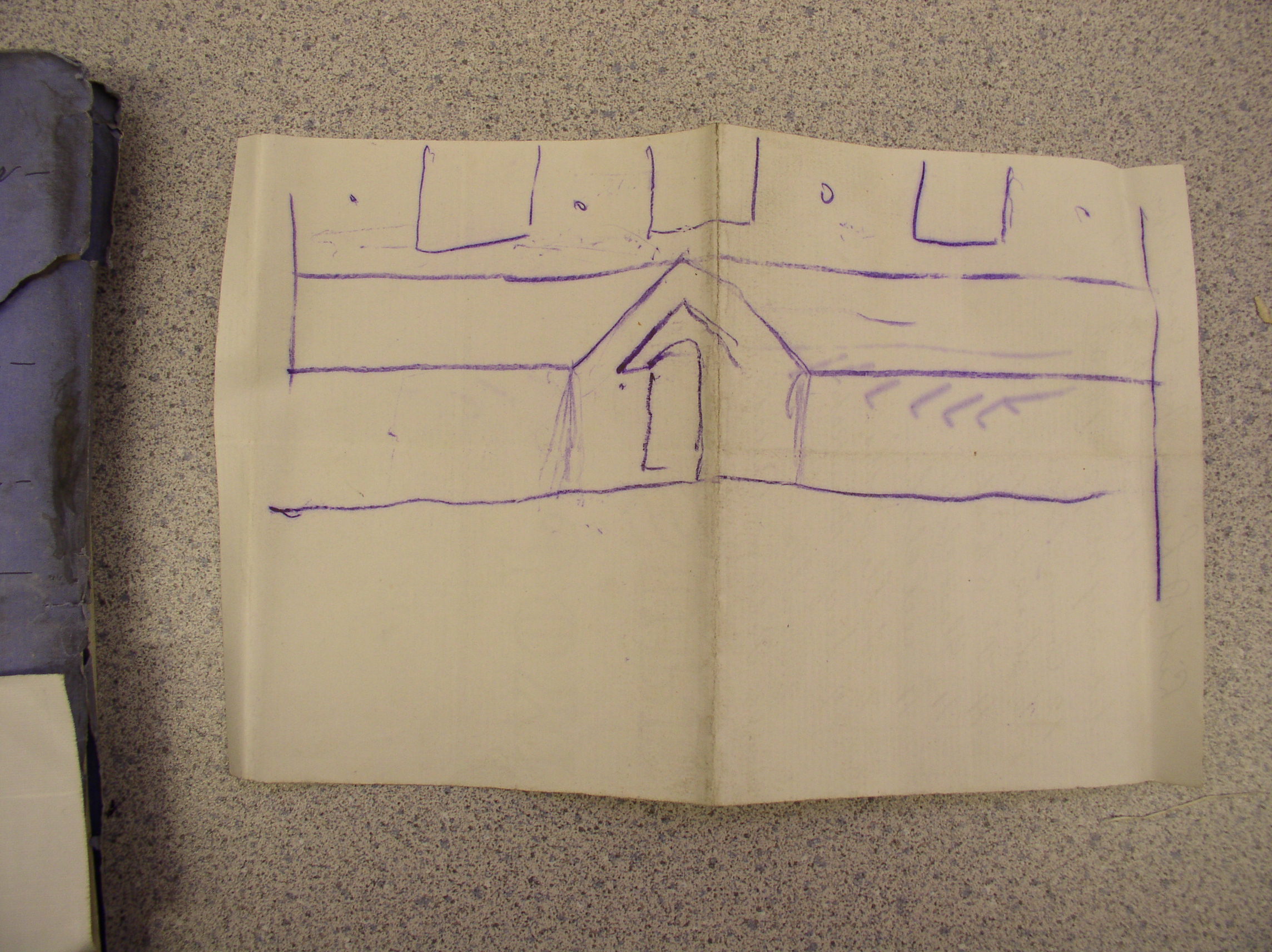
The Rosser family suffered two major losses in quick succession. On 30 October 1861, local builder Lewis Edmunds recorded in his diary that “old John Rosser died suddenly this morning.” He was seventy-six years old and was buried at Mamhilad. Just over two years later, on 10 January 1863, John Rosser Junior himself died at the age of only thirty-eight and was buried at St Iltyd’s Church, Mamhilad. [
Following these deaths, ownership arrangements were reorganised. In May 1863, Ann Rosser, widow of John Rosser Senior, secured the mortgage in fee for herself and her sons Aaron, James and William Rosser. That same year, Amy Rosser arranged for all of her children to be baptised at St Peter’s Church. [
The following article appeared in the Usk Observer on 16th January 1864:
Pugilism at Goytrey
Thomas Jenkins, Thomas Griffiths, John Allgood and Henry Painter were charged with committing a breach of the peace by fighting.
William Rosser gave evidence that John Jenkins and Thomas Griffiths began fighting on the night after Christmas day at Mrs Rosser’s house at the Goytrey and the other two acted as their seconds, after which they began a “set to.”
Mr Ralph (of the Bench) said if the occupier would not sell too much drink at once disturbances would be less frequent.
Fined 9s each.
Tragedy struck again when Amy Rosser died in January 1867 at only forty years of age. Her funeral was held at Mamhilad, and Lewis Edmunds noted in his diary that he attended the service.
By 1871 the inn was being run by William Rosser, then a thirty-two-year-old unmarried publican. Living with him were his nephews John and Charles, together with his niece Ellinor, who acted as housekeeper. William became active in parish affairs, serving as Overseer of the Poor and joining opposition to the proposed transfer of Quarter Sessions from Usk to Newport.
Ownership of the tavern became the subject of family discussion in 1877. A letter written to Lady Llanover by E. Francis records meetings with the Rosser brothers, discussing the proposed sale of the old public house. The owner at that time was John Phillips, grandson of Ann and John Rosser through their daughter Ann, who had married John Phillips of Lower Hendre, Llanover. The correspondence also reveals the Rosser family’s desire to keep ownership within the family if possible.
Later that year, legal conveyance records show the sale of the property. A deed dated 30 October 1877 describes the tavern as a dwelling erected on land formerly called Cae Coed adjoining the main turnpike road. The property, then occupied by William Rosser, included outbuildings, a yard and a garden.
William Rosser ultimately succeeded in purchasing the inn from his nephew John Phillips. By the 1881 census he was recorded as an innkeeper living with his wife Elizabeth Rosser and their young daughter Alice. [
A major turning point came in 1885 when William sold Pengroesoped Tavern to Lady Llanover for £850. He subsequently rented Kiln Farm before moving to the Halfway House at Little Mill, where he died in 1893. [
Lady Llanover immediately transformed the public house into a coffee and temperance house. She let the Tavern to Robert Bassett at a quarterly rent of 10s.Records survive listing the household goods she supplied, including bedding, crockery, cutlery, cooking utensils and cleaning equipment. The inventory provides a rare insight into the furnishing of a rural refreshment house during the Victorian period. Account books for the establishment survive from May 1885 onwards.
The building nevertheless continued to attract local incidents. In June 1883, James Meredith was reported to have become so drunk at Pengroesoped Inn that he remained unconscious for three hours before being taken to the railway station. He was later fined 10 shillings or 7 days.
The census of 1891 says John Morgan and his family are in occupation he is 67, a mason, his wife Ann is 51, they came from Glamorgan. Emma their daughter is 27, living with them is 27 year old William Powell, a weaver.
John Morgan remained at the Inn through to 1911 when he says he is the manager of the refreshment rooms.
The 1921 census of Pengroesoped Temperance House gives the following information, Emma John a 57 year old single woman born in Cardiff is a boarding house keeper. Boarding with her is John Price 76 from Crickhowell, a wood cutter and Melsom Constance 74 from Gibraltar near Monmouth both are working for Llanover estate trustees.
A separate entry also for the Temperance house is Charlotte Mabel Brace aged 29 she is single and was born in Sirhowy. Charlotte is the district sick nurse.
From its origins as a Victorian roadside tavern to its later role as a temperance refreshment house, Pengroesoped Tavern reflects changing attitudes to leisure, drink and community life. Above all, it tells the story of the Rosser family, whose association with the property spanned several generations and left a lasting mark on the history of Goytre.