Papers of Human Interest

T.40 – Main Points

The writer discusses a dispute involving:

  • succession to a military appointment or office,
  • claims of service,
  • seniority,
  • recommendations made by superior officers,
  • and whether a particular candidate had been unfairly passed over.

One passage appears to state that an individual:

“…served with distinction…”

and that recommendations had been made on that person’s behalf.

Another section discusses:

“…promotion…”

and whether proper procedures had been followed.

The overall tone is that of a formal petition setting out facts and arguments to support a claim.

T.41 – Chalklen Estate Papers

The envelope is particularly interesting.

The endorsement appears to read approximately:

“Letters found among Chalklen Estate Papers”

Addressed to:

E. M. Byrde Esq.

with an address that appears to include:

Saxon House

This is significant because it directly links the papers to the Chalklen family whose relationship to the Byrdes was described in the Huguenot memorandum.

Letter Found in the Envelope

The third image contains a personal handwritten letter.

The first paragraphs read approximately:

“…left the house at six o’clock…”

and refer to a journey involving:

  • roads being blocked,
  • difficulties travelling,
  • delays,
  • encounters with local people,
  • and weather conditions.

Later sections mention:

“…the hill of late…”

and:

“…received by post…”

The letter appears personal rather than legal or military.

Several place names occur but are difficult to read from the current image quality.

Lugarches (?) 19th December 1815

and is addressed:

My Lord

It appears to be a formal statement concerning the military service and accounts of Colonel Bird.

Partial transcription

“I have taken the liberty of laying before your Lordship’s indulgence in a case the particulars of which are here stated…”

The letter continues:

“…after the battle of Vittoria, Brevet and Colonel Bird was left there on duty…”

This almost certainly refers to the Battle of Vitoria (21 June 1813) during the Peninsular War.

Further down:

“…his brother was paid by his brother for him, until it was ascertained that the former was going to England…”

The writer then discusses:

  • settlement of accounts,
  • public and private accounts,
  • balances due,
  • military administration after the campaign.

Another readable section states:

“…Captain Leech were authorized by him to settle his accounts both Public and Private…”

and:

“…The balances on the abstract to 24 September were up by £106 9s…”

The remainder becomes progressively harder to read because of the angle and focus.

Archival wrapper

The final image gives an important clue.

It is labelled:

Papers of “human interest”

with archive reference:

T 38-44

This suggests that somebody sorting the Byrde family archive separated a bundle of particularly interesting personal documents from the routine legal deeds.

T.39 – Henry Charles Bird

The second image appears to be titled:

Henry Charles Bird Esq.

and beneath:

The Hague Journal

The document reads like a financial or military account associated with Henry Charles Bird during his time abroad.

Items listed include:

  • Allowance from army contingencies
  • Remittances for charges from various sources
  • Expenses incurred in Holland
  • Payments received
  • “Paid to Stamp and Parchment”
  • “Four quires paper purchased”
  • “Allowance in your capacity over and above your pay”

The entries are accompanied by columns of pounds, shillings and pence.

This is almost certainly a personal account statement rather than a legal deed.

Letter concerning Major Bird

The third image appears to be a draft or copy letter.

Several passages can be read reasonably confidently:

“The business of Lt. Lewis appears to think for a considerable time…”

Later:

“…the circumstances under which his Majesty ordered the payment of four shillings per day…”

and:

“…Major Bird…”

There are references to:

  • army pay,
  • allowances,
  • warrants,
  • travelling expenses,
  • and repayment.

The letter appears to be discussing whether a military officer was entitled to a particular allowance.

At the end:

“I have the honour to be, Sir, your obedient humble servant…”

which is typical official military correspondence.

The wrapper

The final wrapper is particularly revealing.

It reads:

Papers of “human interest”

Archive reference:

T.38-44

Which strongly suggests a later family archivist separated these papers from the mass of title deeds because they contained personal and family material rather than property records.

Why this matters

The deed index you shared earlier listed:

  • Henry Bird’s commission
  • Letters from Henry Byrde in Holland and Spain (1801-1813)
  • Papers relating to the Bird family
  • Military documents

These newly uploaded items look very much like some of those original papers.

In particular, the heading:

Henry Charles Bird Esq. — The Hague Journal

fits perfectly with the catalogue entry describing correspondence from Holland.

If that identification is correct, then these are not simply legal records. They are surviving papers created during the Napoleonic War period and may document:

  • Henry Bird’s military service,
  • his finances while abroad,
  • travel in Holland,
  • army allowances,
  • and correspondence with government departments.

Most exciting clue

The combination of:

  • the Huguenot booklet naming Lieut.-Colonel Henry Bird,
  • the deed inventory mentioning letters from Henry Byrde in Holland and Spain, 1801-1813,
  • and a document headed “Henry Charles Bird Esq. – The Hague Journal”

suggests that a substantial portion of the family’s military archive once survived alongside the Goytre estate

T.40 – “The complaint of a rejected successor of service”

The cover page clearly reads:

The complaint of a rejected successor of service
(or possibly “successor of service” / “successor of office”)

This appears to be a memorandum or legal argument concerning military promotion and succession.

The handwriting is difficult, but the opening paragraph can be broadly read as:

“Sir, I have the honour of placing before your notice the case of Captain [name], who has preferred certain claims…”

The document goes on to discuss:

  • military rank,
  • succession to a post,
  • alleged irregularity,
  • claims to promotion,
  • military regulations,
  • evidence submitted in support.

This looks very much like a formal petition or statement of grievance.

T.39 – Henry Charles Bird Esq.

The account headed:

Henry Charles Bird Esq.

appears to be a detailed financial statement.

A number of entries can be read:

  • Allowance from contingencies
  • Remittances of money received
  • Travelling expenses
  • Postage
  • Stamp and parchment
  • Four quires of paper purchased
  • Various official charges

The account concludes with a balance calculation.

This suggests that Henry Charles Bird was keeping official or semi-official accounts while serving abroad.

The most important letter

The long letter is much clearer than in the earlier photographs.

It discusses events after the:

Battle of Vittoria

(now usually spelled Vitoria)

and concerns:

Colonel Bird

The key points appear to be:

1. Colonel Bird was left on duty after the battle

The writer states that after the battle:

Colonel Bird was left there on duty

while others returned.

2. Confusion over accounts and pay

The letter repeatedly discusses:

  • public accounts,
  • private accounts,
  • balances due,
  • settlement of expenses,
  • authority delegated to others.

3. Captain Leech

A section states that:

Captain Leech was authorised to settle his accounts

while Bird remained on duty.

4. A balance due

The writer calculates sums due and discusses reconciliation of accounts.

Several references occur to:

  • September returns,
  • abstracts,
  • balances,
  • expenditure.

Why this matters for the Byrde story

Earlier documents established:

  • Henry Bird served in the army.
  • Family tradition said he served in the Peninsular War.
  • The archive catalogue listed military commissions and letters from Holland and Spain.
  • The Huguenot booklet described Lieut.-Colonel Henry Bird of the 87th and 5th Regiments.

These documents provide contemporary evidence supporting that tradition.

In particular, the reference to:

“after the battle of Vittoria”

places Henry Bird directly within the Peninsular War context.

Since the Battle of Vitoria took place on 21 June 1813, this letter appears to concern administrative matters arising from that campaign.

A particularly intriguing detail

The catalogue entry No. 48 referred to:

“Letters from Henry Byrde in Holland and Spain to his wife. 1801-1813.”

The combination of:

  • The Hague financial accounts,
  • references to Spain,
  • references to Vitoria,
  • and the military correspondence,

strongly suggests that these are surviving fragments from that very group of papers.

If so, they are not merely family papers but firsthand documents connected with a Byrde ancestor’s service during the Napoleonic Wars.

For a family historian, these military documents may be among the most valuable items in the entire archive because they move the story from family tradition into contemporary documentary evidence.

Extract from Ancient Deeds and Documents

The notes refer to:

  • an “ancient enclosure and labourers’ allotment”,
  • a document relating to allotments,
  • various tenants and occupiers,
  • references to farms and holdings,
  • and what appears to be a summary rather than an original record.

A very interesting section reads approximately:

“…found in a packet of old papers…”

and refers to older family deeds being examined.

The page ends with a list of people connected with an allotment premium:

  • Mrs B. Lewis
  • George B.
  • Charles Oliver
  • William Davies
  • William Lewis

followed by:

18th July 1917

This looks very much like a research memorandum or estate note made during the First World War period.

Second Page

This page is much clearer and concerns allotments in Goytre.

The writer records:

Ancient allotments and labourers’ allotments…

and then discusses forming a committee and the administration of allotment land.

Among the points that can be read are:

  • references to common land,
  • parish administration,
  • allotments for labourers,
  • local management,
  • trustees,
  • and rent collection.

The tone suggests the writer was trying to understand how the system had developed historically.

One passage appears to mention:

“…not specified in the original enclosure…”

which suggests the writer was consulting enclosure documents.

Third Page

This page continues the historical investigation.

Key phrases that can be read include:

“The old commission…”

“The old manor…”

“parish records…”

“Boundaries…”

The notes discuss:

  • ancient parish boundaries,
  • ownership of landed property,
  • rights of occupation,
  • allotments,
  • and local administration.

The writer repeatedly cites earlier deeds and papers and appears to be assembling evidence from several sources.


Huguenot Ancestors

The handwritten notes in the margin appear to read:

Lacoste

and below:

Dupont

These seem to be surname notes added by a later family researcher, probably identifying people mentioned in the text. The printed text itself refers to:

“…a sister of our grandfather, Jean Baptiste De Fer, alive (Madame Dupont)…”

so the “Dupont” note is clearly reinforcing that identification.

Blank End Page Note

The note on the final blank page is clearer here and appears to read:

(ob. 1798)

followed by:

Goutray de Fer (portrait) son of

Jean Baptiste

obit 1798 (died 1798)

which was a common genealogical notation.

The word portrait is very clear and suggests the writer was noting the existence of a portrait of a member of the De Fer family.

The Most Important Discovery

Comparing all versions of the booklet, the family lineage described is:

Francis Guillaume Durand (1649-1733)
↓
Daniel Francis Durand
↓
Hester Jacoba Durand (born 1748)
married
Pierre/Jean Baptiste De Fer
↓
Frances Maria De Fer
married
Captain Henry Bird
↓
Colonel Henry Charles Bird (later Byrde)
↓
The Byrdes of Goytrey

The handwritten amendment on page 7:

“They afterwards changed the name to Byrde”

is particularly significant because it appears to be a family annotation added to the original printed text rather than part of the publication itself.

What This Booklet Actually Is

From the complete set of pages you’ve shown, this is not a formal genealogy book. It is essentially:

  • a family memorandum,
  • written by Frederick George W. Chalklen,
  • dated 30 May 1903,
  • prepared for Amy Rebecca Byrde (later Mrs. Scrimgeour),
  • summarising family traditions concerning the Durand, De Fer, Bird/Byrde, Birt, and Chalklen families.

That makes it a valuable piece of family evidence because it was written by someone who was closely related to all the principal families involved and who was drawing on family knowledge that has likely since disappeared.

For the Byrde family history, the strongest statement in the entire booklet remains:

“Frances Maria De Fer married Captain Henry Bird … she was mother of your great-grandfather Colonel Henry Charles Bird.”

combined with the handwritten note:

“They afterwards changed the name to Byrde.”

The booklet states that:

Francis W. F. Durand, born 1715, was admitted in 1738 as a minister of the Reformed Church. About 1742 or 1743 he married Martha Mary Goutelles. About 1744 he came to Norwich and became pastor of the French Church there. Later he was appointed pastor of the French Church under Canterbury Cathedral, a position he held from 1748 until his death in 1789.

The account continues:

In 1751 he was ordained deacon and priest in the Church of England and later became minister of the united parishes of St. Sampson and the Vale in Guernsey.

Among his children was:

Daniel Francis Durand, educated at the King’s School, Canterbury and subsequently at St John’s College, Cambridge.

Durand later visited relatives in France who had inherited family estates because they had remained Catholic:

They offered to make over the property to him if he would become Roman Catholic, but he refused.

He later met:

Voltaire around 1777.

The Critical Byrde Connection

The next section records:

Hester Jacoba Durand (born 1748) married Pierre Baptiste Jean De Fer of Hardingham in the Pas de Calais.

They had three daughters.

First Daughter

Frances Maria De Fer married Captain Henry Bird (the name so spelled at that time).

The booklet then states:

She was the mother of your great-grandfather Colonel Henry Charles Bird, and also of:

  • Louis George Morgan Bird
  • Frances M. Bird
  • Fredericka Bird
  • Louisa Sophia Bird

A handwritten note was added later:

“changed the name to Byrde”

This is exceptionally significant because it directly states that the family originally used Bird and subsequently adopted the spelling Byrde.

Second Daughter

The author writes:

Hester De Fer, my mother, married George Chalklen.

They had:

  • Sedley Hester Chalklen
  • and myself.

The “myself” here is the author, Frederick George W. Chalklen.

Third Daughter

Susanna De Fer married Rev. John Birt, D.D., Vicar of Faversham.

They had a daughter:

Susanna Durand Sicklemore Birt.

Page 8

The author explains that the De Fer family:

originally came from Italy and settled in Provence about the year 1450.

The earliest marriage then known to the family was:

Benoit De Fer and Mariette Marcel in 1478.

The family bore the title:

“Noble”

The author then writes:

A later branch became Protestant and eventually settled in London in the silk trade around 1750.

He also records the De Fer coat of arms:

An azure shield with three broken golden rings, crest a griffin rampant.

The letter closes:

Yours affectionately,

Frederick George W. Chalklen

30th May 1903

Durand (French Protestant ministers)
↓
De Fer (Provence/Pas-de-Calais family)
↓
Frances Maria De Fer
↓
Captain Henry Bird
↓
Colonel Henry Charles Bird/Byrde
↓
The Byrdes of Goytrey

OUR HUGUENOT ANCESTORS
by F. G. W. Chalklen

Handwritten at top:

O. R. A. Byrde

Handwritten note beneath the author’s name:

(Mae Beryn)
first cousin to my grandfather, Col. H. C. Byrde
of Goytrey Ho.
b. 1815
d. 1895

The last two dates appear to refer to Colonel Henry Charles Byrde and look like:

  • Born: 1815
  • Died: 1895

First Page (partly legible)

Addressed:

To Cousins, Wrennie and Mark

Opening:

“My Dear Jessie Cousins,

Jessie Summers, and Brothers and Sisters, and Sister Edith…”

The main text explains the family’s Huguenot origins and gives a historical introduction:

Between sixty and seventy years after the members of the Reformed French Church were protected by an Edict given at Nantes, that edict was revoked in the year 1685, and from that time all Protestants, or as they were called in France “Huguenots”, were treated with great cruelty.

The author then describes:

  • Protestants being persecuted,
  • property being seized,
  • children being taken from parents,
  • children being placed in Roman Catholic convents and schools,
  • ministers being forbidden to preach,
  • many refugees fleeing to England, Holland and Switzerland.

The page ends with:

“Now about the De Bernis of Montpellier…”

which was evidently about to begin the family history proper.

Why this booklet matters

Based on the inscription, this copy was connected directly to the Byrde family of Goytrey House, whom you’ve been researching in the estate notebook.

What’s especially interesting is that the note identifies Mae Beryn (or possibly Maes Beryn, the house name appearing in the Byrde papers) as the author or owner of the annotation and states a relationship to Col. H. C. Byrde (1815–1895).

The author, F. G. W. Chalklen, is almost certainly connected with the same Chalklen family that appears numerous times in your Byrde estate ledger, where we saw references to:

  • J. G. Chalklen
  • Susan Chalklen
  • promissory notes held by members of the Chalklen family

This suggests the booklet was written within the extended family network rather than being a commercially published genealogy.

Dear Amy,

I now send the long promised Huguenot memoranda, which I trust you will find interesting. Trusting we may soon meet, and with kind regards to David and all yours,

I remain,

Yours affectionately,

F. W. Chalklen

30th May, 1903

The genealogical summary which follows contains some important information:

Years ago at the Revocation of the Edict of Nantes, part of the Protestant branch of the Durand family had to fly into Holland.

One descendant:

Daniel Durand, was a Huguenot pastor.

His grandson:

married a Dutch wife, Mary Goutelles, and came to England about 1743.

He served:

  • first at Norwich
  • later at Canterbury as pastor of the French Church.

The key family connection follows:

Esther Jacoba Durand married Jean Baptiste De Fer.

They had:

  • four boys (all died in infancy)
  • three daughters

First Daughter

Frances, your great-grandmother, who married Henry Bird, Lieutenant-Colonel of the 87th and 5th Regiments, who served in the Peninsular War.

This is a remarkable detail because it specifically identifies Henry Bird’s military service.

It adds:

she afterwards married Richard Mais

which expands the family story considerably.

Second Daughter

Hester, who married George Chalklen.

The booklet states:

she was Sedley and Fred’s mother.

Third Daughter

Susanna, who married Rev. John Birt D.D.

The author adds:

she was my mother.

Page 10

This provides additional family history.

The family lived in:

Hardingham in the Pas de Calais.

The author records that:

Aunt Hester visited family there when she was young.

He then states that:

Fred visited there 54 years ago and found a sister of our grandfather, Jean Baptiste De Fer, still living.

She is identified as:

Madame Dupont, aged 88.

The booklet continues:

The Protestants (our branch) lost all their property and had to flee to Holland.

Another useful note states:

Daniel Francis Durand, pastor of the French Church in Canterbury, had a son, Daniel Durand, who became Dean of Guernsey.

The author notes:

his family still live in the Island.

The booklet is then formally attributed:

Written by Cousin Susan (Mrs Chalklen)

for

Amy Rebecca Byrde (Mrs D. Scrimgeour)

10 Richmond Terrace

Dundee

Handwritten Notes

The note on the otherwise blank page appears to read:

De Fer (portrait) 600?

Jean Baptiste

(dated 1798?)

The first word may be “De Fer” rather than “Goytrey”. The writing is faint and would benefit from a closer

Page 4-5: The Durand Family in Exile

The narrative follows Francis Guillaume Durand, born 11 September 1649 and baptised on 17 September 1649.

Key points:

  • He became a minister at Gennelac in Lower Languedoc.
  • In 1680 he married Demoiselle de Braux de Fontcouvert, daughter of Baron de Fontcouvert.
  • During the persecutions of French Protestants he was forced to flee France.
  • His son Francis was seized by the Jesuits and educated at their college in Montpellier.
  • Durand escaped first to Westphalia, then to Schaffhausen, and later settled near Geneva.

A remarkable episode follows:

He entered the service of King William III and served with Huguenot regiments raised abroad for the war against James II in Ireland.

The booklet records that he combined military and religious service until Church authorities judged the two offices incompatible, after which he resigned his military commission and remained a chaplain.

Later he:

  • served with the English Army in Savoy under the Duke of Schomberg,
  • was in Milan,
  • was at Bruges in 1698,
  • became minister of the Walloon Church at Nijmegen in 1701.

The author had seen a life-size portrait of him owned by Colonel Charles Durand of Guernsey.

Page 6-7: The Link to the Byrdes

These are the most important genealogical pages.

Francis W. F. Durand

Born 1715.

The booklet states that he:

  • became a minister of the Reformed Church,
  • married Martha Mary Goutelles,
  • came to Norwich about 1744,
  • later became pastor of the French Church under Canterbury Cathedral,
  • eventually became Dean of Guernsey.

The crucial passage follows:

Hester Jacoba Durand

Born 1748.

Married:

Pierre Baptiste Jean De Fer

of Hardingham in the Pas de Calais.

They had three daughters.

Daughter 1: Frances Maria De Fer

Married:

Captain Henry Bird

The booklet then states:

She was the mother of your great-grandfather Colonel Henry Charles Bird, and also of Louis George Morgan Bird, Frances M. Bird, Fredericka Bird, and Louisa Sophia Bird.

Most importantly, a contemporary handwritten note has been added beside “Bird”:

“They afterwards changed the name to Byrde.”

This is perhaps the strongest evidence yet explaining why later family members appear as Byrde rather than Bird.

Daughter 2: Hester De Fer

Married:

George Chalklen

and was mother of the author Frederick George W. Chalklen.

Daughter 3: Susanna De Fer

Married:

Rev. John Birt, D.D., Vicar of Faversham.

Page 8: The De Fer Family

The author writes that:

  • the De Fer family originated in Italy,
  • settled in Provence around 1450,
  • the earliest family marriage then known was that of Benoit De Fer and Mariette Marcel in 1478,
  • a later Protestant branch fled persecution and settled in London.

The De Fer coat of arms is described as:

An azure shield with three broken golden rings, crest a griffin rampant.

The letter closes:

Yours affectionately,

Frederick George W. Chalklen

30 May 1903.

Page 9-10: A Simplified Family Tree

These final pages provide a concise summary for Amy Rebecca Byrde (later Mrs Scrimgeour).

The key lineage given is:

Daniel Durand
↓
Esther Jacoba Durand
married Jean Baptiste De Fer
↓
Frances De Fer
married Lieut.-Colonel Henry Bird
(served in the Peninsular War)
↓
Colonel Henry Charles Bird/Byrde
↓
The Byrdes of Goytrey

An additional detail appears here that is not as clear elsewhere:

Frances De Fer later married Richard Mais after the death of Henry Bird.

The Byrdes descended from the Bird family, and the name change from Bird to Byrde was remembered within the family.

The Bird family descended from Frances Maria De Fer.

The De Fers descended from Esther Jacoba Durand of the Huguenot Durand family.

Lieut.-Colonel Henry Bird served in the Peninsular War, giving a military connection that could potentially be verified through army records.


Estate Book

Berney Trust Payments when due

Consols

  • Jan. 6th
  • Apr. 6th
  • July 6th
  • Oct. 6th

N.P. Bank Shares (68)

  • Jan. 9th
  • July 9th

G.W.R. £500 5% Rent Charge Stock

  • Feb. 18th
  • Aug. 18th

Scinde, Punjab & Delhi Annuity

  • Jan. 1st
  • July 1st

Interest account

Jan. 28, 1896. Charges to Executors of the late R. Thomas for:

Interest on £2500 from Sept. 30, 1895 to Nov. 13, 1895 …….. £12 1s 1d

Interest on £1500 from Nov. 13 to Dec. 31, 1895 …….. £8 1s 0d

Less tax …………………………………………. £0 20s 1d

Net ……………………………………………… £18 19s 9d

Overpaid cheque Dec. 3, 1895 ……………………….. £9 0s 0d

On 21st March 1896 the mortgage on Redgate was transferred by deed to W. Calvin Thomas by his late father’s executors.

Honiton Estate

Lotty Valuation

Acreage.

  • 165 Tea
  • 73 Jungle
  • 18 Cocoa-nuts & Cardamoms
  • 5 Cinnamon
  • 10 Alambo (?)*
  • 4 Waste land

275

Valuation

  • Tea 165 @ 200 = 33,000
  • Jungle 73 @ 50 = 3,650
  • Cocoa-nuts 18 @ 50 = 9,000
  • Cinnamon 5 = 500
  • Alambo (?) 10 = 1,000
  • Waste 4 = 100
  • 1895 Dec. 16
  • Pantcom and Penystair (title uncertain)
  • When Col. H. C. Byrde purchased this property 34 years ago, he found it mortgaged to Trustees of the Marriage Settlement of Wm Gee, Esq.
  • Freshford, Bath, for £2000.
  • Ever since the interest has been paid to Wm Gee. The rate of interest at first was 4 p.c. but has lately been reduced to 3½ per cent.
  • Interest is due on March 24 and Sept. 29 in each year.
  • By consent this has been remitted at the end of June & December.
  • The next payment of £35, property tax deducted at 8 in the £, is due on Dec 31st 1895.
  • Further down:
  • Mr Wm Gee died in the Spring of 1900.
  • The mortgage was called in by the family solicitors, Messrs Scott & Cooper.
  • The mortgage was transferred to the Rev. T. A. Byrde conjointly with Arthur L. Burne; the business being eventually completed by Mr Wm Every of …

Memoranda

  • Mortgage on Pentscwm & Penystan ………. 1
  • Mortgage on Ridgate Farm …………….. 3
  • ” Gyde House etc. …………………… 6
  • Mortgage Lease Lands ………………… 7
  • Mortgage on Parc Bach ……………….. 11
  • Mortgage Pentre House ……………….. 13
  • Water Supply to Gyde House …………… 16
  • T. A. Burney loan to H.C.B. ………….. 19
  • Mrs Fanny E. ??? …………………… 21
  • W. W. Phillips Esqre loan to H.C.B. …… 23
  • J. G. Chalklen Esqre loan to H.C.B. …… 25
  • Shooting rights, J. C. Hanbury ……….. 28
  • Property in St Jude’s, Bristol ……….. 31
  • Mortgage on Bristol Property …………. 35
  • … on Pentre Farm ………………….. 5
  • Burne Trust payment when due …………. 38
  • Portfolio Honiton Tea Estate, Ceylon ….. 40
  • Susan Chalklen loan to Exors. ………… 22
  • Annie E. J. Byrde loan to Exors. ……… 20
  • Fredk. H. Mace details of his life ……. 33
  • 1895 Dec. 16
  • Pentwscwm and Penystan
  • When Col. H. C. Byrde purchased this Property 34 years ago, he found it Mortgaged to Trustees of the Marriage Settlement of Wm Gee Esq.
  • Freshford, Bath, for £2000.
  • Ever since the interest has been paid to Wm Gee. The rate of interest at first was 4 p.c. but has lately been reduced to 3½ per cent.
  • Interest is due on March 24 and Sept. 29 in each year.
  • By consent this has been remitted at the End of June & December.
  • The next payment of £35, property tax deducted at 8d in the £, is due on Dec. 31st 1895.
  • Mr Wm Gee died in the Spring of 1900.
  • The Mortgage was called in by the family Solicitors, Messrs Scott & Cooper.
  • The Mortgage was transferred to the Rev. T. A. Byrde conjointly with Arthur L. Burne; the business being eventually completed by Mr Wm Every of …
  • Honiton acting on behalf of T. A. Byrde & Arthur L. Burne, on the 20th April 1901.
  • Interest to be paid half yearly at 4 p.c. per an. from the above date viz. Apr. 20 to T. A. Byrde.
  • When Col. H. C. Byrde bought this property in 18[?], in order to effect the purchase, he borrowed on Mortgage from the late Rev. R. Thomas, Hanover, the sum of £2500, paying interest at the rate of 4 per cent.
  • After the death of the Rev. R. Thomas, interest on Mortgage was paid to the widow Mrs Mary Lloyd Thomas.
  • A Policy for £999.14 in the Life Association of Scotland, on the life of H. C. Byrde, was assigned to the Trustees of the late Rev. R. Thomas.
  • The amount of the Policy was received by the Trustees on the 13th Nov. 1895, thus reducing the amount of Mortgage from that date to £1500.
  • The interest is due, and has been paid, at the end of March, June, Sept. & Dec. in each year.
  • Mrs Lloyd Thomas widow of the Rev. R. Thomas died Dec. 4. 1895.
  • Interest has now to be remitted to W. Calvin Thomas, Hampton Villa, Newport.
  • Pentstair Farm
  • £1000 is due to the Llamion Estate secured by a mortgage of the Pentstair Farm.
  • The interest at 4% is due in April 24th, 1904.
  • Cheque £38-3-4 sent July 16.
  • The amount £1000 was paid off & the deeds taken up on June 6th, 1906.
  • A sum of £5000 was borrowed on mortgage of Topite House and freeholds, Parc Bach and the Yewtree, from the trustees Richard J. Llewellyn (solicitor) on August 8th, 1898.
  • The mortgage was paid off on Nov. 19, 1904.
  • The amount was then made up as follows:
  • Less the amount of the balance of the late C. Byrde and interest on deposit …….. £2604 0s 1d
  • Supplied by gardners (?) ……………………………… £439 13s 0d
  • Balance …………………………………………….. £2000 0s 0d
  • Expenses.
  • Lease Lands
    Dec. 19, 1895
  • The Mortgage on these Properties is held by Galindo Esquire (annuitant).
  • Payment of interest is made to W. C. A. Williams Esquire, County Treasurer’s Office, Monmouth.
  • and is due on 2nd July in each year.
  • Rate of interest is at 5 per cent.
  • The mortgage at the beginning of the year 1894 was £900.
  • On Oct. 30th 1894, £100 was paid off.
  • On March 20th 1895, £300 more was paid off.
  • For payment due July 2, 1895, interest was calculated on the different amounts of £900, £800 and £500 according to dates of payment made.
  • 3 months & 28 days interest from July 2, 1894 to 30 Oct. 1894 on £900 …….. £14 14s.
  • 4 months & 22 days interest from 30 Oct. 1894 to 20th March 1895 on £800 …….. £15 14s.
  • 3 months & 5 days interest from 20 May 1895 to 2nd July 1895 on £500 …….. £6 11s.
  • £37 0s 8d
  • Property tax deducted …….. £1 4s 8d
  • £35 16s 0d
  • Parc Bach
    Dec. 19, 1895
  • The Mortgage on this Property is held by
  • N. C. Bendall Esquire
    Upper Court, Clifford
    R.S.O. Herefordshire.
  • On Sept. 27, 1895, Mr. Bendall wrote to Col. H. C. Byrde giving him notice that he required the repayment of the amount due at the end of six months, namely March 25, 1896.
  • The amount borrowed on mortgage is £400.
  • Interest at the rate of 4 per cent is due from Feb. 2, 1895.
  • Payment of interest lapsed for one year in 1881-2.
  • Cheque sent to N. C. Bendall on March 28, 1896 for £427 4s. 10d. in payment of mortgage and arrears of interest.
  • Calculation
  • Amount borrowed on Mortgage …….. £400
  • 1 year’s interest from Feb. 2, 1895 to Feb. 2, 1896, less tax …….. £15 10s. 0d.
  • Interest from Feb. 2 to Mar. 25, 1896 …….. £2 5s. 6d.
  • Interest on £16 for 14 years …….. £8 19s. 0d.
  • Balance due through error in cheque of Sept. 29, 1895 …….. 9s. 4d.
  • Total: £427 4s. 10d.
  • Pentre House
    Dec. 19, 1895
  • £500
  • The mortgage on this dwelling house is held by the Trustees of the
  • Goytre Cyfnewidion Society
  • The rate of interest is at 4 per cent.
  • One year’s interest, £20, was due on the 6th Nov. 1895.
  • Dr. C. Berney
  • Loan of £100 to H. C. Byrde.
  • Interest at 5 per cent due on March 31.
  • One half of above amount (£50) was paid by cheque to Dr. Berney on Feb. 1st, 1896.
  • Cheque sent on Apr. 10, 1896 for £4 9s. 6d.
  • Calculation
  • Interest on £100 from Mar. 31, 1895 to Jan. 31, 1896 …….. £4 3s. 8d.
  • Interest on £50 from Jan. 31 to Mar. 31, 1896 …….. 8s. 4d.
  • Less tax …….. 2s. 6d.
  • £4 9s. 6d.
  • Interest is now paid annually on £50 to Madame Ch. Berney.
  • Aug. 21, 1905, by cheque No. 28813, Madame Berney was paid:
  • £50 and 5 months interest £1 1s. 0d.
  • Total: £51 1s. 0d.
  • Fanny E. Dix
  • A Promissory Note for £180 is held by Miss F. E. Dix.
  • Interest at 5 per cent, payable on Feb. 2nd and Aug. 2nd in each year.
  • Susan Chalklen
  • A Promissory Note is held by Mrs. Susan Chalklen for £91.
  • Interest at 4 per cent, viz. £3 12s. 10d. per annum, to be paid half-yearly from May 1, 1901.

N.B.

The promissory note for £91 is for the amount due to Mrs. Chalklen under the will of R. A. Byrde:

  • £100 less £9
  • leaving £91

The liability of the estate of R. A. Byrde was £250.

Mrs. Chalklen …….. £91

A. E. J. Byrde …….. £90

£181

N.B.

Miss A. E. J. Byrde held a bond from Col. H. C. Byrde for £250.

By her will she left:

  • £100 to Mrs. Chalklen
  • £50 in funeral expenses

with the remainder to A. E. J. Byrde.

Water Supply to Goytre House

Yearly rent of £1, payable to

J. C. Hanbury, Esq.

Ten shillings to be paid half-yearly on May 1st and November 1st.

Also:

Five shillings to be paid yearly on July 1st to the G.W.R. Company.

G. H. Mills, Secy.

W. W. Phillips, Esq. Dec. 19, 1895

Two drafts amounting to £300 are held by W. W. Phillips, as follows:

  • July 1, 1884 …….. £200
  • Mar. 1, 1886 …….. £100

Total £300

The rate of interest is at 5 per cent.

Interest is due half-yearly on January 1st and July 1st.

The last payment (£7 10s., less income tax at 8d.) due July 1st, 1895, was made on Sept. 5th.

J. G. Chalklen, Esq.

Loan to H. C. Byrde on note of hand, May 1873, at 6 p.c. …….. £150

No interest has been paid since June 30, 1887.

J. G. C. has reduced rate of interest to 4 per cent.

Memorandum respecting Note of Hand of Col. H. C. Byrde (deceased)

Loan on note of hand …….. £150

Interest thereon from 30 June 1895 to 31 Dec. 1897
(2½ years at 4%) …….. £15

£165

Deduct payments received on account Dec. 1897 …….. £60

Balance £105

Interest thereon from 31 Dec. 1897 at 4%.

J. G. C. 14 Jan. 1898

Maes Beryn Fields

Jan. 17, 1896. Payment of £24 to J. G. Chalklen for two years’ rent to Aug. 2nd, 1895.

Previous payments:

  • Jan. 24, 1894. Half year’s rent …….. £6
  • Feb. 7, 1895. Do. …….. £6
  • R. A. B’s rough valuation of Goytre property, 1906
  • (Property names are difficult and some remain uncertain.)
Property Value
Goytre House £5000
Pentre Farm £2000
Penglan (?) £1500
Llanllow (?) £300
Llwyn Celyn £600
Pentre House £600
Parc Bach £500

Total: £10,500

Lower section (partially illegible):

  • Little Hill (?) …. £270
  • Parcels (?) …. £500
  • [unclear item] …. £2000
  • Llwyn Celyn …. £400
  • [unclear] …. £250
  • [unclear] …. £90

Total appears to be written as approximately £6,110.

Shooting Rights

Shooting rights granted to executors of H. C. Byrde by Hon. Dafydd C. Hanbury for yearly payment of £8 12s.

For western lands:

  • Goytre Mill
  • Goytre Church Farms

Area approximately:

  • 230 acres

Annual payment:

  • £5 5s. 0d.

Lands lately lying east of Goytre

Occupiers:

  • Cooke
  • Nicholl

Area:

  • 196 acres

Annual payment:

  • £3 7s. 0d.
  • Bristol Property owned by F. C. Mais, Esq.
    Dec. 19, 1895
  • (i) River Street
  • Three houses in River Street let on lease to Messrs. Smith & Gregory (owners of the adjoining factory) for 14 years at £35 per annum.
  • The lease expires in 2 years. There is a clause in the present lease to the effect that it can be renewed for another 14 years.
  • If the property is sold, Messrs. Smith & Gregory have the first refusal and offer £570.
  • Ground Rent: £1 7s. 6d.
  • (ii) George Street
  • Premises used as a Blue Factory.
  • Let to Mr. Jay, Keynsham, at £40 per annum on a lease for 21 years.
  • 19 years still to run.
  • (iii)
  • Three houses and one warehouse adjoining the former.
  • Let to Mr. Furseman at £42 per annum.
  • The landlord pays rates and taxes on these.
  • (iv) Mais Court
  • Twelve houses in Mais Court let to tenants paying weekly.
  • These houses produce per week about £1 7s. 6d., less rates.
  • Ground Rent: £2 0s. 0d.
  • Annual Income Summary
Property Rent
Smith & Gregory, River St. £35
Blue Factory £40
Four Houses £42
Twelve Cottages £60
Total £177

The amount paid to Col. H. C. Byrde after deducting expenses has ranged generally from £110 to £120 per annum.

A small sketch plan at the bottom of page 32 shows the relative positions of:

  • Smith & Gregory’s property
  • Mais Court
  • Blue Factory
  • Three houses and warehouse
  • River Street
  • George Street

Frederick Charles Mais

Born: April 1812

Admitted as a patient into:

Brislington House – 21 Sept. 1832

Discharged – 21 Mar. 1833

Readmitted – 16 Apr. 1835

Removed to:

Barnwood House, Gloucester – 1 Apr. 1873

Died at Barnwood – 11 Feb. 1902

Left no documents of any kind.

Additional family notes:

  • Rebecca Byrde, sister, died 23 Dec. 1893
  • Amelia Mais, sister, died 23 Sept. 1889

Bristol Property

A deed of mortgage was executed in 1872 between H. C. Byrde and Wm. Gregory (deceased some years) in reference to a freehold in the outlying parish of St. Philip & Jacob, Bristol.

The amount borrowed was £600.

Interest to be paid at the rate of 4½ per cent.

Payments are due half-yearly on:

  • January 18
  • July 18

in each year and are made to:

Messrs. Curtis, Jenkwood (surname somewhat uncertain)
Exchange Buildings
Bristol

and are due to the trustees of Mrs. Hamilton.

Berney Trust

Payments when due

Consols

  • Jan. 6th
  • Apr. 6th
  • July 6th
  • Oct. 6th

N.P. Bank Shares (68)

  • Jan. 9th
  • July 9th

G.W.R. £500 5% Rent Charge Stock

  • Feb. 18th
  • Aug. 18th

Scinde, Punjab & Delhi Annuity

  • Jan. 1st
  • July 1st

Chester Jones Junr. died Aug. 5, 1890

Rate per diem of Trust Moneys

Investment Per diem
N.P. Bank Shares (68) 7s. 2d.
G.W.R. £500 5% Rent Charge Stock 1s. 4d.
Scinde, Punjab & Delhi Annuity 1s. 2¾d.
Consols 11¾d.

Additional notes at foot of page:

  • Sarah Pownall died Aug. 28, 1898.
  • E. Chester Jones died Apr. 18, 1892.

Profits from Honiton Tea Estate, Ceylon

Received from F. W. Byrde

The page records distributions and remittances from a tea estate in Ceylon (modern Sri Lanka).

1896

  • Jan. 7, for period ending Sept. 30, 1895 …….. £108 5s. 6d.
  • Mar. 2, to Dec. 31, 1895 …….. £53

1897

  • May 14 …………………………………. £224 5s.

1898

  • Sept. 21, to June 30, 1898 …….. £33 18s. 6d.

1899

  • Mar. 25, to Dec. 31, 1898 …….. £37 13s. 2d.
  • Sept. 7, to June 30, 1899 …….. £137 6s. 2d.

1900

  • Apr. 18, to Dec. 31, 1899 …….. £65 14s. 11d.
  • Oct. 3, to June 30, 1900 …….. £36 0s. 6d.
  • Dec. 7, to Sept. 30, 1900 …….. £15 5s. 8d.

1902

  • Mar. 15, year ending Dec. 31, 1901 …….. £22 15s. 4d.
  • July 26, ½ year to June 30, 1902 …….. £88 3s.

1903

  • July 6, to March 31, 1903 …….. £43 0s. 8d.
  • Oct. 26, to June 30, 1903 …….. £23 19s. 3d.
  • Dec. 15, to Sept. 30, 1903 …….. £47 17s. 5d.

1904

  • June 15 …….. £48 12s. 1d.
  • Sept. 27 …….. £32 9s. 1d.

1905

  • Apr. 20 (for period ending Dec. 31, 1904) …….. £46 4s. 8d.

1906

  • Apr. 2 …….. approximately £7 2s.
  • Oct. 8 …….. £32 2s. 6d.

Memo of Amount Paid by F. W. Byrde (1910)

Entries include:

  • June 3: gas cleaning and sundry expenses
  • June 3: acknowledgment of delivery of Col. Byrde’s tablet
  • June 6: name put on Sutton Chapel board
  • June 11: churchyard price / cemetery fee
  • July: payment relating to memorial

Several small amounts are listed, including:

  • 18s. 0d.
  • £3 9s. 2d.
  • 17s. 6d.
  • 15s. 6d.
  • £1 16s.
  • £1 7s. 9d.

Total appears to be approximately £9 3s. 11d.

Additional notes:

  • June 23: Premium on Policy
  • Fee to solicitor (possibly “White”)
  • “Mrs Goytre’s furniture at the price was valued by Mr Price”
  • “Jan 24, ’90 at £79 : 9 : 6”
  • Proceeds of Sale of Nuwara Eliya Stores
  • Received from Sale …….. Rs. 4000
  • Arrears of Rent …….. Rs. 440
  • Rs. 4440
  • Less legal expenses …….. Rs. 114.75
  • Balance Rs. 4325.25
  • English money: £264 13s. 11d.

8 April 1908

A note signed E. M. B. appears to state:

By her letter of April 4, 1908,

Miss A. E. J. Byrde relinquishes her claim to the £10 per annum paid by the trustees, and no further payment will be made.

Signed:

E. M. B.

Below:

Payment of the annual sum of £10 was terminated Feb. 1910.

Amounts Payable to Miss A. E. J. Byrde

A ledger of recurring payments.

January

15th
Annuity of £60 payable quarterly …….. 15s.

20th
Interest on £791 (? Chalklen fund) …….. £15 19s. 1d.

28th
Interest on £250 at 4% half-yearly …….. £5

February

1st
Extra annuity payable quarterly …….. £2 10s.

Do. for gardener …….. £2

15th
Annuity £60 …….. 15s.

May

1st
Interest on £91 (Chalklen fund) …….. £1 16s.

Extra annuity gardener …….. £4 10s.

1st
Interest on £90 at 4% …….. £1 16s.

July

20th
Interest on £791 (?) …….. £15 19s. 1d.

15th
Annuity £60 …….. 15s.

28th
Interest on £250 half-yearly …….. £5

August

1st
Extra annuity gardener …….. £4 10s.

October

15th
Annuity …….. 15s.

November

1st
Interest on £91 half-yearly …….. £1 16s.

Extra annuity gardener …….. £4 10s.

December

1st
Interest on £90 half-yearly …….. £1 16s.

Yearly Totals

The page then totals the annual payments and allowances.

Of the figures visible:

  • Allowance …….. £70
  • Gardener …….. £8
  • Total appears approximately …….. £127 3s.

The lower section then refers to:

F. W. Byrde

Interest on:

  • £700 at 4% quarterly …….. £7 0s. 0d.
  • £200 at 4% half-yearly …….. £4 0s. 0d.


Ceylon Papers

“I have investigated the above complaint as taking evidence and the foregoing does very accurately represent one of the statements made…”

A clear date appears:

26th July 1829

Several signatures follow.

One section appears to read:

“(Signed) Hugh Tytler”

“Acting Superintendent”

Lower down another endorsement appears:

“… examined this 26th January 1831”

and references:

Henry Charles Bird

with additional official signatures.

This suggests the document predates the plantation agreements and may relate to Bird’s acquisition, title, or administrative claim.

This page seems to be a narrative memorandum concerning land, cultivation, and possibly title disputes.

Among the more legible fragments:

“… in the year 1828 …”

“… application …”

“… cultivation …”

“… land …”

“… cleared …”

“… acres …”

“… coffee …”

There are repeated references to acreage and expenditure.

The overall character is that of a justification or historical statement explaining how land had been occupied, improved, or cultivated.

Survey

of a tract of land belonging to

Lieut. Henry Bird and 2nd Lieut. Charles Augustus Cobbe, both of the Ceylon Rifle Regiment

situate in the district of Oodapalata within the Central Province

…

Containing 150 Acres

Surveyed 14th July 1830

by G.W. Van Houten, Surveyor

Boundaries shown

The land is bounded by:

  • Gallalaye/Hathalaye Illé (river or stream name, spelling uncertain)
  • Lunapo Kandura (stream)
  • Flood Hill Bond (or similarly written boundary)
  • Property of another owner on the western side

The plan contains contouring or elevation markings, with heights marked:

  • 200
  • 300
  • 400
  • 500
  • 700
  • 900
  • 1000
  • 1200 feet

This suggests a surveyed upland coffee property in the Kandyan region.

DSCN2085 – Same Survey Plan (reverse orientation)

This second photograph confirms the reading.

The title is clearer as:

Survey

of a tract of land belonging to

Lieut. Henry Bird and 2nd Lieut. Charles Augustus Cobbe

both of the

Ceylon Rifle Regiment

situate in the district of

Oodapalata

within the

Central Province

Containing 150 Acres

Surveyed 14th July 1830

by G.W. Van Houten

This is likely the survey referenced in the 1831 partnership agreement.

DSCN2086 – Execution and Witnessing Page

This is the most important legal page so far.

Main heading

The centre section states:

Memorandum of Agreement

and references:

Henry Charles Bird

and

Charles Augustus Cobbe

The date appears to be:

4th August 1831

(or very close to that date)

Left witness panel

I can read portions as:

Signed and delivered by the within named

Henry Charles Bird

in the presence of …

followed by signatures and a seal.

Centre panel

Contains additional witnessing and registration signatures.

Right panel

Appears to read:

Memorandum of Agreement made on the 4th August 1831

between Henry Charles Bird and Charles Augustus Cobbe

followed by:

Signed sealed and delivered…

with further witness signatures and an impressed wax seal.

Historical reconstruction

With these latest pages the sequence now becomes much clearer:

1830

Survey created for:

  • Lieut. Henry Bird
  • Lieut. Charles Augustus Cobbe
  • Ceylon Rifle Regiment

Property:

  • Oodapalata District
  • Central Province
  • 150 acres

Surveyor:

  • G.W. Van Houten

1831

Formal agreement executed between:

  • Henry Charles Bird
  • Charles Augustus Cobbe

regarding development of the surveyed land as a coffee plantation.

1835

Estate accounts:

  • Labour costs
  • Coffee yields
  • Sale of cattle
  • Sale of elephants
  • Cash receipts and expenditures

1836-1837

Lengthy management correspondence concerning:

  • Gampola estate
  • Mortgage obligations
  • Sir Edward Barnes
  • Turnour family interests
  • Coffee marketing
  • Estate debt
  • Plantation recovery efforts

April 1837

Estate assessed as:

potentially highly profitable if another season succeeds,

but otherwise likely to be sold.

Genealogical note

The names appearing repeatedly throughout the collection are now firmly established as:

  • Lieutenant Henry Charles Bird
  • Charles Augustus Cobbe
  • Sir Edward Barnes
  • Turnour
  • Major Braybrooke
  • Boyd

. of young plants which will come into
bearing next year if kept properly
cleaned & 50 acres more where the roads
are perfect but the trees are in very bad
order.

The rest of the plantation consists
of jungle in other fields under the trees
but they will never be worth anything
more than to pick the coffee that comes
on them.

I have very little doubt that
if we get over this year well the Estate
will eventually be a very profitable
one. If we do not the Estate will very
likely be sold.

Dated April 28th 1837

This dating is particularly important because it places the conclusion about a year later than many of the preceding entries.

Interpretation

The writer’s final assessment can be summarized as follows:

Positive factors

  • Young coffee trees are approaching productive age.
  • Approximately 50 additional acres are being prepared.
  • Roads and infrastructure appear to be in good condition.
  • The author believes the estate could become highly profitable.

Negative factors

  • Many older trees are in poor condition.
  • Significant portions of the estate have reverted to jungle.
  • Some areas are considered beyond economic recovery except for occasional harvesting.
  • The estate remains financially vulnerable.

Key concluding statement

The most significant sentence is:

“If we get over this year well the Estate will eventually be a very profitable one. If we do not the Estate will very likely be sold.”

That line neatly captures the precarious condition of many early Ceylon coffee ventures during the 1830s.

DSCN2079

This appears to be only the marbled paper cover of the notebook or wrapper. No readable text is visible.

DSCN2080

This page continues the historical narrative found in the “Lewis’s Account” section.

Some clearer passages include:

… Uncle continued here doing as he could for some time until at last he gave it up …

Major Braybrooke does not I may think that any dishonesty can be charged to Uncle …

… there certainly must have been great faults on both sides …

… Henry came out then Mr Turnour said he would not advance money on Sir Edward’s account …

On the opposite page:

Providentially there was a good crop that year.

If there had not been the estate would have been sold.

Henry set about cleaning & manuring the best part of the property …

… Mr Turnour refuses to advance more than £300 …

… the debt to Sir E.B. at the end of the year …

… I trust that the present crop will enable us to pay …

… there is a great deal of coffee on the trees …

… about 50 acres which Henry manured and has replanted between the rows of the old trees …

Overall significance of the manuscript

From all the pages you’ve shared, the notebook appears to contain:

  1. Financial accounts (1835)
    • Receipts and expenditures.
    • Coffee crop revenues.
    • Sales of cattle and elephants.
    • Bond debt accounts.
  2. Estate correspondence (1836-1837)
    • Detailed letters about the management of Gampola Estate.
    • Discussions of mortgages, debt, and coffee sales in England.
  3. Agricultural observations
    • Importance of shade trees.
    • Effects of deforestation.
    • Manuring and cleaning practices.
    • Crop estimates and yields.
  4. Estate history
    • Problems following the death of an earlier proprietor.
    • Falling coffee prices.
    • Management disputes.
    • Attempts to rescue the estate financially.
  5. Final conclusion (April 1837)
    • The estate remained viable but was at a turning point.
    • Success depended on the upcoming crop and continued investment.
    • Failure would likely force a sale of the property.

Taken together, these pages form a remarkably detailed firsthand account of an early Ceylon coffee plantation during the coffee boom of the 1830s, combining financial records, agricultural practice, and estate management in a single surviving manuscript.

… took him and Sir Wm
wrote for it however.
How or what became of it
only he can point out
in some liabilities.

Main account

“Sum paid to Mr Turnour’s estate on account of Bond Debt”

Year Description Amount
1831 By Mr Bird from balance in Guardian £143 4s 2d
1832 Interest from coffee crop from Gampola £194 11s 4d
1833 By ditto from same £288 1s 1½d

Total: appears to be approximately £625 2s 6½d

The figures are reasonably clear, although I would want a higher-resolution image before certifying the amounts.

DSCN2076

This page begins:

Lewis’ Account

The writer appears to be describing how Lewis became manager after another person’s death.

Readable sections

I have had the management of the Estate
since … with a salary of £4 10s a month.

What I have been able to gather with
respect to the Estate is this:

On my father’s death the property seems to
have been in a flourishing condition…

Further down:

… the crop of that year sold at a low price…

… upwards of 100 men…

… he would not sell the coffee because the price was so low…

And later:

… the consequence was that fine grass grew and choked the trees…

… the coffee that was in the store was spoiled…

Interpretation

This is an important narrative passage. The writer is looking back historically and explaining:

  • The estate was prosperous when inherited.
  • Coffee prices then fell sharply.
  • Large labour costs continued.
  • Coffee was withheld from market because prices were poor.
  • Maintenance suffered.
  • Grass and weeds overtook parts of the plantation.
  • Stored coffee deteriorated.

This reads almost like an explanation of how the estate’s financial troubles began.

DSCN2077

This is the continuation of the same account.

Left page

Among the clearer passages:

… economy before rule…

… assistance to Perry and Lewis as they needed.

Last year I may not be on the spot but by that time I trust Lewis will have gained so much experience of the concern as to render my supervision less necessary.

The great advantage is to know Singalese…

… and be able to write the language.

I would have accepted a situation of Assistant Engineer which would give me an addition of 4/6 or 3/- per day, but I will not let go Gampola till every debt is paid…

This is one of the clearest personal statements in the manuscript.

Right page

The writer continues:

… every debt is paid.

Lewis is not in any way my servant.

I again entreat that you will use every means in your power to send him here…

… he has a brother who will then be abroad with him…

… I have a comfortable home for him.

I do not apply for him because for his passage from the estate, but if it can be procured I will be answerable for it.

I engage that if he paid with regular attention…

… it would double …

The last portion becomes difficult to read, but the general sense is that the author is strongly recommending Lewis, wants him sent out, and is personally willing to support or sponsor him.

. after all the trouble
and anxiety I have had
to get the coffee down in time
that it cannot go and that
he does not know when to
put it. He gives me no expla-
nation so that I do not know
the reason why it cannot.

He puts on Boyd and the Teign-
mouth, as it must be in full time
with respect to the consignment.

Some people think he ought to send
the coffee to Mr Barnes and
that Mr Turnour should still
provide funds for the operation
of the estate and in that
case the money having been
lent in Ceylon it will be at
Sir Edward’s option to change
the difference of the rate of…

Right page

… exchange to the estate when
Mr Bolton sells the coffee
in England.

My brother is bound to make all con-
signments to Major Boyd
while he owes any debt to
that house and it has hitherto
been done.

… that debt is actually to the
house. I am sure should
not mind waiting a short
time longer as he has
9 per cent interest to Sir E.B.
whereas our debt is only at
five per cent and Turnour
would not be justified in
not complying with Sir E.B.’s
instructions…

… next year if we have a blossom
crop it will be entirely cleared
off…

Interpretation

The writer is discussing:

  • How and where the coffee crop should be consigned and sold.
  • Debt owed to a commercial house connected with Major Boyd.
  • A dispute about whether proceeds should be directed to Sir Edward Barnes.
  • Different interest rates (9% versus about 5%).
  • Hope that another good crop could clear the remaining debt.

DSCN2073

Left page

This page is particularly interesting because it discusses the cultivation of coffee under shade trees.

I hope I have given you a
clear idea of the present state
of the concern.

I wish you to understand the cause
of failure which is the want
of forest trees…

… the ground requires constant clearing
and manuring, which
under the shade from the
constant falling of leaves
keeps it moist, manures it and
prevents the grass from
growing.

This is a remarkably early observation about shade-grown coffee and soil management.

Right page

… there being
the necessity of all this,
and that I would now write
it as the whole matter is essential for here
and abroad on the property.

If properly attended to
I hope you will be able to make him see
the manifest advantage it
will be of to all concerned…

…

100 now is worth as much to Gampola
as 500 will be in a few years.

Interpretation

The writer argues that:

  • The estate’s past problems stem largely from clearing too much original forest.
  • Shade trees improve moisture retention and fertility.
  • Proper investment now will create much greater future value.

DSCN2074

Left page

The state of affairs is so favourable
that while the property looks
as well as under all circum-
stances as it does, your money
is perfectly safe.

There is now no doubt but that
together they will manage
the concern…

…

Mr Turnour has been advising me not
to spend too much money
on the present plantation
as it will be better at once
to clear and plant the forest…

Right page

… ground which will pay
much better and be under
cultivation.

A further great consideration is
the comparative freedom of
this end of the advantage to
the colony.

…

then there will be no difficulty
in effecting being myself
Government Agent

…

while the old plantation is
made the means of clearing
itself and bringing in the
new one, which in three years
would bring in a comfortable
income and be some recompense
for the disappointment
Gampola has occasioned.

Feby 22nd

I have just received
a letter from Braybrooke…

Historical significance of these pages

Taken together, the pages reveal several themes:

  1. Financial restructuring
    Ongoing attempts to use coffee proceeds to pay mortgages and debts.
  2. Colonial coffee commerce
    Discussions of consignments, shipping, commissions, exchange rates, and sale of coffee in England.
  3. Agricultural insight
    Repeated emphasis on the importance of forest shade, leaf litter, and soil conditions for coffee production. This is striking because later coffee failures in Ceylon were often linked to poor cultivation practices and environmental degradation.
  4. Estate transition strategy
    The writer increasingly advocates developing new forest land while using the existing plantation to finance expansion.
  5. Named individuals
    • Sir Edward Barnes
    • William Turnour / Turnour family
    • Major Boyd
    • Braybrooke
    • Bolton
    • Bird (estate manager)
    • Gampola estate

These pages are turning into a coherent letter or memorandum on the management and finances of a Ceylon coffee estate in early 1836. With the pages you’ve provided so far, it’s possible to reconstruct much of the estate’s business history and the author’s views on coffee cultivation.

.. of 1836 for which my lands
are upon my arrival, I say
considering all this that
there is fully £40 to be taken
from the proceeds. The crop
of 1835 is coffee [?]. This is
much upon the whole as done,
for one year’s return towards
liquidation of the debts, after
deducting freight the whole will
be paid off if Sir Edward Barnes
in Turner’s drawing against
it now at 5 or 6[?] the remainder
paid to Sir Edward in England.

The true object of this is that
as the money was drawn here
it is surely it should be paid
here as bills are selling at a
discount of 4 per cent but
Burnbrooks can draw under
some arrangement he has
made with C. Hamilton.

. at your wish which now will do
and pay the cash to Turner so
what they lose one way we gain
another by diminishing the
capital at once and setting
the interest. It is of great object
to Sir Edward to be paid the
money here and it is just
that it should be done however.

There is no shade. The tree gradually
die off, which 300 acres but after
4 years have done the 100 acres
which are now productive with
attention may be made to
pay off the debts with a little
help from a fresh plantation,
which coming into full bearing
in 4 years will then yield a
recompense for all the expense,
the trouble and anxiety Sampayo
has caused us. I am going to
commence clearing and planting…

DSCN2070 (left page)

… as soon as I am under the preli-
minary arrangements
I do not intend to neglect the
present trees but get as much
out of them as possible,

but it is quite clear that
wherever there is want of shade
the trees will only yield a
crop for two or three years.
This has been proved over & over
again.

February 25

I am just returned from Gampola.
The last rain has improved
the appearance of the trees very
much and thrown many of
them out in full blossom, being
exactly resembling a field of snow
especially where I have manured;
the leaves are assuming a healthy
green. I do not think the crop will
be so good as the last but it is yet
impossible to form a fair judgement.

Right page

Turner in a letter from J.C.B.
has desired to foreclose the bonds
and bring the estate to a sale.

Under the impression that the
property was entirely neglected,
knowing my branch had often
missed it, and he adds by
which having been to visit the
family of Col. Bird and Mrs Bird
and found them living apparently
in consequence induced by return,
Gampola in their hands, but
if the contrary, you had better
secure the mortgage by selling
it.

Sir Wm. [William] Turnour has both
lent and retained doing
under the present favourable aspect
of affairs, in answer to Sir Edward
they say young Bird has the
management of the estate and
while he performs the material
part of it badly in his own way, still
a great deal is done though many…

This page is difficult, but the reference to young Bird managing the estate is fairly clear.

DSCN2071 (coffee crop calculations)

Left page

This page contains crop estimates.

Good ordinary 10 bags
each 6 parrahs equal
to 40 parrahs each
bag weighing 140 lbs
equal to 5600 lbs roasted

Thus No. 1

Gampola Coffee
Crop 2 1835

First sort three bags
each 4 parrahs equal
to 12 parrahs each
bag weighing 125 lbs
equal 375 lbs roasted

Thus No. 2

Gampola Coffee
Crop 3 1835

So that the whole quantity
of coffee amounts to
52 bags of 6 parrahs
in each bag weighing
23,548½ lbs of coffee.

(The final figure is reasonably legible though not completely certain.)

Right page

22½ lbs. Their being totally
calculated at 88 so that
the crop may be estimated
to be worth at least £800.

Prospects say are more
than 60 per cent but
should coffee crop in
the safe side believe
certainly is not a
certainty, but the
stem is something
good in the way of
clearing away the
load that has been our
greatest particular
consideration.

Considering that
the money actually
advanced … is
not less incurred on the
crop up to January last,
including that for cleaning
& partly picking the coffee…

Expenditure for 1835

  • Pay lists for January and February
  • Coffee pickers for December
  • April pay list
  • May, June
  • August & July
  • Picking 964 pounds
  • September pay list for picking
  • Picking 699 lbs coffee
  • October pay list
  • Tools & other work
  • Blacksmiths
  • Cart duty etc.
  • Sale of elephants
  • Picking of 836 pounds of coffee
  • Purchase of 2 carts
  • Pay list for October
  • Cash in hand

Total: approximately £220 3s 0d

Opposite page

Extract of letter from Ceylon with an account of … 24th June 1835

Readable portions:

Land in bearing 45 acres
Plantation 24 years old 50 …
Cleared and fenced round, partly planted with cinnamon
150 acres forest ground
300 acres waste lands
The money to be spent monthly ought to be £50 to do it justice

Further down:

Receipts and expenditure during the year up to the end of October

Receipts include:

  • Cash from Turnour
  • April
  • July sale of cattle
  • August cash from Turnour
  • September
  • October sale of cattle
  • Sale of two elephants
  • … sale of cattle

Total: about £220

Dated 20 February 1836

This page is much clearer and appears to be a letter discussing a shipment of coffee.

Partial transcription:

February 20, 1836.

Shipped the coffee off yesterday afternoon from Tangalle in Howard’s, and am now putting Dogi’s work in a letter. It will, as far as marketing of it in London goes, disappoint expectations, nor do I sincerely hope it will be in time, for not one shall lose an advantage by being the first plantation coffee in the market…

… Your brother has sent you from Ceylon by this a general sample of fine coffee …

Right-hand page of the letter

The most legible section reads:

… beautiful specimen and ought to fetch the very highest price in the market. I have received my statement of the quantity, and although not what it is very great, it arrived as we can expect from the production.

Part of the plantation, as they comprise a very small portion of what was originally planted, there are 7 fields but 159 bags each …

… weighing 157½ lbs equal to 21,873½ lbs …

At the bottom:

Sample coffee crop of 1835.

Third image

The loose label appears to read:

Ceylon Paper

and a smaller slip marked:

T 215

… took him and Sir Wm
wrote for it however.
How or what became of it
only he can point out
in some liabilities.

Main account

“Sum paid to Mr Turnour’s estate on account of Bond Debt”

Year Description Amount
1831 By Mr Bird from balance in Guardian £143 4s 2d
1832 Interest from coffee crop from Gampola £194 11s 4d
1833 By ditto from same £288 1s 1½d

Total: appears to be approximately £625 2s 6½d

The figures are reasonably clear, although I would want a higher-resolution image before certifying the amounts.

DSCN2076

This page begins:

Lewis’ Account

The writer appears to be describing how Lewis became manager after another person’s death.

Readable sections

I have had the management of the Estate
since … with a salary of £4 10s a month.

What I have been able to gather with
respect to the Estate is this:

On my father’s death the property seems to
have been in a flourishing condition…

Further down:

… the crop of that year sold at a low price…

… upwards of 100 men…

… he would not sell the coffee because the price was so low…

And later:

… the consequence was that fine grass grew and choked the trees…

… the coffee that was in the store was spoiled…

Interpretation

This is an important narrative passage. The writer is looking back historically and explaining:

  • The estate was prosperous when inherited.
  • Coffee prices then fell sharply.
  • Large labour costs continued.
  • Coffee was withheld from market because prices were poor.
  • Maintenance suffered.
  • Grass and weeds overtook parts of the plantation.
  • Stored coffee deteriorated.

This reads almost like an explanation of how the estate’s financial troubles began.

DSCN2077

This is the continuation of the same account.

Left page

Among the clearer passages:

… economy before rule…

… assistance to Perry and Lewis as they needed.

Last year I may not be on the spot but by that time I trust Lewis will have gained so much experience of the concern as to render my supervision less necessary.

The great advantage is to know Singalese…

… and be able to write the language.

I would have accepted a situation of Assistant Engineer which would give me an addition of 4/6 or 3/- per day, but I will not let go Gampola till every debt is paid…

This is one of the clearest personal statements in the manuscript.

Right page

The writer continues:

… every debt is paid.

Lewis is not in any way my servant.

I again entreat that you will use every means in your power to send him here…

… he has a brother who will then be abroad with him…

… I have a comfortable home for him.

I do not apply for him because for his passage from the estate, but if it can be procured I will be answerable for it.

I engage that if he paid with regular attention…

… it would double …

The last portion becomes difficult to read, but the general sense is that the author is strongly recommending Lewis, wants him sent out, and is personally willing to support or sponsor him.

The manuscript now provides a fairly complete picture of the estate’s history:

Estate finances

  • Bond debt owed to the Turnour estate.
  • Income from successive coffee crops used to service debt.
  • Ongoing concern with mortgages and interest payments.

Estate decline

  • Coffee prices fell.
  • Coffee was retained rather than sold.
  • Estate maintenance suffered.
  • Grass and weeds overtook parts of the plantation.
  • Stored coffee deteriorated.

Management

  • Lewis appears to have served as manager or assistant manager.
  • The writer has direct supervisory responsibility.
  • Knowledge of Sinhala (“Singalese”) is considered a major advantage for estate management.

Personal tone

The narrative is now less like an account book and more like a long explanatory letter defending management decisions and outlining a recovery plan for the Gampola coffee plantation.

Of all the pages you’ve shared, the “Lewis’ Account” section may be one of the most valuable historically because it explains why the estate got into difficulty, rather than merely recording the finances.

No. 04

Articles of Agreement made at Kandy in the Island of Ceylon on the fourteenth day of May in the year of our Lord one thousand eight hundred and thirty one…

The parties appear to be:

Lieutenant Henry Charles Bird

and

Charles Augustus Boyd, coffee planter of Ceylon.

Subject of the agreement

The document concerns coffee land situated at:

Pussellawa (spelled similarly to Pussellawa/Pussellawa district)

and refers to land granted by government on:

22 August 1830

Acreage

The agreement refers to:

262 acres, 1 rood and 2½ perches (best reading)

and later:

150 acres

of adjoining land.

Nature of the arrangement

The document establishes a partnership or joint undertaking whereby:

  • Bird contributes land.
  • Boyd undertakes to admit Bird into a coffee planting enterprise.
  • The land is to be jointly cultivated as a coffee plantation.
  • Profits and produce are to be shared.
  • Costs of preparing, planting, cultivating, and improving the land are to be borne according to agreed terms.

Important names recovered

From this page alone we can identify:

  • Lieutenant Henry Charles Bird
  • Charles Augustus Boyd
  • Kandy
  • Pussellawa
  • Date: 14 May 1831
  • Government grant dated 22 August 1830

A coffee estate in Oodapalata (Central Province, Ceylon), associated with the surveyed tract of:

150 acres

surveyed on:

14 July 1830

for:

  • Henry Charles Bird
  • Charles Augustus Cobbe


Col. Henry Bird’s Journal – 1818

1818

Canterbury → Dover → Calais → Northern France → Belgium → Luxembourg → Rhine Valley → Schaffhausen → Lucerne → Interlaken → Berne → Geneva → Burgundy → Paris → Versailles → Beauvais → Calais → England

June 27th

Left Cant. by 20 mins before 6 – arrived at Dover 10 min past 8.

Much difficulty in getting the carriage on board. Breakfast at Dover. Intense heat.

Wrote to Merriott. Dined at Dover.

Embarked for Calais on board the King George at half past 4. (King George was a 60-70 ton sloop which began operating across the English Channel in 1814.) Not a breath of wind till about 7 o’clock when a breeze sprang and gradually increased till we came off Calais about 12 o’clock.

It being low water and no boats coming off we lay to, the wind continuing to blow very hard and reached Calais harbour at half past 5 on Sunday morning.

Past the Custom Houses without any difficulty. Came to Quillarg’s Hotel, breakfast.

Miss Parry dreadfully sick during the voyage. Mrs P. Ill but not sick, so myself, Eliz and Miss S. Most courageous, such a voyage I hope never to have again and I most hastily, and with all my energies thank God for his Gracious Preservation of us through what we conceived dangers.

Walked up to the Barracks, admired the sight very much, the pier head from the top fine and interesting.

The first thing that disgusted me on my entry into ? was the other shops and market and all the ordinary occasions of life and fellows without any awareness of the filthy conditions and of abstaining from all worldly callings.

Very much favoured with the accommodation starting at M. Emilloge.

Went into the church to see mass performed, this I don’t attempt to describe.

Saw Cpt. Harrison and his son who were very attentive and useful in getting money exchanged.

After dinner we walked on the Esplanade and I saw Napoleon’s Bridge over the canal, not at all fatigued with the days journey.

The weather has been particularly fine, very hot the whole day. In my private opinion the accommodations at the hotel in Calais are far more finer than those in England. The civility of the attendants is unprecedented than that of the persons.

The honey and hams are in every way inferior to that in England. The country abounds in corn and wood. The towns and villages are old. It being the Saturday/Sunday we saw the peasantry dressed in their best clothes.

I sincerely thank God for bringing us safely to the end of this day’s journey. I trust in God that my dearest wife and children are all comfortably and happily settled at home. May God in his infinite goodness guide and support them during my absence and bring me home to them.

At St Omer the ruins of the Jesuit College are very fine and beautiful.

? from Calais to Omer was not very particularly interesting nor indeed to Lille except that the ? of trees attract the eye and are extremely beautiful. We intended to pass through Orfel but the state of the bridge.

Lille is a very fine town. We went to the Hotel de Bourbon.

Mon June 30th

We left Lille at ¼ past 6. Breakfasted at Tournai, at the Hotel d’Jamril, not a very good house, before we set down to breakfast we walked to the Cathedral where the priest was holding mass. It is a very fine building. I was quite enamoured by the organ, which had a particularly strong body of tune and was played very well indeed.

The ride in ? was very uninteresting until we came to Eynheim from which we were obliged to come after being detained some time. When we had covered about 2 or 3 miles we met a carriage with 3 English ladies and a maid servant returning to England. We exchanged horses and came to a beautiful park, a pavilion by a pond wherein were cold fish and from which we can see from the pavilion the park extended indeed.

From Eynheim to Bethune was much as expected though it was too dark to see very much of the country having been detained at Eynheim ¾ of an hour for horses. We arrived at the hotel Vue at 11 o’clock at night /no dinner/.

We enter Belgium between Pont à Timfin and Jourain.

From Lille to Brusselles

À Pont à Turfin 1¾  hours, 9½ miles

In Tourai 1¾ 9½

À Leuze 2 11

À Ath 1½  8¼

À Eyheim 2¼ 12¼

À Hal 1¾  9½

À Brusselles 2½ 13¾

In two days we travelled 156¾ miles well and all. I thank God very well and in part. I think the Lewis’s very cheerful.

After breakfast the ladies went shopping for about 5 hours. We then went to the museum and the Cathedral. In the former were a great amount of very beautiful pictures, one in particular by D (Jacques-Louis David) Telemachus and Eucharis.

In the Cathedral is a very ancient pulpit and on the pillars in the rear of the church are very fine colourful statues of the apostles and in each chapel was a candle or a lamp burning. The effect of the furthest chapel was fine.

Dined at the Tulle d’ Late. Called in the Gweforg? And went to tea at the Palace of Laeken, the summer residence of the King of the Netherlands and was very much pleased particularly with the concert room which is a very fine circular building.

The entry very beautiful and the gardens laid out in the English manner. A stream of water running along the bottom. A fine view of Brussels on the front, very much  // with the peasants singing and making merry.

The ride through Attey Seely was particularly interesting and beautiful.

Took a barge from Ghent up the canal which saw a beautiful night.

Thurs July 2nd – Johnnie birth-day

Friday, July 3rd – A mileage table headed roughly:

Route Miles
Templeuve to Genappe (?) 22
another stage 11
another stage 13½
Arras (?) 22
Total about 68½

The narrative contains observations about Belgian and French farming.

Several readable remarks include:

There is a great deal of farm work going on and the roads are remarkably good the villages are also clean and neat. There is also a great deal of manufacturing along the roads with comments on church buildings and architecture.

  • July 4

    • Lille
    • Hotel
    • Aire & Calonne (or Aire & Calais, uncertain)

    Total shown: – £6 12s 0d

    Saturday, July 5th

    Arrived at La Chapelle or La Chapelle d’Armentières (the place-name is difficult).

    For dinner breakfast and lodgings the amount now spent is £9 12s 0d

    We had gained a beautiful view…the diary repeatedly praises:

    church spires, public buildings, village layouts, cultivated fields, and roadside scenery and a chateau and saying how beautiful the landscape is.

Sunday, July 7th – A fresh mileage table begins. Places seem to include:

  • Bonningues (possibly)
  • Ruminghem (?)
  • Andres (?)
  • Colembert

Total approximately 53½ miles.

  • July 7 – Contains place names that appear to include:

    • Sunday
    • Templeuve
    • Andresel (?) / Audreselles (possibly)
    • Colembert

    Total:

    £9 7s 0d

    July 8 – Places resembling:

    • Bethune
    • St Omer
    • Hesdin
    • Montreuil

    Total:

    £5 8s 10d

    July 9 – Places apparently including:

    • Fruges
    • Fauquembergues
    • Wormhout
    • Hazebrouck
    • Merris

    Total:

    £7 6s 0d

    July 11, 1811 — Baden

    The first opening appears to describe arrival at Baden (almost certainly Baden in present-day Belgium near Spa).

    Fragments that can be read with reasonable confidence include:

    Arrived at Baden at half past five, went into the Gardens the weather very hot and dusty we arrived back at the hotel after ten. The writer praises the public gardens and town layout and repeatedly remarks on the beauty of the scenery.

    A mileage note at the bottom appears to indicate:

    • Left about 8 a.m.
    • Reached Baden around mid-afternoon.
    • Total distance around 63½ miles.

    July 12, 1811 — Baden

    This is one of the most personal passages in the diary.

    The writer does not travel far and instead spends the day in Baden.

    Key readable sections:

    “Did not rise very early today…”

    “…called on one of Mary’s relations…”

    The day’s activities include:

    • walking through the town,
    • visiting gardens,
    • observing visitors and local life,
    • sitting in the public promenade,
    • talking with acquaintances.

    A particularly interesting section reflects on personal conduct and temptation. The writer discusses a moral question and concludes:

    “…I did not yield…”

    and later:

    “…that was not to do…”

    The tone becomes surprisingly introspective for a travel journal.

    Later the writer describes:

    “…one of the finest promenades…”

    “…many visitors…”

    “…music…”

    suggesting a fashionable spa town atmosphere.

Monday, July 15

The writer is still travelling along the Rhine Valley.

Key points discernible from the text:

  • After breakfast they went to view scenery along the Rhine.
  • The writer repeatedly comments on:
    • the beauty of the river,
    • steep hills and mountains,
    • vineyards,
    • towns beside the river,
    • and castle ruins.

One passage can be summarized as:

The views became increasingly beautiful as the journey progressed, with mountains rising close to the river and numerous picturesque villages.

The writer appears particularly impressed by the scenery around Schaffhausen and the upper Rhine districts.

Tuesday, July 16

A clearly dated entry begins:

Tuesday July 16.

The party left Schaffhausen at approximately 7 o’clock.

A route list follows which includes several place names, though some are difficult to decipher.

The destination appears to have been an Alpine district near:

  • Lucerne
  • lake country
  • mountain scenery

The writer records:

“The road itself was particularly good…”

and remarks on fine weather and excellent views.

One especially readable observation:

“…the lakes and mountains were very beautiful…”

The day’s journey ended around evening after travel through mountainous country.

Wednesday, July 17

This page is clearer.

The writer notes:

Left [town] after breakfast…

The journey included:

  • river scenery,
  • mountain roads,
  • several villages and towns,
  • views over a lake,
  • passing through cultivated valleys.

A particularly readable section states:

“…the weather today was clear and much cooler among the mountains.”

The writer describes stopping beside a lake and observing reflections of mountains on the water.

Saturday, July 18

The writer leaves Interlaken after an early breakfast and travels toward Lucerne.

The entry mentions:

  • passing through mountain districts,
  • travelling beside lakes,
  • numerous waterfalls,
  • snow-covered peaks visible in the distance,
  • excellent roads through the valleys.

One particularly clear theme is the writer’s admiration for the Swiss landscape:

“…the scenery was most delightful…”

and

“…great masses of mountains…”

The writer repeatedly notes changes in elevation and the contrast between lakes and mountain slopes.

Sunday, July 19

This entry appears largely devoted to sightseeing rather than long-distance travel.

The writer describes:

  • church attendance,
  • walks through the town,
  • viewing mountain scenery,
  • observation of visitors and tourists.

Several references seem to be to Lucerne and its surroundings.

There are repeated remarks about:

  • lake views,
  • promenades,
  • church buildings,
  • and the cleanliness and orderliness of the town.

The tone is reflective and appreciative.

Thursday, July 20th

Fine weather all day but very windy.

The writer records a visit to a church.

Several passages discuss:

  • the church interior,
  • stained or coloured glass,
  • monuments,
  • carved work,
  • and memorials.

One paragraph appears to mention:

a monument erected to the memory of persons killed during the Revolution

though some words remain uncertain.

Friday, July 21st

The writer leaves a town early:

Left [town] at about 6.

The remainder describes:

  • crossing open country,
  • visiting another church,
  • examining civic buildings,

“Breakfast at St Omer’s, but had not time to see the town…”

“…the accommodation at the inn at Calais. It was far superior to those in England. The civility of the attendants is unparalleled…”

Place Distance
Templeux 13½
Doullens 11
Abbeville 8⅓
Hesdin (?) 12¼
Amiens 13¾

Total journey:

“13½ = 74¼”

Friday, July 26

The traveller appears to leave Geneva after breakfast.

A mileage table records a route through several French towns, including what appear to be:

  • St. Julien
  • Annemasse
  • Cruseilles
  • Frangy
  • and other small Savoy settlements

Total distance appears to be about 64¼ miles.

The narrative comments on:

  • unsettled weather,
  • intermittent rain,
  • attractive farming country,
  • good roads despite the weather.

A particularly readable phrase is:

“The weather intensely hot and almost insufferable…”

followed later by remarks that conditions improved.

The writer notes difficulty obtaining rooms because of the number of travellers on the road.

Saturday, July 27

The party travelled from Dijon toward Auxerre.

The route table appears to total approximately 31¾ miles before midday, followed by additional travel.

Places that can be made out include:

  • Dijon
  • Genlis
  • Auxonne
  • St. Jean-de-Losne (likely)
  • and surrounding Burgundy towns

Observations include:

  • vineyards,
  • extensive cultivation,
  • prosperous-looking farms,
  • good accommodation.

The writer remarks favourably on the Burgundy countryside and the excellent roads.

Sunday, July 28

A long mileage table occupies much of the page.

The traveller leaves Dijon and proceeds toward Paris by stages.

The place names are difficult but appear to include several Yonne and Seine districts.

The total shown at the bottom is approximately:

125½ miles

which suggests this may have been a full day’s coach or motor journey with multiple stages.

The narrative records:

  • breakfast at a hotel,
  • departure shortly after,
  • arrival in Paris in the evening.

One line appears to read:

“…reached Paris about 6 o’clock…”

The writer comments on urban traffic after many days in rural districts.

Monday, July 29 – They leave  Paris early.

The diary notes:

Left Paris at half past four and records travel northward.

The writer compares Paris with the rural regions seen earlier and remarks on:

  • crowds,
  • traffic,
  • noise,
  • and the contrast with the Swiss mountains.

There is also praise for parts of Paris, including public buildings and broad streets.

The Channel crossing itself is mentioned briefly and appears to have been smoother than the outward voyage.

Below that:

“Monday July 1st”

The writer describes travelling through attractive country:

“…the road runs through beautiful scenery…”

References include:

  • villages,
  • churches,
  • public buildings,
  • gardens,
  • cultivated land,
  • Protestant churches,
  • architecture,
  • market towns.

The diary reads like observations made during a coach or carriage journey across northern France.

  • At the top is a distance table. The place names are partly obscured, but appear to include:

    • Aire
    • Thérouanne
    • Licques

    Total approximately 48½ miles.

    The narrative then records arrival at Licques:

    We arrived at Licques about 5 o’clock.
    The roads at any time but especially in the evening when the dust had settled looked exceedingly beautiful.

    The writer comments favourably on:

    • the countryside,
    • the cleanliness of the roads,
    • cultivation of the land,
    • and the farming.

    A later sentence appears to read:

    The corn looked very promising.

    The page ends with:

Tuesday, July 22

The writer appears to leave Berne (Bern) after breakfast.

The entry records:

  • a drive through attractive agricultural country,
  • villages and farmhouses,
  • travel beside lakes,
  • continued admiration for Swiss roads and scenery.

A readable section suggests:

“…the road was exceedingly beautiful…”

The writer notes stopping for meals at roadside inns and comments several times on the quality of accommodation and hospitality.

There is also a reflective passage comparing travel comforts abroad with conditions at home.

Wednesday, July 23

This page is much clearer.

The route appears to involve travel toward Vevey and the eastern end of Lake Geneva (Lac Léman).

Notable observations include:

  • mountain scenery descending dramatically toward the lake,
  • vineyards on steep slopes,
  • villages overlooking the water,
  • exceptionally clear views.

The writer repeatedly comments on:

“…beautiful scenery…”

and

“…one of the most delightful drives…”

There are references to arriving in the evening and obtaining accommodation after a long day’s travel.

Thursday, July 24

The diary becomes almost entirely descriptive.

The writer describes:

  • the lake surface,
  • mountains reflected in the water,
  • changing colours during the day,
  • boats on the lake,
  • villages along the shoreline.

One passage appears to say that no written account can adequately convey the beauty of the scene.

The author notes:

“…all were delighted…”

and repeatedly records feelings of gratitude for seeing such scenery.

Landscape Description

Several features recur throughout these pages:

Lake Geneva district

The diary appears to have reached the Lake Geneva region.

References include:

  • lakeside roads,
  • vineyards,
  • terraces,
  • mountain slopes descending to the water.

Swiss Villages

The writer praises:

  • cleanliness,
  • neat farmhouses,
  • flowers,
  • public buildings,
  • church spires.

Roads

Again there are repeated remarks that:

the roads are excellent

and

travelling is comfortable.

This observation appears throughout the entire continental tour.

What Makes These Pages Interesting

These entries mark a noticeable transition in the diary.

Earlier sections concentrated on:

  • mileage,
  • routes,

July 9, 1811 — Rhine Journey

The final opening is especially important because it identifies the route.

Mileage Table

The route appears to include:

  • Bingen
  • Bacharach
  • Oberwesel
  • Boppard
  • St. Goar
  • possibly Mainz / Mayence

with a total near 60½ miles.

Narrative

The writer describes travel beside the Rhine:

“The road to Bingen was good…”

“Breakfast at Mayence…”

The account then becomes a long description of the Rhine scenery.

Readable passages include:

“…crossed the Rhine…”

“…many castles…”

“…vineyards…”

“…beautiful scenery…”

“…the Rhine running between high mountains…”

The traveler is plainly impressed:

“…the scenery continually beautiful…”

“…one of the most delightful drives…”

The writer notes:

  • castle ruins,
  • steep hillsides,
  • vineyards running down to the river,
  • river traffic,
  • numerous villages,
  • and church towers.

Arrival

A later section reads approximately:

“…Reached Mayence…”

Monday, July 20

This is one of the more legible entries.

After breakfast the party makes an excursion into the mountains.

The writer records views over a large lake and notes:

“…the lake was beautiful…”

and

“…the mountains reflected in the water…”

There are references to:

  • high roads,
  • wooded slopes,
  • meadows,
  • and villages scattered across the hillsides.

The writer remarks that no photograph or sketch could adequately capture the scene.

Tuesday, July 21

Travel resumes.

The diary notes:

  • departure after breakfast,
  • movement through mountain passes,
  • villages with carved wooden houses,
  • cattle grazing on steep slopes.

A significant feature seems to be a high viewpoint overlooking both valleys and lakes.

The writer repeatedly pauses to describe the panorama.

Expense Ledger (1811)

The middle image is largely an account of daily expenses and accommodation costs.

Legible headings include:

1811

  • June 29
  • July entries throughout the journey

Items recorded include:

  • Hotel expenses
  • Postage
  • Tips
  • Guides
  • Meals
  • Laundry
  • Railway and carriage expenses

Several place names can still be identified:

  • Calais
  • Lille
  • Dijon
  • Templeuve
  • Paris
  • Versailles
  • Geneva
  • Vevey
  • Lucerne
  • Berne

Many amounts are written in pounds, shillings and pence.

This appears to be a retrospective accounting of costs incurred during the tour.

Wednesday, July 29

This page is comparatively clear.

The entry reads approximately:

Reached Versailles at 12 o’clock.

The writer visited:

  • the town of Paris,
  • the Château,
  • the gardens,
  • the Trianon.

A later sentence appears to read:

Returned to Paris at 6 o’clock.

The day was devoted largely to sightseeing around Versailles.

Thursday, July 30

Tuesday, July 30

This section appears to describe the final stages before crossing to England.

The traveller records:

  • reaching the coast,
  • hotel accommodation,
  • arrangements for departure,
  • weather conditions.

The writer travelled:

from Paris to Beauvais

Distance noted:

18½ miles

The entry appears to mention:

  • the Cathedral of Beauvais,
  • gardens,
  • public walks,
  • and time spent viewing the town.

Image 3 – Closing Entries

This page is the most historically interesting because it appears to conclude the journey.

Wednesday, July 29

Reasonably clear:

Reached Versailles at 12 o’clock.

The writer then records visits to:

  • The town of Paris
  • The Château
  • The gardens
  • The Trianons

and states:

Returned to Paris at 6 o’clock.

Thursday, July 30

A brief journey is recorded:

From Paris to Beauvais

Distance:

18½ miles

The writer mentions the cathedral and spending part of the day viewing the town.

Friday, July 31

The final dated diary entry.

Went to post office, Bank of England, and the Louvre…

What is clearer is that the day contains very little travel and reads more like a winding-down of the tour before departure.

Bottom-line total visible:

£41 5s 0d

The page is essentially a cost ledger accompanying the route described in the diary.

Only a short final note survives.

References include:

  • Post Office
  • Bank
  • the Seine

and what appears to be the end of the journey.


New House/The Croft

The Croft or New House

349 on the 1841 Tithe Map.

The Earl of Abergavenny leased a cottage with 4 acres of land on waste ground called Pellennig to William Watkin Thomas in 1763 for the lives of Ann Watkins 7 years and Ann Sems 12 years.
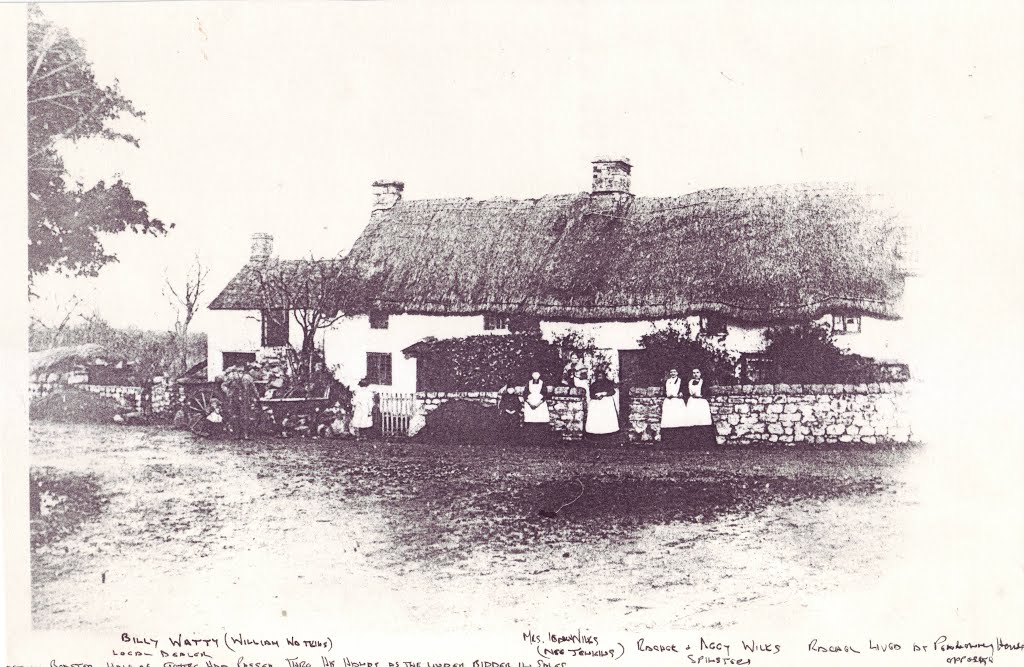
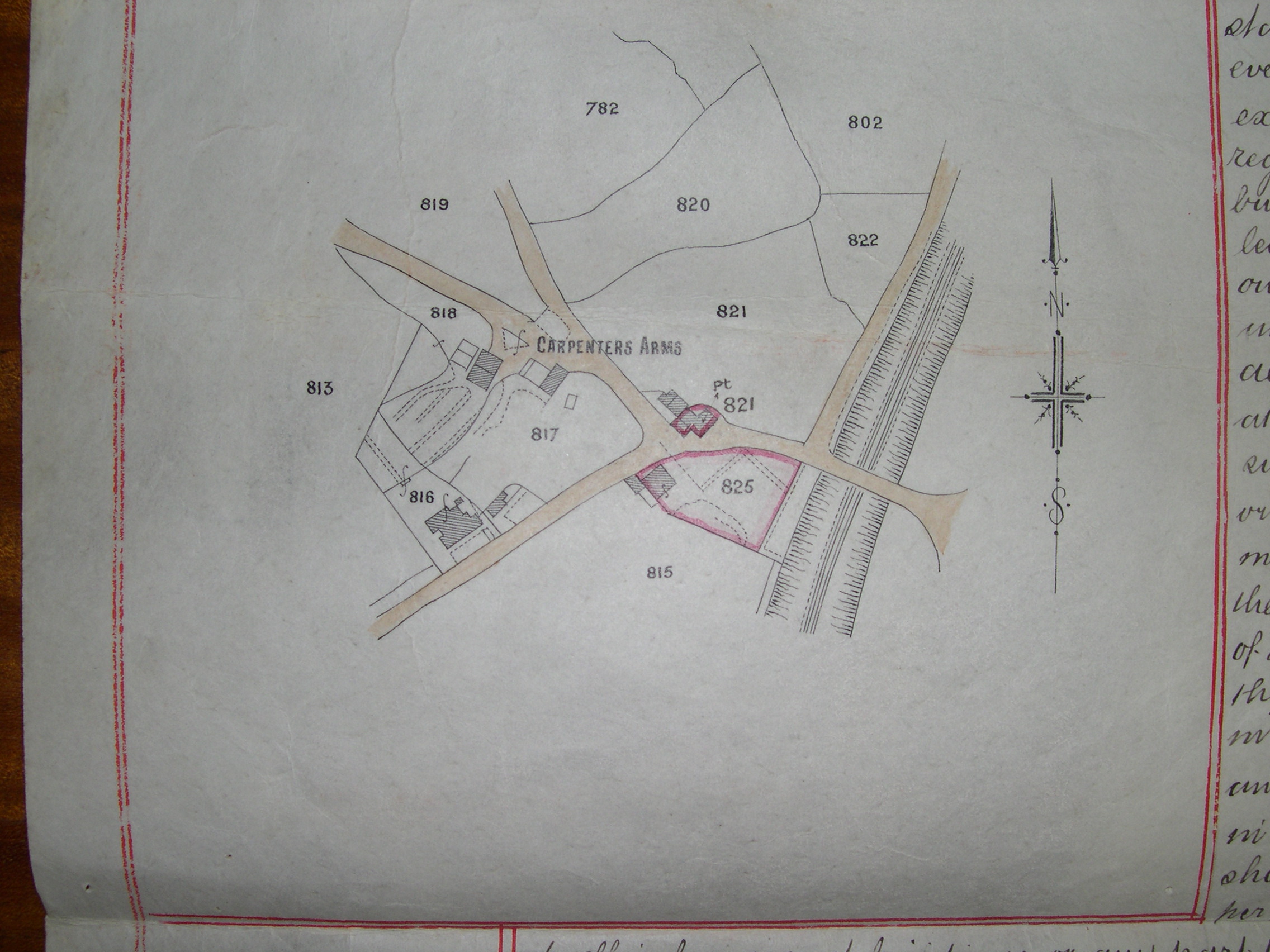
On 30th May 1771 at St Peter’s church Ann Watkins married John Williams, witnesses were William and Thomas Jenkins. The next mention is when John Williams becomes constable for his lease of the property.

Land tax of 1798 is paid by John Williams. On the Earl of Abergavenny’s parish survey of 1821 the property is numbered 156.

An 1840 lease for lives near bridge 83 (bridge numbers have changed since that date) when the Earl of Abergavenny let to John Williams (I must assume the younger) 5a 3r 28p.

The census of 1841 says John Williams is 55 a carpenter, living with him is Edward and Martha Jenkins, Edward is 55, Martha is 70.

In the following census of 1851 the property is called Ty Sare by the enumerator, it says John Williams is 68, unmarried, a wheelwright, still living with him is 61 year old Edward Jenkins a basket maker from Dingestow and Martha 65 from Llantrissant.

In 1852 the leaseholder changes to John Jenkins who is a cattle dealer, his wife is Jane, their daughter is Keturah 6, staying with them is William 3, the son of Peter Fodee of Smallwood, Chester, a grocer. John Jenkins and his family are still in residence at the time of the 1871 census John Jenkins is 62, born in Raglan still a cattle dealer, Jane is 57, born is Usk, living with them is their unmarried daughter Elizabeth 24 and servant Edward Sheen 40 from Ireland

The electoral register of 1878 says John Gilbert is now the occupier of the “New House,” a leasehold property with land. He is a retired farmer aged 81. On the 1881 census he was born in Llangattock, Susan his wife is 61 he remains on the tithe update of 1889.

The same year William Evans takes residence, the following census says he is 41 a wheelwright born in Pontypool, Rebecca his wife is 40 born in Machen, their children all born in Goytre are Edward 11, William 10, Rose 8, Emily 5, Gertrude 3, Mabel 1, they have a15 year old servant Annie Scammel also born in Goytre.

William and Rebecca remain at the property through to the census of 1901 which says William is 51 and Rebecca 49 and children Gertrude 13, Mabel 11, Margaret 7 and Rebecca 5.

On the 1911 census Thomas Morgan and his family have moved to the New House, Thomas is 52, a market gardener from Griffithstown, his wife Mary Jane is 60, they had been married for 27 years and have 5 children, one daughter Ethel Beatrice 22 is at home, 15-year-old Gilbert Walton is helping in the market garden.

The Earl of Abergavenny sold his property in the parish of Goytre in 1920, New House is advertised as a smallholding of 4a 2r 7p paying 18s 6d tithe to the rector. It was sold to the leaseholder D H Morgan of the Wern for £250.

A sale of live and dead stock was held at New House Farm on 12th January 1920 due to Mr Thomas Morgan leaving the premises.

By 1921 the occupier of the New House is Abraham Phillips 63, born in Mamhilad, he is a farmer, his wife Elizabeth is 59 from Mountain Ash, two sons are living with them, Edwin 23, a blacksmith at Mynydd Maen colliery and Redvers 19 who is an out of work case maker.

Abraham Phillips died in August 1924; on the 22nd of August his wife Elizabeth placed a message in the Free Press thanking people for their kind support . He left £2054 14s 3d in his will.

A fire occurred at the property in January 1925 where a ton of hay was lost, it was soon to be the family home of H. Morgan and his new bride to be, the owner is mentioned,David Morgan now of the Gwynydd.

On the electoral register of 1930 Herbert Hedley Morgan and his wife Ada are in residence (by 1937 they had moved to live with David Morgan at the Gwynydd.)

In 1938 it was Robert Long and his wife Ada on the electoral register, by 1945 it was Annie Tallentire and her son Harland who came from Grantham.

About 1955 the Williams family moved to the Croft, Francis Williams married Margaret Howells of nearby Road Farm.

Rose Cottage

Rose Cottage

742a on the 1841 Tithe Map

An Earl of Abergavenny lease no. 1079 dated 1703 says William Pritchard of Goitre, a victualler rents a cottage and four acres of land in Pellenny.

The next lease dated 1749 gives Francis Morgan holding a cottage, garden and four acres.

The National Library of Wales have leases no. 122 dated 1807 which says Joseph Griffiths blacksmith holds part of a messuage or dwelling house, the next lease, 125 says William Williams a labourer holds the remaining part of the property scheduled in lease 122. At this time Francis Phillips was in occupation.

Francis died whilst in the workhouse in 1826 aged 82 years, he was buried in St Peter’s churchyard.

William Williams of Rose Cottage was called to the Court Leet in 1810 for encroaching the highway near Penpellenig.

William Williams died in 1814 aged 86, he was buried in St Peter’s churchyard.

The land tax of 1813-15 says John Williams holds the lease and William Lloyd the occupier of Rose Cottage.

By 1816 Francis Morgan jnr., is holding a cottage lately of Susan Williams the widow of John Williams the previous lease holder of Rose Cottage.

The Earl of Abergavenny’s parish survey in 1821 says William Williams and Joseph Griffiths have adjacent gardens.

In 1823 Susan Williams the widow of John died aged 78, she was buried in St Peter’s churchyard.

The land tax 1824-1825 says Francis Morgan jnr., late Susan Williams, from 1829 -1831 the owner of Rose Cottage is the Earl of Abergavenny with Margaret Williams the occupier.

In 1838 John Prosser took the lease of four parcels of land and cottages previously held by William Williams which has now expired.

The tithe of 1841 says Walter Williams is the occupier, he is 25 as is his wife Ann.

On the 1851 census Walter Williams and Ann are still at Rose cottage, they now have a son Williams 6, Walter is a haulier.

Ann Williams, the wife of Walter died in 1861 aged 47, also being buried at St Peter’s churchyard.

In 1870 a new lease was drawn up by the Earl of Abergavenny to the Rev. Richard Augustus Byrde for a parcel of land with two decayed cottages, one a blacksmiths shop and two parcels of garden on the other side of the parish road excluding 30 perches of land granted by lease to John Prosser in 1838, all lying in Penpellenny for 21 years at £1 1s per annum.
The census of 1871 says Margaret Morgan is residing at Rose cottage, she is 67, an annuitant, living with her is her niece Clara Williams 25 and nephew John Williams 2, they were all born in Goytre.

William Bevan and his wife Elizabeth were residing at Rose cottage on the census of 1891, William is 57 a farm labourer born in Mamhilad,, Elizabeth is 61, born in Panteg.

By 1901 Ann Jenkins 73 from Pontypool had taken occupation.

Another family had taken residence by 1911, Edward Owen 66 a bootmaker from Radnorshire, Harriet his wife 65 from Trevethin and son Harry 25, a mason. Edward and Harriet had been married 22 years and had 5 children who were all alive.

The Earl of Abergavenny held a sale of his properties in 1920, I don’t know who purchased Rose cottage.

There is no entry for the property in 1921.

In 1939 Elizabeth Williams was residing there, she was born in May 1866 and living on private means.

Berllan Nantyderry

629 on the 1841 Tithe Map.

The 1841 tithe gives Samuel Batman as the owner and John Lewis the occupier of 19 acres 1rood and 29 perches paying £2 5s 5d to the rector.

In 1859  on the 2nd March John Edwards, farmer of 20 acres near Nantyderry signed a petition against  paying towards the widening of Newport bridge.

There are parts missing on the census of 1861, the census of 1871 says James Trim and his wife Eliza both 48, their children are Sarah 11 and Mary Ann 8. James and Elizabeth were both born in Puddletown Dorset.

In early1890 Abraham Boyce married Emma Ann Wood  in Newport, Abraham was born in Llanbaddock, the son of William and Amy Emma Lewis.

The Boyce family remained at Berllan for many years from this date.

The census of 1891 says Abraham is 40, a farmer, Emma is 32, living with them are Emma’s two sisters, Joan Wood 33 who is living on her own means and Margaret 30, a dressmaker.

By the census of 1901 the family had grown, Abraham is now 51, Emma is 44, their children are John 9, Alfred 7, twins Charles and Margaret are 4, Kate 2, sister-in-law Joan Wood is now 45, who is still living on her own means.

In 1911 Abraham is 61, Emma is 54, at home is John Stanley 19, now a postman for the GPO, Alfred is 17, a porter for GWR, Charles and Margaret 14 are both at school as is 12 year old Kate. Joan Wood 55 a dressmaker is a visitor.

Sometime between the 1911 and 1921 census Stanley and Alfred emigrated to America.

On the census of 1921 Abraham is 72, Emma 63. son Charles Godfrey, is 25, assisting his father on the farm, daughter Margaret Joan also 25 is a dairymaid, younger daughter Kate Louise is now married, her surname is Lewis, they have a 4 month old baby called Edmund, Joan Agnes Wood is now assisting on the farm.

Sadly in November 1923 Emma Boyce died aged 71, she was buried in St Peter’s churchyard. Abraham died in August 1930, he was buried alongside Emma. His obituary says he was a native of Coed-y-paen and had purchased Berllan on his return from America 40 years ago.  In his will he left £677 to his twin children Charles and Margaret who were living with him and working the farm.

On the electoral register of 1935 Charles and his twin sister are alone at Berllan and again on the 1939 register.

About 1940  Arthur Charles Boyce, the son of William and Alice, nee Evans and his wife Ethel, nee Gameson who had married in 1937 went to live at Berllan, they had two children, Ivy, who died a short while after birth and Brenda.

Brenda married Frank Robinson of Nantyderry nurseries in 1963 at St Peter’s  (I was fortunate to have been a guest at their wedding.)

Arthur Boyce and Ethel remained at Berllan until their deaths, Arthur in 1965 and Ethel in 1988.

Bwrgwm Farm

081 on the 1841 tithe map.

The first mention of Bwrgwm farm is of William and Ann David who had the children baptised at St Peter’s church, January 1747 Mary, August 1749 Francis, June 1750 Anne, and Margaret in May 1755.

They left Bwrgwm in 1756 to live in Llanvair Kilgeddin, this is when a deed of purchase dated 20th January 1756 took place, the deed says where William David did dwell containing 23 acres, the new purchasers of Bwrgwm were Richard Pennell and Howell Thomas.

The new tenant is Richard Watkins.

In 1765 Richard Watkins became an overseer of the poor for the parish and constable the following year.

Richard Gregory of Llanvair Kilgeddin took a mortgage of £50 for the messuage where William David did dwell, now of Richard Watkins.

Richard died in 1788,  he was buried in St Peter’s churchyard,  his will says he is a yeoman, leaving £5 to each of his wife Alice’s nephews, William Morgan of Llantilio Crosseny and William Morgan of Llanthewy Rhytherch, his wife Alice died the following year 1789, the court leet saying she was seized of a lease.

Richard Gregory the owner of Bwrgwm died in 1807, he was buried in Llanvair Kilgeddin churchyard.

The overseer of the poor for Bwrgwm in 1816 is Edward Lewis, his wife Margaret died in 1819 aged 75, also being buried in Llanvair Kilgeddin.

The Earl of Abergavenny’s survey of 1821 shows Edward Lewis as the owner on his map.

By 1825 William Jones is in occupation of a property formerly Edward Lewis.

William Crump was the new occupier, his daughter Mary being baptised at St Peter’s Goytre on the 30th September 1827 and a son John was baptised on 7th March 1830.

An advert was placed in the Monmouthshire Merlin in July 1829 for the farm to be sold at the Greyhound Inn by auction on the 21st July. The advert said William Crump was in occupation of a newly built dwelling house with convenient outbuildings, orchard and closes of meadow, pasture and woodland. A short distance from the turnpike road from Abergavenny to Pontypool. For further details contact Mr Lewis ironmonger Abergavenny or Hugh Jones Attorney.

William Crump is mentioned in the Court Leet 6th May 1830, no further information is given.

In 1833 the owner of the property, Louisa Little of Llanfoist, but now of Regent Street gave Bwrgwm to her son James of Little Regent Street.

The next occupier is William Jeremiah and his wife Elizabeth, they had two children baptised at St Peter’s Goytre, Elizabeth in March 1833 and Thomas in July 1837. The census of 1841 says William and Elizabeth are 40, their children are Harriet 15, William 13, Azariah 9 and Thomas 6.

James Little the owner sells Bwrgwm to Robert Wheeler of The Pentre, Llanfoist for £499 15s.

William and Elizabeth Jeremiah and family are still at Bwrgwm on the 1851 census, where William is 56 a wood collier, Elizabeth is 57, daughter Harriet is a dairy maid, William the younger 23 is also a wood collier as are Azariah 19 and Thomas 16. Elizabeth died in 1856 I am unable to find out when.

On the 1861 census William Jeremiah is a widower, a farmer of 16a, he has a housekeeper, 53 year old Mary Lewis also a widow who was born in Llanwenarth.

In 1865 Col. Henry Byrde took a mortgage of £650 from Ann Wheeley, (Robert Wheeler died in 1856) for the purchase of Bwrgwm Farm. Ann Wheeley died in 1879 leaving £12,000.

William Jeremiah died in 1866 aged 72, he was buried in St Peter’s churchyard.

The new occupier on the census of 1871 is Walter Jenkins, he is a 37 year old keeper and farmer, born in Goytre, Anne his wife is 34 also born in Goytre, their children are Ann 2 and William 9.

An entry in Penperlleni school register on 21st June 1880 says the children of Walter Jenkins a gamekeeper started school, they were Ann born 27th June 1868, William born 23rd June 1870 and Maria born 3rd August 1872.

On the 1881 census Walter Jenkins is 47, still a gamekeeper, Ann is 44, daughters are Ann 12, Maria 8, Rachel 6, Martha 4, their son is William 10. They have two lodgers, James Jones 19, a woodcutter and William Williams 30 from Morriston who is a woollen weaver.

The school register in 1883 says Martha Jenkins, daughter of Walter had left Bwrgwm and was now living at Church Farm.

I am unable to find who was living on the census in 1891 but in 1901 the property was uninhabited.

By 1904 David Evans was in occupation, his children Mary Ann, John, Hannah and Esther enrolled at Goytre school on the 16th May.

The census of 1921 says George Evans 35, a farmer from Gilwern is living at Bwrgwm farm with his wife Mabel Maud born in Monkswood and their children George 8 born in Usk and Leslie 8 months born in Goytre.

George Evans remained at Bwrgwm farm until his death In 1935, when he collapsed and died whilst waiting for a bus at Lapstone Lane, Goytre aged 49.

Penty Cottages 1 & 2

Now in the parish of Llanover, originally owned by the Earl of Abergavenny. Number  277 on the 1841 tithe map

In 1827 the original property was enlarged to make two cottages.

On the 21st March 1830 Morgan Griffith died at Penty, he was 91 years old, followed by ten year old Mary Griffith in 1835, they were both buried in Llanvair Kilgeddin churchyard.

The census of 1841 gives Morris Griffith a 40 year old quarryman, Ann his wife also 40, daughter Mary 15, son John 6 and Charles Dowling, 20 a mason living at number one.

At number two is Mary Mathews 70 and her daughter Rachel, both Mary and Rachel annuitants.

10 month old Emily Griffiths died at Penty in 1847, she was buried in Llanover churchyard, the following year a baby girl was born to George and Elizabeth Griffith, the register says George is a butler and have baptised the baby Mary Elizabeth.

Unfortunately the census of 1851 is a minefield, the enumerator appears to have gone round the parish only mentioning a few properties, against the names of most he has written “none.”

Also missing is the 1861 census.

At Llanover church on the 11 September 1870 John James and Elizabeth his wife had their baby son Peter baptised, John said he was a labourer living at Penty. The following year another son, Arthur, was baptised.

On the census of 1871 is John Jones 51, his wife Ann 46 and 7 year old son Henry.

Lewis Edmund, the local builder wrote in his diary on 3rd Nov 1875 that he was at Hanover for the funeral of John Jones, gardener Penty.

A lease was signed by Ebenezer Morgan on 1st May 1877 for the

tenancy of Penty cottages, the lease also signed on 1st May 1877 is held by Rees Jenkins, farmer, who sub let to Ebenezer who was a retired tailor,  born in Abergavenny in 1804,  the son of Morgan Morgan also a tailor.

The following memo was written on 27th May 1879  by Lady Llanover regarding her concerns about Mr James and a lady.


There is a very distressing scandal and means must be found to put an end to it.  The woman who keeps house for Ebenezer Morgan it appears not only drinks herself but continually has Mr James from the next door to sit up all night drinking.

Ebenezer goes to bed about half past eight. I spoke to Mr. Thomas of Hanover yesterday and he says that he has done his very best to awaken Mr James to a sense of the wickedness of such conduct but that he is so infatuated by the temptation always at hand that nothing can be done effectually unless this woman is sent away which she certainly ought to be if only for another reason that she has been known to offer a penny to a child to go with a jug to Pen Croes Oped to bring some sort of liquor and of course such conduct is most demoralising.

I believe you know that Ebenezer’s sister (Mrs Edwards of Pentstair) when dying begged me to let her brother have one of my cottages and I promised he should.  No doubt she thought that he would thereby have some influence or authority ( over him as he is blind and deaf,  as he is he would be very likely to come to some untimely end if he was not near here with a next door neighbour  – but most unfortunately this woman is ruining the next door neighbours and if I turn him off suddenly his mother and sister may both starve which indeed I believe they have lately nearly done as Mr James has become very unkind to his mother since all this has taken place and I have given his sister leave to be a week at the Ty Uchaf  for the sake of having milk and good food to buy to get up her strength.

Mr Thomas tells me that she is a most plausible woman, quick and active and industrious but having this dreadful vice is no doubt the reason that she was glad to undertake the charge of Ebenezers house instead of a better place,- she is a widow, has some property and a son, when she is got rid of, of course Ann James and her mother would take care of Ebenezer and live in their own house but it would not do to say a word of this beforehand, for they say she is a very violent woman and she might accuse them of trying to get rid of her to get the place.

I understand that Allen the policeman was up there one night not long ago by the request of Mr James’s mother who also sent for Rhys Jenkins whose tenants they are as he rents the house off me.

I wish you to see Allen and ask him from me if he cannot give any evidence as to finding them drinking there late at night so that I might have grounds to tell Ebenezer so that she must go and tell him herself that it is better for her to go quietly as if it was her own wish, to prevent still more public scandal which would still more seriously injure her character.

I should be very decided with Ebenezer to say that he shall not have my house to live in if he keeps such a housekeeper but otherwise that he can be very comfortable and have a respectable woman to take care of him. It will be the next time when she is gone to take Mr James in hand and very likely he will have to go also.

I should send him off at once if it were not for his mother, who, he previously is good to and supported.  I have asked Davis about his work – he says he is often off his work and has lost days the last month – but he always makes the excuse that he has such bad health and is not able to come to work – he says he always takes him off the book every time, that sometimes he makes up the time again – and sometimes he does not.

I think for the future  that when any of the men do not keep their time that it ought to appear some way on the book if it is made up again by over hours – but I will check to you about his again but had I known that this man was intentionally missing days I should have had enquiries made sooner and I do not suppose that you discussed it.

(The remainder of the letter is about other matters relating to the estate)

The land tax of 1878 says Mrs James, the following year Richard Morgan is also paying land tax for Penty, and on the 10th December he paid income tax for Penty house and garden to Lady Llanover.

The census of 1881 says Richard Morgan is 29, a farm labourer born in Llanover, his 26 year old wife Miriam was born in Glyn Neath, they were married in January 1878, their children are David 2 and William 2 months, both born in Goytre.

Over the following years Richard Morgan is mentioned several time for paying rates and taxes for Penty and signing the petition for a welsh speaking vicar for the parish of Goytre.

The census of 1891 gives two families residing at Penty,

Henry Jones a 27 year old gardener born in Goytre, he is married to Mary 26 from Ammanford, they have a two year old son John, living with them is 21 year old William Edwards who is under gamekeeper on the estate, William was born in Brecon.

At the other property is Richard Morgan, he is now 39 and a general labourer, Miriam is 35, their children, all born in Goytre are David 12, William 10, Jacob 8, Jane 6 and Edith 9 months.

The enumerator on the 1901 census has numbered the properties, Richard Morgan is at number one with his wife Miriam, daughter Edith, he has a lodger, William Walters, a 78 year old gardener. Children William and Jacob are living in Glyn Neath, Jane has also left home, in 1920 she married William Webster.

At number two is Thomas Jacob who is a 38 year old gardener born in Llanover, his wife Alice is 24 from Whitchurch, they were married in Llanover church in 1896 their two children are Ivor 2 and Charles 10 months.

An entry in Llanover church burial register says Miriam Morgan 53 of Penty was buried on 5th May 1909, there is another entry for her son David John in June 1913.

At number one on the 1911 census is Richard Morgan a woodcutter, now aged 60., daughter Edith Maud is 20 and Maggie Coombes 10 from Glyn Neath.

At number two is Thomas Jacob 48 a coal man at the mansion, Alice his wife is 33, their children are Ivor 13, Charles 10, Elsie 8, Gladys 5, and William 2.

The census of 1921 says Richard Morgan is now 60, a woodcutter for Lord Treowen at Llanover estate, Jacob is 38, single, a colliery engine driver at British Rhondda colliery Glyn Neath, Maggie Coombes is still with them, she is a general servant.

At the other cottage is Thomas Jacob, Alice, their children Elsie, Gladys Willie, Cyril, Allen and Harold, Thomas is a general labourer for Lord Treowen.

Thomas and his family remained at Penty until their deaths, Thomas died in 1945 followed by Elsie in 1947.