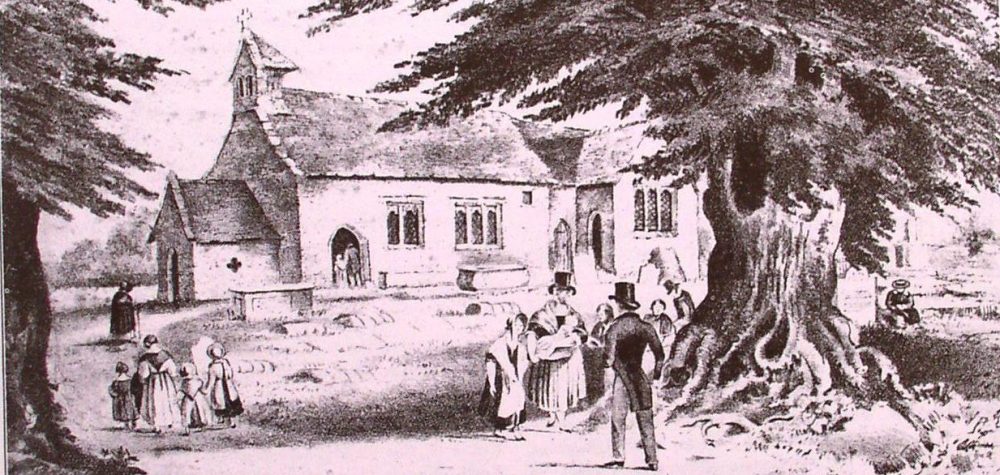
Number 978 on the 1841 tithe map. Although I have seen Penpedairhewl spelt in many different ways I will keep to one spelling.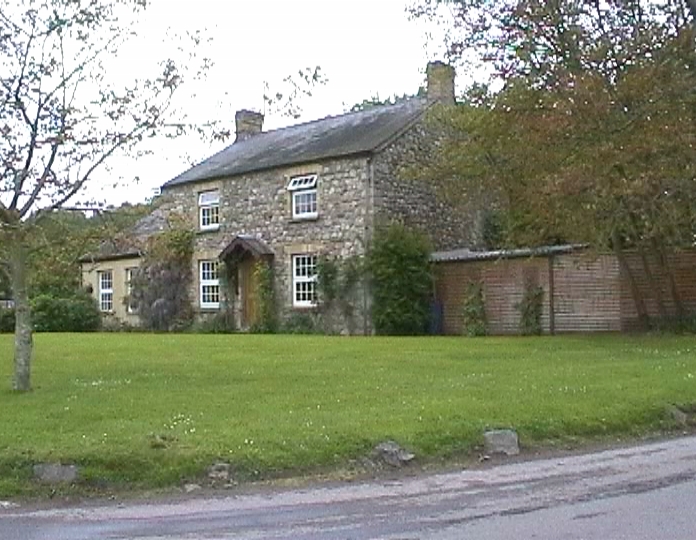
The earliest mention is in 1726 when the parish records show William Mathews is the constable for Penpedairhewl, the next mention is 1791 when Philip Jeremiah is given as constable for Mr Phillips, Penpedairhewl.
A marriage took place at St Peter’s Church Goytre between William Jenkins, a labourer and Ann Jones on the 13th May 1819. William and Ann started their married life at Penpedairhewl. Their family grew quite quickly with the birth of John who was baptised at St Peter’s in March 1820 followed by Thomas, July 1821, William, August 1823, Mary, March 1826, Philip, July 1828, Elizabeth, April 1831, Walter November 1833 and James in June 1837.
In 1828 William Jenkins is listed as the Constable for Penpedairhewl but by 1833 William had moved his family to the Walnut Tree Farm.
The tithe of 1841 says the owner is still Thomas Phillips, the census of the same year says Roderick Roderick is the occupier, a widower, his wife Margaret having died in 1838. He had married Margaret at Monkswood church in 1814. Living with him are his children, John and William both aged 20, Roderick, John and William are all shoemakers, also living with him ishis daughter Mary aged 8.
Roderick Roderick died in 1848, his son John and family are now living at Penpedairhewl. John is married to Sarah Pritchard, the wedding took place at Monkswood church on July 22 1843. On the census of 1851 their children are Jane 7, Margaret 5, Mary and Sarah 2, and two month old Ann.
John, Sarah and family remained at Penpedairhewl for the next 20 years, their family increasing by Thomas, Emma, John, Alice, William and Harriet. John had changed his occupation by 1871 to wood collier.
By the census of 1881 John and Sarah had moved to Llanover village where John’s occupation is an agricultural labourer, John and Sarah are both aged 60. It is here in 1882 that John died, followed by Sarah in 1888.
On the census of 1881 at Penpedairhewl is 80 year old farmers widow Mary Watts and her granddaughter Emma Watts. Mary had been married to Thomas Watts who had a fight with Thomas Morris outside the Royal Oak in 1845, the outcome being that Thomas Morris died of his injuries.
William Rees, a 41 year old farmer had taken up residence by 1891 along with his wife Sarah, 37. This had changed again by 1891 to Thomas Pitt from Hereford, Thomas was 27, a carter on a farm, his wife Florence is 23 they have one daughter Florence who is one year old.
By 1911 Florence Sarah Richards was in occupation of Penpedairhewl, she was born at Chapel Farm Monkswood, the daughter of Henry and Sarah Stinchcombe (nee Mathews.) Florence had married Thomas Richards in Newport in 1903. On the census their children were Edward 7 and John Anthony 6, they were both born at Six Bells Abertillery, daughter Florence, 6 in Monkswood.
Florence remarried Benjamin Thomas in December quarter 1916, her family on the 1921 census are Edward 17, John 13, Molly 10, Clarice 4 and Leslie 1. Edward is employed by his mother in the market gardens that she runs.
In 1925 a dreadful occurrence took place with Gwendoline, the daughter of Florence.
The following is a copy of the Free press artiicle from August 1925.
Death of Goytrey Child Accelerated by Malnutrition
Evidence “Sufficient for Prosecution under the Children’s Act”
Very great interest was taken by the people of Goytrey in an inquest held by Mr R W Dauncey and a jury of seven [with Major F E Craven-Jones as foreman] at the Carpenters Arms in that parish on Friday evening on the body of the 9 year old illegitimate daughter [Gwendoline] of Mrs Florence Richards of Rumble Street, Goytrey, who died on March 16th.
Police Superintendent I Spendlove was present with P S Cotterell and P C Taylor, and the proceedings lasted over four hours, the mother being under examination a considerable time.
At the onset, the Coroner warned Mrs Richards that she need answer no questions, nor make any statement that would tend to incriminate her, but whatever she said would be taken down in writing and might be used in evidence against her hereafter.
Mrs Richards elected to give evidence. All her children, she said, were more or less delicate. A couple of weeks ago she noticed that Gwendoline was shaking as if her nerves were bad but she would not tell witness how or where she felt ill. Her appetite was as good as ever, and she never complained of not being satisfied, nor of not having had enough food. She had never been refused breakfast to witness’s knowledge, nor had she been made to carry large bundles of sticks before breakfast. Molly was witness’s eldest daughter, 14 years of age.
The Coroner: Witnesses are going to say that five or six weeks ago the child was seen crying and that when spoken to she said that Molly would not give her any breakfast.
Witness: I always left them to their food; they fed themselves.
You do not know about her being refused breakfast? No sir; but I don’t think she would be refused other than the other children.
Another witness is going to say that she saw the child about a month ago, about 9 o’clock in the morning carrying sticks, and that she had complained that she had had no breakfast, and that you had refused to give her any, is that true? no sir.
Why has she been crying so much? She often cried and many people would think I had been beating her, but I have never done so. I don’t know why she has been crying so much.
Another witness is going to say that the child has complained that she did not get enough dinner?, the children are all dealt with equally, and at no time, to my knowledge has she had insufficient dinner.
Have you sent her out with a bottle to fetch paraffin at dinner-time so that she had no time for dinner? No sir.
In categorical reply to questions, Mrs Richards denied that she had sent the deceased out on errands to prevent her having dinner: that she had never threatened to “bash her brains in”, that deceased cried frequently from want of food; and that she had forbidden the school teachers providing the child with a cup of cocoa.
The Coroner: why did this child go home to dinner while her sisters remained at school to dinner?; – Because they accused her of stealing dinners.
Was that because she was hungry and had not sufficient food? – I don’t think she stole the dinners and I thought if she came home she could not be accused. It was not because she had insufficient food.
Do you know that people have given her food? – Not until today I have known that other people gave her a mouthful of food.
And if a witness comes forward and says that she has given your child food several times and that when you found it out you kept her from the house, is that not correct? No sir.
Why have you always sent this child and not the other children for wood? – I have one to help me in the house and the others are too young.
You have a boy? – Yes, aged 17.
Why not send him? – Because he is at work, he does casual work.
The Girl’s Illness
In reply to further questions witness said she had no knowledge that deceased had been heard crying when going to the wood and saying that she had had no breakfast; nor that her son Jack had ill-treated and threatened the child. Deceased did not carry all the sticks, but she got them every day for the morning. When witness noticed her shaking on March 9th she got her into the house and seeing no improvement later, she sent for the doctor. That was on Thursday week. Deceased went to school a couple of days after the Christmas holidays, but she had not gone regularly because witness objected to the child being kept in the infants’ class. She knew she was under an obligation to keep the children at school until they were 14, and the magistrates had made an order against her. Deceased was in a made up bed in the kitchen when the doctor came on the Thursday and she did not go out afterwards to her knowledge. Witness kept the child downstairs because her legs would not allow her to go up and downstairs to attend to her. Deceased was about the same, and she sent a message to that effect to the doctor on the 13th.
The Coroner: But she seemed very ill, didn’t she? – I could not understand her because her appetite was so good. She seemed better witness continued and said she was better on the Sunday but witness did not understand her shaking and her hands trembling so much. She seemed to be the same all day on Monday.
“I was going to pick her up, then I thought I would put the children to bed first. I had partly raised her and then her head fell forward and she died immediately”.
In reply to questions as to diet, witness said that deceased had hot milk on the Monday. She wanted jam and was cross, but witness did not give it to her as she thought she ought not to have it. She had only bread and butter on the Sunday for breakfast and milk for dinner. She had milk just before she died, but nothing solid to eat. During the time she was ill- from March 9th to the 16th – she had toast and bread and butter and milk. At other times she had had the same as the other children, bacon and bacon and fat, and bread and butter etc.
The Coroner: Now I am going to put it you, and you need not answer it unless you want to, that this child has been systematically underfed for a very long period? – no sir, not at all.
That, perhaps without actual violence that you have systematically ill-treated this child? – No sir, I have never marked the child.
That you have under-clothed the child? She has been clothed in the same way as the others. I know their clothes are scanty, but I have little money.
That you have treated this child quite differently from the other children? – Not at all sir, – she is my child, and I have had the same thought for her as for the others.
Had the children as much milk as they wanted? – No sir, I could not afford it.
How much did they have? – I get a quart a day. I have only 15s a week besides my earnings as a general thing.
Do you keep cows? – No sir, I keep goats and when they have milk I make most of it.
The Coroner put questions as to the ordinary daily diet of the family, and witness re-asserted that Gwendoline had the same as the other children. Deceased ate two or two and a half rounds of bread from a 2lbs loaf at a meal except when it was a cooked one with potatoes and other vegetables. Deceased took an average day’s food up to the Saturday before she died. Then a friend, Mrs Cutter advised her to give the child more milk and less food. On the last Sunday deceased asked her for an orange, and witness peeled it and she ate it contentedly. On the Monday – the day before she died witness cooked her an apple before dinner, she ate that and had three half cup-fulls of milk after.
The Coroner: Do you seriously tell me that the child has been fed like this up to the Saturday before she died? – Yes
Do you know that the doctor says there was not an atom of fat on the child’s body? – It was not for the want of food sir.
That the condition of the body could only have been brought about by the systematic lack of food.
Florence Richards remained at Penpedairhewl until her death in 1963, she made a will leaving her estate of £1443 18s 5d to Alfred Llewellyn Richards.