February 23rd
Selling Beer without a License
William Garner, who appeared on remand, was charged with having sold beer at Goytrey, without a license.
He was convicted in the penalty of 20s, including costs.
May 12th
Rejoicings at Goytrey
The return of Lieutenant Colonel and Mrs Byrde from Ceylon, to their residence at Goytrey was enthusiastically celebrated on Wednesday week. The inhabitants for some time had been awaiting the news of their arrival, and everyone was wishful to do all in his power to getting up some public expression of their good wishes and affection.
When the suggestion was made, it was met with a ready and cheerful response from all. Accordingly at 3 o’clock in the afternoon of the above day, about 150 children met at Penpellenny, formed in procession, headed by the Goytrey band, went around Goytrey House and were warmly received.
Thence they made their way to Goytrey Co-operative Stores, where Mr & Mrs Jenkins, assisted by several ladies had provided a good drop of tea and cake for the young.
Having regarded ourselves (writes our correspondent) with the good provisions, we found that our time was rather short to reach Nantyderry Station for the train. We found, when approaching the station that every place was well timed with lookers on.
Usk Observer Sept 1st
Stealing Meat
Thomas Watts, timber haulier, Goytre, was charged with stealing 5lbs of veal, the property of John Richardson, butcher, Usk on the 21st of August. Mr Henry Roberts appeared for the prisoner, Charles Coleman, miller Llanbaddock, said he was riding on the walk down Bridge street Usk on the evening of the day named about eight o’clock, when he saw, by the light of the gas, the prisoner take a piece of meat from a hook in the shop of prosecutor and put it under his coat; witness at first thought it was a joke, but he waited a short time to see if it was so or not, and seeing the prisoner walk away with another man who was with him, he told prosecutor that he had seen.
In cross examination the witness said he was sure it was Watts took the meat, not the other man – Francis Young, who is in the employ of the prosecutor said he missed part of a neck of veal off a hook in the shop; he had just before served the prisoner and a man called Rosser with 23/4 lbs of chops, part of which he had cut off the neck in question; Watts paid for the chops with a sovereign and witness went into another room to get the change; he afterwards saw the prisoner apprehended and the piece of veal, which was the same as he had cut the chops from, taken from his pocket.
John Richardson, the prosecutor, deposed to giving information to the police, and to being present when the prisoner was apprehended, at the foot of the Usk bridge; when he (prosecutor) took the piece of meat from his pocket – P C Hill proved to apprehending the prisoner, and added that he found £6 5s 1d on him. Under cross examination this witness said; We forcibly searched the prisoner and took away everything we found on him; we did not take the knife from him because he was drunk; he was not drunk. – Mr Roberts in addressing the bench contended that the prisoner had taken the meat in a lark, as the witness Coleman had first supposed it was; and this idea he submitted was favoured by the fact that the prisoner was in a respectable position as a timber haulier; and further by the circumstances that he was returning towards Usk when he was overtaken by the policeman.
The prisoner, after being duly cautioned was committed for trial at the quarter sessions bail being taken.
Nov 10th
GOYTREY GRIEVANCES
We have received the following letter, with a request for its publication, from a parish meeting held in Goytrey on the 1st inst. The letter was enclosed to the Clerk of the Highway Board at Usk, for the Chairman, to be laid by him before the Board at their special meeting on the 29th ult. The letter was not brought before the Board, nor any intimation made regarding it.
CHAPTER I
SHOWS HOW THE RECTOR WRITES THE WRONG
Nantyderry House, Oct 21 1866.
Sir,- In accordance with the request of the rate-payers of Goytrey, assembled in the vestry on the 22nd inst., I send you herewith the resolutions of the last and previous meetings, convened for considering wheat steps it is their duty to take in reference to the greatly increasing pressure upon them of road-rates, caused by the unprecedented expenditure on the Star road. And in doing so, I trust I may be excused for submitting to the Board the fact that the ratepayers – who are generally small payers, and in comparatively humble circumstances – have been called upon to pay, during the last three half-years, in road and poor rates, a sum amounting to a total of not less than £954 17s,; and that within the last twelve months and two days their road rates have amounted to £322, whilst an order is again made upon them by your Board to pay within the next two months not less than £140, making a total of £462, within the short space of fourteen months!
The rateable value of the parish of Goytrey is £2955, and the number of ratepayers about 150, of these, about 25 are rated under £20 and over £10, and about 60 are rated under £10 and over £2, The Highway Board can, therefore, imagine how heavily and sorely the above taxation presses upon and oppresses a large class of small agriculturalists and agricultural labourers in the parish.
I beg leave to add that the ratepayers, feeling deeply aggrieved by the unprecedented road-rates laid upon them, and by what they deem to be a gross misapplication of their rates on Star hill, are now resolved to see in what way they can get redress, be protected, or protect themselves.
I remain, Sir, yours obediently
Thomas Evans
Rector of Goytrey and Chairman of the Vestry.
To the Chairman of the Highway Board, Usk.
CHAPTER II
VERY LIKE A SNUB.
The ratepayers of Goytrey held a meeting on Thursday, the 1st inst., to hear the result of the Board meeting. The Waywarden having stated that no communication from Goytrey had been brought before the Board, the Rector was desired to write to the Clerk for an explanation of the discourtesy.
CHAPTER III
GIVES THE REPLY, SHOWING HOW THE RECTOR’S LETTER WAS “PRODUCED.”
Sir, – I have received your letter of the 2nd inst., and sent a copy of it to the Chairman of this Board. Your letter of the 24th and the accompanying resolutions, were communicated to the Chairman and produced at the last meeting, and remained upon the table to the close of the proceedings. The Waywarden of Goytrey, in the course of the discussion which took place [reported by us last week and by no other newspaper], stated the substance of the resolutions, but did not request them to be read. It is far from my wish or intention to be discourteous to yourself or the vestry.
I remain, Sir, your obedient servant
KEATS
The Rev. Thomas Evans
CHAPTER IV
SUGGESTS A FEW QUERIES.
Mr Keats’ letter offers a few points worth of the consideration of the Board.
When a portion of their constituents think it necessary to write to them upon important business, ought any request that the letter be read to be required?
In a letter sufficiently “produced” before them for practical purposes “by its remaining upon the table to the close of proceedings?” Would not under the table be nearly as useful a place of deposit; or might not the paper as well be utilised in the form of pipe-lights?
The Clerk being acquitted has there been any discovery in this business?
CHAPTER V.
HOLDS OUT THE OLIVE BRANCE.
At the meeting before referred to, the Goytrey ratepayers passed the following resolution, with the object, if possible, of bring the difficulty to a pacific solution:-
Resolved, that the Chairman write to the board of Waywardens and offer to have the matter in dispute between the parish and that body, in reference to the cost of the improvement of the Star pitch, referred to the decision of the Usk Bench of Magistrates, or to the Pontypool Bench, or to the Chairman of the said Benches, provided the said Board enter a note or resolution on their minute-book to abide by such decision as the referees arrive at; and this parish agree to such decision as final and conclusive, as to the liability of Goytrey to the expenditure incurred. And that the parish agree that the magistrates shall decide the question in the capacity of private gentlemen, and not judicially, as magistrates; and that they are at liberty to decide the points upon their legal merits, the Waywardens appearing to view the matter in an Act of Parliament light only.
This proposal having been sent to the Board, with them it will then rest either to “let slip the dogs of Law” or to agree to a just compromise of a vexatious dispute.
Usk Observer Nov 24th
Apples v Eggs
A young lad named Isaac Jeremiah appeared at the instance of a man called Jones for stealing his apples. The parties reside at Goytrey, Jones had some apples on a barn floor and on looking through a crevice in the door he saw the lad putting some of them in a basket.
On speaking to him he put them back whence he had taken them. Mrs. Jeremiah said she had some hens laying in the barn, of which they were tenants until the month of May next year and she sent her son with a basket (produced) to gather the eggs. Jones said that the last witness had three hens laying in the barn. The bench said that although the lad might have been sent to look for eggs, yet he might have taken an apple or two.
Case dismissed; complainant to pay 6s. 6d costs.
Usk Observer Nov 24th
A charge of stealing £14
William Jones plasterer &c., Nantyderry, appeared on remand to answer a charge of having stolen £14, the property of the trustees of the Pontypool Park Estate.
Mr Alexander Edwards for the prosecutors and Mr Greenway for defendant, the first mentioned gentleman briefly stated the facts of the case which were, that a letter containing two £5 notes and 4 sovereigns was sent from the estate office on the 3rd inst., by a messenger, to the park house, which accidently fell out of the hat unobserved by him whilst taking off the same to bow to a gentleman who was passing him in the street. Prisoner having been suspected of picking the letter up denied having done so when questioned on the matter by Sergeant Brook, and when at the police-station he said he only had £12 in his possession and the notes bearing the same numbers of those lost, and four sovereigns, were found upon him.
The fact of his denying having the letter he (Mr Alexander Edwards) contended was a proof that he intended to keep the money. In answer to the chairman, Mr A Edwards said the letter was directed to Mr Tomlinson, Pontypool Park. Mr Greenway asked for the production of the envelope. Mr Edwards said prisoner had destroyed it.
The chairman wished to now if there was any evidence to shew that prisoner knew that the letter dropped out of the hat, when it appeared that no evidence of that nature had been obtained. In answer to the magistrate’s clerk, it was stated that the letter was dropped at twenty minutes to one, and the money found at about two o’clock in the afternoon.
Mr Alexander Edwards observed that he was aware it must be proved that prisoner had the means to knowing to whom the letter belonged, which he had from the envelope.
Mr Greenway said he had only been consulted on the case since he came into court. He did not mean to deny that prisoner had not picked the letter up, but he says that he did not know that what he was doing wrong, and was very sorry for what he had done. The fact of the matter was, that he (prisoner) had taken too much drink at the time, and on the policeman coming up and questioning him as he did he became irritated and would not give any information about the letter but when you have such a character given him as that produced by a gentleman of such standing, you cannot think for a moment that he intended to appropriate the money, and if he had become a little more sober, he no doubt would have acknowledged the possession of the letter. Mr Greenway added that he was not instructed to withhold anything.
In the course of some general remarks the chairman said prisoner had been taken up for larceny, but there were motives why he might deny having the letter in his possession.
He might deny having it in the hopes of receiving some reward for finding it, and unless it could be proved that he had a felonious intention he must be discharged.
Whatever the bench might think of the act itself, they must keep within the law; there was no evidence to shew that he saw the letter fall from the hat, addressing prisoner the chairman told him that he had placed himself in a position that every honest man would be ashamed to be placed in. He had received a good character, but many a man get well spoken of simply because he has had the tact to keep his dark deeds from coming to light. After being cautioned as to his future proceedings, prisoner was discharged. The money of course was given to the owners.
Free Press Oct 13th
ANOTHER WOLF IN GWENT
Not the first legend whose foundation lies in the sand of romance, rather than on the rock of fact, is that which gave Mr C.H. Williams the ground-work for his clever ballad. But the wolf which went scraping his paws, grinding his jaws, through brake and flood to Goytrey wood, where he got that ugly lick from Mr Herbert’s staff, was not the last of his race. Another wolf remains to be slain in Goytrey – so we are credibly informed – but no descendant of the brave Earl of Pembroke appears to give him chase.
Rides Stretton from Bryn derwen,
Rides Relph from hill of beech.
But then, ‘tis smaller vermin that you hunt nowadays, unless you go to France with His Grace of Beaufort.
The wolf of this our new Legend of Gwent
stated to ravage the country by force of law.
Created by Act of Parliament, brought into the district by Barons and Justices, held in charge by its own Wardens, our wolf notwithstanding all these accessories of respectability, works much mischief, spreads wide discontent, and evokes stern maledictions from the farmers and cottagers of Goytrey.
“Ho! bring the wolf-staves from the wall,
See that your knives are keen;
Come, men of hearts and sinews strong,
No child’s-play this, I ween.”
Certainly not- no child’s-play at all; but then wolf-staves and knives wont do the business. Our wolf is proof against edged tools, or there are pikes and bill-hooks which would have stopped his depredations before now.
But – to throw off our wolf’s clothing – what our neighbours complain of is the too vigorous measures (as they consider) which the Usk and Pontypool Highway Board is taking to improve their roads. The Goytrey people admit that their ways needed mending, and they may have been contumacious in not obeying certain Justices’ Orders for their improvement; but Nemesis has overtaken them, and the ratepayers begin to think that Goytrey is being “improved” too much entirely. Nearly £300 called for by the Highway Board, for the reconstruction of less than half-a-mile of road at one extremity of the parish, they think is pretty well to begin with, and seeing that there are nearly twenty miles of road, the repair of which lies either wholly or in part upon them, there seems good scope for further operations. “But” say the Board, “you needn’t make rates to amount we require at once. A beneficent Legislature has provided facilities for your borrowing the money, to be re-paid by instalments in twenty years.” Goytrey replies, “We can’t see it. Once let us begin borrowing, and when will you let us stop? If we borrow £500 for making this road to Pontypool, you may next call upon us, with equal reason, to make a new road to Blaenafon.” Our only chance for economy is to keep a tight grip upon our purse-strings, and we mean to do so.”
The road now under “repair” is near Kemeys Suspension Bridge, and while it is important only to one or two farms in Goytrey, it forms the shortest route to Pontypool from the parishes of Llanvair Kilgeddin, Bettws Newydd, and Kemeys Commander. Consequently, the Goytrey people argue that it is unfair that they should have to bear so great an expense for providing their neighbours a good road to market, while many of their own parishioners can hardly get a cart to their doors. They ask that the parishes receiving the benefit shall contribute towards the outlay, and the Board is said by some persons to have the power so to apportion it. The Board either cannot or has not done so, and an appeal for voluntary contributions is therefore contemplated by Goytrey, to which we cannot doubt there will be a liberal response.
To complete the road now in hand as far as Penpellenny – near Col Byrde’s residence – a distance of a mile and three-quarters, it is expected that a total cost of £500 will be incurred, which will represent more that 3s. 6d. in the pound on the rateable value of the parish. The calls already made amount to about 2s. in the pound: and the pressure upon the ratepayers being found to be very great, a vestry meeting was held on the 5th inst., the Rev Thos. Evans, rector, presiding, for the purpose of protesting against the proceedings of the Highway Board. Resolutions were passed, denouncing, as gross injustice, the borrowing of money, and the alleged excessive and unnecessary outlay on the road to Pontypool; and a proposition for appointing a deputation to wait upon the Board was adjourned to another meeting to be held in a fortnight, in order that the Waywarden might be able to give information as to the call last made.
“Your money or your life,” was a challenge to which our ancestors sometimes had to respond. Goytrey seems to think it doesn’t even get the chance of the grim alternative but reads the demand, “Your money and your life.”
“ _________ You take my life
When you take the means by which I live.”
Free Press Nov 3rd
GOYTREY AND THE HIGHWAY BOARD
HOSTILITIES IMMINENT
One of the early days in November has acquired a tolerably wide notoriety in connection with kegs of gunpowder, barrels of pitch and other inflammable and combustible materials. In the same period the calendar marks the anniversary of the battle of Inkerman. Appropriately, therefore, has next week been chosen for the firing of the first gun in the combat between the Highway Board and the parish of Goytrey. The cause of war is the refusal by Goytrey to pay £100 out of £140 demanded by the Board – the £100 being wanted for the new work on the Pontypool road.
Particulars of the earlier stages of the discussion we gave the week before last. Since then the parishioners have met in vestry, and having been informed by the Waywarden that the Board had sent him a call for £140, to be paid in two instalments, – £100 in November and £40 in December, – they resolved to pay the £40, which the amount of the surveyor’s estimate for ordinary repairs, and to refuse the larger amount. This determination the Rector, as chairman, was directed to communicate to the Board. A special meeting of the latter was held at the Town Hall, Usk, on Monday last, to consider the position of affairs. The work on the road has been done under two contracts, let to Abraham Williams, a labouring man living in Goytrey.
The first contract amounted to £165. The other tenders were £142, £167, £260, £281, £214 and £226, all except that at £142 including hedging. The surveyor’s estimate for the work was £206. It was stated from the first by practical men that Williams had taken the work for too little money, and this was found to be the case. Considerable delay took place after a commencement had been made, in consequence of a misunderstanding between the Board and one of the landowners; but at length Williams went on, until he had drawn all his money upon the first contract – the work being at the same largely in arrear. As a kind of Hibernian mode of enabling him to finish the first, the Board let Williams a second contract, at £90, for an additional piece of the road. This second contract, we believe, is said to have been completed, but to finish the first a large additional outlay is required – estimates ranging between £50 and £100. The Board consider that Williams has done work enough to cover the amount paid him, but the road not being nearly finished, and in an impassable state, what was to be done? This was the problem which the Board met on Monday to solve.
Mr G. R. Greenhow-Ralph, who is a member of the Board ex officio, said he understood the Board went to work on the road under an order of two magistrates that it should be widened. Now, he had been told in Pontypool, on Saturday, that one of the magistrates signing the order did not belong to the division. If that were so, then the order was illegal, and if objections were raised he thought there would be difficulty in meeting them, and in enforcing the calls made by the Board.
The Chairman (Mr Thomas Watkins) said that the Land Clauses Consolidation Act gave the necessary power. The magistrates’ order was made some years ago, and promises were given on behalf of Goytrey that the work should be done, but it was not done.
Mr Ralph considered that the road in question was what might be called an outside road, as regarded Goytrey, those neighbouring parishes to which it would be a great convenience might be reasonably asked to contribute.
Mr John Morgan, of Little Mill, said that if the Board persisted in a course of unfair treatment towards Goytrey they would embark on a sea of litigation. The parishioners were determined to resist. They would employ a solicitor, and would fight the question to the end. The only way to meet the difficulty was to do justly by Goytrey and call upon the neighbouring parishes, which were benefited by the road, to contribute pro rata.
The Chairman said that when the question came before the Board twelve months ago, a committee was appointed to consider it, and Mr Ralph was on that committee.
Mr Ralph: I was; but that makes no difference, if the magistrates’ order is illegal. Mr Stretton, who signed with Mr Little, was not a magistrate of the division. The fact of his occasionally acting on the division did not make him so.
The Chairman said it seemed to him that members of the Board were picking holes in their own act. They had much better consider what course they would take for completing the road, for it could not be left now as it was – they would be liable to proceedings for obstructing a public highway.
Mr John Morgan: Do that which is fair and just, and not throw the whole burden upon Goytrey.
Mr Gwatkin, Waywarden for Goytrey, said that his parish was determined to resist. They had resolved not to pay £100 called for, but the £40 only. They had paid 2s. 2d. in the pound road rates in one year.
The Chairman: You defy us, then?
Mr Gwatkin: Just so, sir.
The Chairman said he knew Llanvair would not contribute to the road.
Mr Edward Price said Kemeys would not. He had called a parish meeting to consider the matter, and the result was a unanimous refusal. Kemeys had gone to great expense in improving the road leading to the Black Bear. Having done this without assistance, he did not see why they should be called upon to help Goytrey.
Mr John Morgan: Well, if Llanvair, Kemeys, and Bettws refuse to contribute, the matter will have to be fought out.
The Chairman said Llanvair had expended £400 in making a new road from the Chain Bridge to Pantygoitre.
Mr Ralph said it was a pity there should be litigation on the subject, and he again urged that Goytrey ought to be assisted.
Mr John Morgan asked by what authority the contractor obtained payment of the £100, on the first contract, before the work was two-thirds finished?
The Chairman having, in reply to a question, said that the contractor had not been required to give sureties,
Mr Morgan remarked that therefore there was the greater necessity for making advances to him.
The Chairman said that as the contract provided for a portion of the value of work done being always held in hand, it was considered the Board would have security enough. The contractor said that the Board made the first breach in the contract by stopping the work, owing to a difficulty with regard to Mr Cook’s land. If the Board would pay him for the remainder of the work by measurement, he would go on and finish it.
Mr Ralph said that Col Byrde had offered to get the road widened for £100.
Mr Gwatkin: And now it will cost £600.
The Chairman said that other roads made by Colonel Byrde cost a good deal to keep in repair.
Mr Price, of Usk, said it was Mr Gwatkin’s fault that the contract was let to Williams.
Mr Gwatkin said he thought no one could be more competent than a man who could do the work himself; and the work had been done satisfactorily, only that it could not be finished for the money.
The Chairman said that there was no doubt that the contract was taken at too low a price. If Mr Gwatkin had thought it was so, he should have objected at the time.
Mr Gwatkin said that Goytrey had paid £322 for less than half the work to be done. He also stated that Mr Stretton and Mr Thompson, two magistrates, had ridiculed the outlay on the road as extravagant.
The Chairman: The £322 includes the repairs and working expenses of more than twenty miles of roads.
Mr Gwatkin: If we pay the present call, we shall have paid £290 for about half the work. In three half-years Goytrey will have paid, in poor rate and road rate, £900.
The Chairman said that some of the richest landowners in the county were ratepayers in Goytrey, and to get up such a howl as this was most disgraceful to the parish. The question now before the meeting was how was the work to be finished?
Mr John Morgan: I beg to propose that the work be suspended until some arrangement can be made to provide funds for its completion.
Mr Gwatkin: I beg to second that.
Mr Ralph asked if the Chairman felt that the Board had broken the contract.
The reply, if any was made, did not reach the further end of the room.
Mr Morgan said that the contractor ought to have been paid only pro rate, according to the work done.
The Chairman said that when a disagreement arose between the contractor and the surveyor to the Board, as to the amount of work done, he (the Chairman) got two other surveyors to measure the work, and upon their certificate the work was paid.
Mr Relph: Has any money been paid the contractor without a surveyor’s certificate?
The Chairman: After the disagreement, the surveyor gave certificates at my request.
Mr Morgan: You ought not to have interfered.
The Surveyor, Mr Henry Williams, explained the first or second fortnight after the contractor began, he asked for a sum of money. He (the Surveyor) measured the work, and not finding an adequate amount done, refused his certificate. The contractor then went to Mr Watkins, who seemed to think enough work had been done for the amount of money asked for, and at Mr Watkins’s request he gave the certificate, and had continued to do so since.
The Chairman: By the agreement I was made referee, and when a dispute arose I took that which I considered the proper course.
Mr Relph said it was always desirable that the Chairman should have the support and confidence of the Board, but he could not help considering it unfortunate that the Chairman should have exercised his opinion contrary to that of the surveyor.
Mr Price, of Usk, urged that it was the duty of the Board to support the surveyor, and not allow him to be insulted. He should move that the Board have nothing further to do with the contractor, and that the surveyor finish the work.
The motion having been seconded,
Mr Morgan moved his former resolution as an amendment, and Mr Gwatkin seconded.
The Chairman said there were many parishes paying at a higher rate per mile than Goytrey.
Mr Gwatkin said it must be remembered that all the outlay in Goytrey was made upon eight or ten miles of road. The upper part of the parish got very little done for it, and the ratepayers there were very dissatisfied.
The votes were then taken, and the proposition that the surveyor carry on the work was declared to be carried by six against five
The meeting then separated.
Free Press Nov 10th
GOYTREY GRIEVANCES
We have received the following letter, with a request for its publication, from a parish meeting held in Goytrey on the 1st inst. The letter was enclosed to the Clerk of the Highway Board at Usk, for the Chairman, to be laid by him before the Board at their special meeting on the 29th ult. The letter was not brought before the Board, nor any intimation made regarding it.
CHAPTER I
SHOWS HOW THE RECTOR WRITES THE WRONG
Nantyderry House, Oct 21 1866.
Sir,- In accordance with the request of the rate-payers of Goytrey, assembled in the vestry on the 22nd inst., I send you herewith the resolutions of the last and previous meetings, convened for considering what steps it is their duty to take in reference to the greatly increasing pressure upon them of road-rates, caused by the unprecedented expenditure on the Star road. And in doing so, I trust I may be excused for submitting to the Board the fact that the ratepayers – who are generally small payers, and in comparatively humble circumstances – have been called upon to pay, during the last three half-years, in road and poor rates, a sum amounting to a total of not less than £954 17s, and that within the last twelve months and two days their road rates have amounted to £322, whilst an order is again made upon them by your Board to pay within the next two months not less than £140, making a total of £462, within the short space of fourteen months!
The rateable value of the parish of Goytrey is £2955, and the number of ratepayers about 150. of these, about 25 are rated under £20 and over £10, and about 60 are rated under £10 and over £2, The Highway Board can, therefore, imagine how heavily and sorely the above taxation presses upon and oppresses a large class of small agriculturalists and agricultural labourers in the parish.
I beg leave to add that the ratepayers, feeling deeply aggrieved by the unprecedented road-rates laid upon them, and by what they deem to be a gross misapplication of their rates on Star hill, are now resolved to see in what way they can get redress, be protected, or protect themselves.
I remain, Sir, yours obediently
Thomas Evans
Rector of Goytrey and Chairman of the Vestry.
To the Chairman of the Highway Board, Usk.
CHAPTER II
VERY LIKE A SNUB.
The ratepayers of Goytrey held a meeting on Thursday, the 1st inst., to hear the result of the Board meeting. The Waywarden having stated that no communication from Goytrey had been brought before the Board, the Rector was desired to write to the Clerk for an explanation of the discourtesy.
CHAPTER III
GIVES THE REPLY, SHOWING HOW THE RECTOR’S LETTER WAS “PRODUCED.”
Sir, – I have received your letter of the 2nd inst., and sent a copy of it to the Chairman of this Board. Your letter of the 24th and the accompanying resolutions, were communicated to the Chairman and produced at the last meeting, and remained upon the table to the close of the proceedings. The Waywarden of Goytrey, in the course of the discussion which took place [reported by us last week and by no other newspaper], stated the substance of the resolutions, but did not request them to be read. It is far from my wish or intention to be discourteous to yourself or the vestry.
I remain, Sir, your obedient servant
KEATS
The Rev. Thomas Evans
CHAPTER IV
SUGGESTS A FEW QUERIES.
Mr Keats’ letter offers a few points worth of the consideration of the Board.
When a portion of their constituents think it necessary to write to them upon important business, ought any request that the letter be read to be required?
In a letter sufficiently “produced” before them for practical purposes “by its remaining upon the table to the close of proceedings?” Would not under the table be nearly as useful a place of deposit; or might not the paper as well be utilised in the form of pipe-lights?
The Clerk being acquitted has there been any discovery in this business?
CHAPTER V.
HOLDS OUT THE OLIVE BRANCE.
At the meeting before referred to, the Goytrey ratepayers passed the following resolution, with the object, if possible, of bringing the difficulty to a pacific solution:-
Resolved, that the Chairman write to the board of Waywardens and offer to have the matter in dispute between the parish and that body, in reference to the cost of the improvement of the Star pitch, referred to the decision of the Usk Bench of Magistrates, or to the Pontypool Bench, or to the Chairman of the said Benches, provided the said Board enter a note or resolution on their minute-book to abide by such decision as the referees arrive at; and this parish agree to such decision as final and conclusive, as to the liability of Goytrey to the expenditure incurred. And that the parish agree that the magistrates shall decide the question in the capacity of private gentlemen, and not judicially, as magistrates; and that they are at liberty to decide the points upon their legal merits, the Waywardens appearing to view the matter in an Act of Parliament light only.
This proposal having been sent to the Board, with them it will then rest either to “let slip the dogs of Law” or to agree to a just compromise of a vexatious dispute.
Free Press December 8th
USK HIGHWAY BOARD
A meeting of the above was held at the Town Hall, Usk, on Monday, the following members being present: Messrs Thomas Watkins, (chairman), Gwatkin, Walter Blower, W. Price, Jno Williams, John Morgan, James Powell, C. J. Watkins, E. Lister (Ex Officio,) Moseley, E. J. Williams, Gough and W. Fisher. In addition to the foregoing there were several of the principal ratepayers from Goytrey and the adjoining parishes present.
The Clerk read several letters, copies of which appeared in the Free Press, and in addition he read the following:-
Blaenafon Parsonage, near Pontypool,
Nov 19, 1866.
Gentlemen,- I beg to enclose a rough tracing of a portion of a map of the parish of Goytrey, and to call your attention to Penstair’s Road, coloured Red in the tracing, This road, nearly a mile long, connects two glebe farms belonging to me, one called Cwm in occupation of Thomas James, the other called Caen Cryddion, rented by Mrs Ann Prosser. This road is the only access to the Cwm Farm. Four gates have lately been put up on this road, and a portion of the fence has been pulled down.
If the parish officers have sanctioned the putting up of the gates they have acted illegally, and very unjustly towards those who have farms in that neighbourhood.
I, therefore, beg to ask whether the Board of Roads sanctions the putting up of the gates, and if not, whether they will take steps for their immediate removal. Begging the favour of an early reply,
I am, Gentlemen, yours truly,
JOHN JONES
Incumbent of Blaenafon, and Chairman of the Blaenafon Local board.
Kandy, Ceylon, Sept 28th 1866
To the Chairman of the Highway Board, Usk, Monmouthshire.
Dear Sir,- Your clerk has kindly forwarded to my son, now resident at Goytrey, the copy of a letter addressed by the Rev. Thomas Evans, rector of Goytrey, to the District Surveyor, respecting certain gates in the old abandoned which passes the cottages belonging to Pentrebach and Penystair farms, and which are represented by re Rector as causing very great dissatisfaction, though who are included in the “we” of his letter, or who besides himself “feels aggrieved in the matter,” does not appear by his communication.
I much regret that I did not, at once, avail myself of your kind offer to inspect the lane in question, and had I known that I should so soon have found it necessary to return to Ceylon. I would not have delayed the proposed inspection a single day, for by this unfortunate postponement I have subjected myself to a renewed attack on the part of the Rector of the Parish, and your Board to additional trouble.
I will now proceed to show you how far credence is to be given to his representation, by a detail of a few facts connected with this lane.
1.- In the first place I have a tolerably distinct recollection of this lane at various periods for thirty-five years, and it never was in different condition to what it is now, over-grown, dilapidated and unused.
2,- There never were, within my recollection, any fences, other than at present, along the fields of the Penystair and Pentrebach farms adjoining that lane.
3.- I have never seen, during the period of my residence in Goytrey, either a horse, mule, or ass, traversing that lane that I can recall to my own remembrance.
4.- Neither have I met with any parishioner who can remember any parish outlay on this old lane.
5.- And I can prove to your Board, and to any one open to conviction, that this lane is of no use to anyone, and ought to be abandoned by the parish as a highway to be maintained by it.
On the other hand, it is not true that the lane has been partially taken into my land, or that it is a channel of communication of value to the parish. Nor can I believe there has been the “complaint or dissatisfaction” represented, that the gates in question have been allowed to remain, for though I have personally spoken of them to many in the parish, I never heard one single word of objection expressed to their existence; nor has the land by these gates withdrawn from public use, and there is nothing really to restore to the public, for the gates are always open, and form no impediment to any one desiring to use lane, if such a desire exists, and it is impossible that the rector or anyone else can really feel aggrieved in the matter in the correct sense of this term, and some other motive than a praiseworthy desire to maintain the interests of the parish must be looked to for the rector’s championship of this abandoned highway.
I will now trouble you briefly with the occasion of my putting up these gates, that the Board may have perfect understanding of the whole matter.
I had found on taking possession of the Pentrebach farm and Graig Ddu rough lands had been perpetually grazed and over-run by stray sheep, cattle, and donkeys; and my bailiff had great difficulty in repairing the pathways for the use of my own stock and at one of the meetings of the parishioners I stated this grievance, and expressed a wish to place two latch gates at either end of the lane, similar to those on the parish lanes opening upon the mountain common, to save useless hedging along it; and though no vote was taken on the subject, or opinion recorded, no objection was expressed, and I felt satisfied that my fellow-parishioners would at any time, under their common sense of right, form a correct judgement in such a matter, and to their unbiased sense of what is due to themselves and to me, I am willing to leave the question, with perfect confidence; for surely there could be no great hardship to anyone who should, perchance, desire to use this old lane, to put out his hand and open the gate if he should pass through it, or to let it shut-to after him.
I will now further prove to you that it is quite a useless line of communication.
1.- Anyone going from Llanover to the upper part of the parish, would not go out of his way to choose this lane, when he had a more direct and better route up the Burgwm road.
2.- Anyone going from Llanover to Pontypool would surely not go so far from the main road, which invites them in preference.
3.- Even anyone going from Penwern farm, which also belongs to me, would go up the lane by the new barn or Bwrgwm road
In fact it is impossible to suggest any motive that could influence anyone in making use of that lane for any purpose that would not be better accomplished by other means more readily available and it would puzzle the ingenuity of the parish clerk himself to conceive any public use that the lane can be of to the parish. It is virtually abandoned to traffic, and in consideration of the uselessness of this lane I should, on behalf of the parish, be very unwilling that it should be subjected to any taxation for improvement or repair, especially when the conditions in road rates are beyond all precedent, and form an oppressive burden upon the small farmers and cottagers.
Finally, I have a distinct remembrance of one or more conversations with the rector himself in times past, on the subject of the uselessness of that lane, and on my liability to trespass on it; and I can recollect a remark by him that now I had the farms adjoining it, it was of no use to anyone else, but might be required if the farms were again possessed by separate owners.
I am, therefore, unwillingly forced to the conclusion that the interference of the rector in this matter can only be attributed to some other cause than to a disinterested desire to maintain parish rights, which I have no desire to infringe, and I feel satisfied that the Board will not suffer advantage to be taken of my absence, in acting without full inquiry on the representation which has the appearance, at least, of being influenced any private feelings, and that, too, on the part of the clergyman towards a parishioner who has power willingly given him cause of offence, but who on the other hand, so far from evincing an oppressive spirit has given proofs that he has been influenced by a desire to promote the interests of the people of the parish of Goytrey, since his lot has been cast among them.
I remain, dear sir, yours faithfully,
HENRY C. BYRDE
The first business that came before the Board was with respect to the adoption by the Parish of the road made by Col. Byrde, from Goytre Church to Penpellenny farm, the largest portion of the said road running parallel with the railway. A meeting of the ratepayers, it appeared, had been held, at which it was resolved that the road should be taken and adopted by the parish.
The Chairman said it did not state who was at the meeting in favour of it, or who was not.
A Member: It was agreed to do so at a parish meeting.
The Chairman: Is it intended that the Board should take the necessary steps for the adoption of the road?
Mr Gwatkin: There is a copy of the resolution sent.
The Chairman: There is nothing sent, only that it was agreed at a parish meeting to do so.
A Member: The parish agreed to do so.
The Chairman: Who is the parish?
A Member: Why the inhabitants.
The Chairman: Oh, no.
Mr John Morgan: If the parish wishes the road to be adopted, and it is put in proper repair, there can be no objection to do so.
Mr Gwatkin: The parish will do everything in their power to meet the case.
Mr John Morgan: The road has been travelled over by the public for the past two or three years , and if it is not a public road I do not see why the public should travel over it. I dare say the chairman himself has travelled over it
The Chairman: Yes, I have travelled over it many times.
Mr John Williams, farm bailiff to Mr Logan, attended on the part of his employer to state that when he granted the land for the making of this road, it was on the condition that the fences were kept in repair by the parish, but there were no fences there. They got the grant of the land in 1858, but it was not made use of until 1862. Mr Logan was quite prepared to carry out what he agreed to do, and that was, that the parish should keep the fences in repair if he gave them the land.
A Member: It was not said at the meeting that the fences were to be kept in repair by the parish.
The Chairman (to Mr John Williams): Were you at the parish meeting?
Mr John Williams: No sir, I was not.
The Chairman: Was it understood by Mr Logan that the fences should be kept in repair?
Mr John Williams: Yes sir, it was
Mr John Morgan: I don’t think we could undertake such a responsibility.
The Chairman: What, to keep the fences in repair?
Mr John Morgan: Yes, the fences are of no use to us, and we cannot use the road very much.
Mr Gwatkin made an observation regarding this road but his remark did not reach our reporter’s ears.
Mr John Morgan: It is unusual to keep fences in repair.
Mr John Williams: Mr Logan is a gentleman whose word can be relied on. It was agreed that if he should give the land the fences should be kept in repair and unless that unless that was adhered to he would put up a gate and stop it up.
The Chairman: It shows how uprightly the Board should act in al matters.
The Clerk then read the 23rd section of the Highway Act, 5th and 6th Wm. IV.., cap 50, which says, – (long quote from Highway Act)
Mr John Morgan: No individual should make a road for his own use, and then call upon the public to repair it. There is no doubt that if it is properly represented to Mr Logan, everything will be made right.
The clerk having called attention to the lower part of the section of the Act previously given,
Mr John Morgan said – That proves that the parish shall be protected from the encroachment of any influential individual.
A Member: If there is any cavilling about the road it shall be shut up.
The Clerk: Three’ months notice must be given to the Surveyor.
Mr John Morgan: That is intended as a protection for the parish.
The Clerk: Then who is the parish?
Mr John Morgan: Why, the vestry. It is intended to prevent the parish being imposed upon; but here it does not come within the meaning of the Act, as the parish is willing to take the road if you make it properly.
The Chairman: Then the surveyor will say whether the road has been made the proper width or not.
The Surveyor: I am not prepared to give an answer at present.
Mr John Morgan: The parish will do what is reasonable, and you ought not to do what is unreasonable.
Mr John Williams: Mr Logan is a gentleman who will do what he says, and I know that he will stop the road up if the fences are not kept in repair.
Mr John Morgan: Does this involve any other fences?
A Member: Yes it does.
The Chairman: The question is, whether the Board will take it or not?
Mr John Williams: The new piece of road is 33 chains long.
The Clerk: The maker of the road has to give notice and get a certificate.
Mr John Morgan: The parish does not wish to have a private road for persons, and then be called upon to contribute towards it.
Mr Lister: I they want the road adopted by the parish, and it is taken by the parish, it must be certified by the magistrates.
Mr John Morgan: I differ from you, sir; I have read the clause over, and this road is not of public utility.
The Chairman: You have no objection to giving notice?
Mr John Morgan: Mr Logan says he will stop the road up.
The Clerk: If it was a road made by the parish it would be a very different thing.
Mr Gwatkin: It is a road made by subscription.
The Chairman: Mr Logan can be heard, and the magistrates will hear him, if things are not right.
Mr John Williams: Mr Logan does not wish to shut the road up; all he wants is to have the fences kept in repair.
Mr John Morgan: The road having been made, it was quite right for the parish to accept it.
Mr Gwatkin: The parish is willing to take the road.
Mr John Morgan: Well then, let the meeting decide whether the road shall be taken or not.
The Clerk: To adopt it as a highway?
The Chairman: Yes, I think so.
Some remarks having been given regarding the length and situation of the road: –
The clerk read the following resolution:-
“That the legal steps be taken at the expense of the parish of Goytrey, to adopt a certain new highway in Goytrey , running parallel with the railway there, about 33 chains in length, and to have same certified by Justices, and the certificate enrolled according to the road section of the Highway Act. 1862.”
Mr Gwatkin: That will not do.
Mr John Morgan: The question is whether the Bench will accept the road or not.
The Chairman:: Well let it read thus: – That the necessary legal steps be taken —–
Mr John Morgan: That is absurd. I shall propose that the new road made by Colonel Byrde be taken, adopted, and repaired by the Board. You are really worse than a lot of petty fogging lawyers. (Laughter.)
The Chairman: We meet here under an Act of Parliament, and we have no power to adopt the road.
Mr John Morgan: If you are wanted to take the road you can do so.
The Chairman: The object is to prevent any cavilling hereafter
Mr Watkins said he would second the propositions.
Mr John Morgan: I differ from you, Mr Chairman, altogether; I think the parish can take the road directly.
The Chairman: But we have no right to take it in any other way.
Mr Price: Would it not be better to call a parish meeting?
The Chairman: The is one of the steps towards it.
The amendment was then put to the Board, but was lost by a large majority.
The Chairman called attention to the letter forwarded by the Rev J. Jones, of Blaenafon, and said the question was whether there was any right to put up the gates.
The Surveyor said it was impossible to haul much up the road.
After some remarks by Mr Byrde, jnr.,
The Chairman said the putting up of the gates had not been sanctioned by the Board, and the question to decide was what should they do in it? There was no doubt that the gates should be removed.
A letter signed by several persons respecting the gates on the Penystair road, having been read.
Mr Price asked if there was an objection to adjourn the subject until Col Byrde’s return, as they would only have a short time to wait.
The Chairman: Are the gates kept shut?
The Surveyor: They are always shut, but not fastened.
Mr Gwatkin: I will have them down, or I will put a gate by Goytrey church.
Mr Lister: I think it will be better to adjourn it until Col. Byrde’s return, and let it be understood that the gates shall not be locked.
It was then agreed that the subject of the removal of the gates on the Penystair road be adjourned tp the next meeting, it being understood that the gates are not to be locked.
The Chairman said their calls were due on the 5th of December, and not one parish had paid the call.
Mr Walter Blower said there was money due to them, and their collector was in the room and he said he could not get the money in, and he thought it would be hard to summon half the people in the parish, when there was a balance in the bank in their favour, and the money was not wanted.
The Chairman: But the money is wanted; and if not paid, we had better dismiss Mr Williams and every one of them.
Mr W. Blower: But we have £20 more than is wanted. I will guarantee that the money is paid when it is wanted.
The Chairman: The calls must be paid, or the parties must be summoned.
Mr B. J. Williams: I shall object to that.
Mr Gwatkin: I shall object to any summons taken out against Goytrey.
The Chairman then went through the various parishes comprise din the highway district, every on of which had failed to pay the call made.
Mr John Morgan: When the last contract for the Goytrey road was let, I never knew that it was done.
A Member: I thought that you were on the committee.
Mr John Morgan: I heard that it was let, but knew nothing of it at the time.
The Clerk referred to a minute of a previous meeting, and said that the Chairman and Mr Gwatkin were empowered to let about eight chains of the road leading to Pontypool.
Mr Gwatkin: That was put in unknown to me. It was said seven chains. But now it is said eight or nine chains. The road was impassable, and I thought that the money would be got by subscription.
The Chairman: Who was to do it?
Mr Gwatkin: I would have subscribed for one.
The Clerk: It is resolved that the parishes in arrear be summoned.
Mr John Morgan: Who Proposed that?
The Chairman: Why the Board.
Mr John Morgan: Then I object to it. I think it is a monstrous thing for Goytrey to pay so much money. Let the people pay when the money is wanted.
The Chairman: I think we should have a general resolution of the Board.
Mr Price: Is the object to get out of debt?
The Chairman: Yes.
The Surveyor: If the roads are left for a time, they will get into such a state that it will take a lot of money to get them repaired.
Several members: Yes, they will get into a very bad state.
The Surveyor: You should have borrowed the money, and made the repayment extend over several; years.
In reply to a member,
The surveyor said that the work could be done for £150.
Mr Gwatkin: Will you do it for that? It will take from £400 to £600 to do ti, and it will not be done for less.
The Clerk: It is proposed that the parishes in arrear be proceeded against.
Mr John Morgan: Who proposed it?
The Chairman: Well, then, let it come from the Chair.
The proposition was then put by the Chairman.
Mr Gwatkin: I shall second Mr Morgan’s motion, and let everybody pay —
The Chairman: When they choose.
Mr Gwatkin at this stage of the proceedings rose and left the table.
The Chairman: Is there any wish to stop the work?
Mr John Morgan: It is better to stop than to go on in the reckless manner that we have been going on in.
Mr Gwatkin: It is the most scandalous thing I have ever heard of.
The Chairman: Is there any opposition to the proposition?
Mr Gwatkin: Mr Morgan has made a motion.
The Chairman: What was the motion?
Mr John Morgan: I beg to move that no summons be issued against Goytrey.
Mr Gwatkin: I beg to second that.
The resolution was then put, when eight were in favour of summoning, and five against it.
The Chairman then moved that professional assistance be obtained for the occasion, as it was only a cover for some parties to say that the parish took it up, and as they would employ professional assistance, it was only right to meet them on their own grounds.
Mr Morgan: Have you no confidence in your clerk?
The Chairman: He is not engaged to do it.
A few more remarks, of no public interest, were made, and it was agreed that professional assistance should be engaged to conduct the Goytrey case before the magistrates; and after signing some cheques, the Board rose shortly after five o’clock, the meeting having lasted upwards of three hours.
Free Press December 22 1866
THE RECTOR OF GOYTREYS REPLY TO COLONEL BYRDES LETTER
23 Half-Moon Street, Piccadilly, Dec 13th 1866.
To the Editor of the Free Press
Sir,- Before I left home this week, I observe red in your paper of Saturday last, an attack upon me in a letter addressed by col. Byrde to the Usk Highway Board. I feel obliged to your correspondent, who, it appears was present at the last meeting of that body, when the letter was read, for having procured a copy of it. But for this, to one fortunate circumstance, I should have remained in entire ignorance of the entire burden of that communication, which, doubtless, the writer had no idea when penning it, would ever have found its way to the Press, to give the assailed party an opportunity of repudiating his undeserved attack, and of showing to the public that the dissatisfaction stated by me to exist in the upper part of my parish, respecting the gates on the Penystair road is real, and that, consequently, the representation to the Board is not only calculated to mislead, but (of course from ignorance of the case) wholly inconsistent with the fact. When, owing to the chance of proper grounds and reasons, argument fails, abuse is convenient, and often resorted to.
I had no idea of interfering with the Penystair road question, although long aware of discontent about it, until I accidentally saw the surveyor, some time ago, near my church, when two of my parishioners, the one a freeholder, and the other a leaseholder in Bwrgwm, were having an excited conversation with him about road matters, and also about the three gates put up by col. Byrde on the Penystair road. We represented to the Surveyor that it was illegal, and a positive injustice to the owners and occupiers of land on the side of the hill in Goytrey and Llanover, to allow these gates to remain on a parish road.
He observed that he could do nothing in the matter when a complaint was made – and suggested that one of the two more particularly interested, should write to the Board or to him, and formally complain of the objection. Some hesitation being, however, felt by my two parishioners in reference to the task of writing to the Board, I offered to write for them. Hence “the Rector’s championship,” volunteered in a matter so evidently disinterested to Col. Byrde.
I can truly say, I hope that whatever the Rector sees the attempt of might to overcome right, he will never be wanting in his duty to his parishioners to maintain their ancient and just right to all parish thoroughfares.
I distinctly remember the conversation at a parish meeting on the subject of putting gates on the road, and I well remember the caution, on the part of the few present, with which Col. Byrde’s wishes were received and the entire absence of response to those wishes. He thus tells the Board – “Nor can I believe there has been ‘the complaint or dissatisfaction’ represented that the gates in question have been allowed to remain, for though I have personally spoken of them to many in the parish, I never heard one single word of objection expressed to their existence.”
I distinctly remember a parishioner, who had always felt aggrieved on the point, expressing to him his dissatisfaction and objection, and also the dissatisfaction felt by others in the upper part of the parish, that gates had been put on the road. – and, surely, Col. Byrde’s memory must be exceedingly defective if he does not recollect when at a parish meeting he was much annoyed at having been told, in my hearing, by one of the farmers, in alluding to interference with the road in question, that “it was a monopoly.”
I never said to col. Byrde that this road was useless. I could not say so with truth – but could and might have said that it was “comparatively useless” – like two other roads in Bwrgwm.
Since such road are occasionally used they cannot with justice to the public be shut up, or so interfered with as to have gates put on them. A few sheep may, perchance, stray along the roads and get into Penystair fields, but where the “young cattle and donkeys” are to come from I am unable to conceive. But col. Byrde has no more reason to complain than others on this head. Has no the lord of the manor provided for such an evil? Has he not put a good gate on top of the main lane leading to the mountain in order to prevent sheep coming down? And if they should jump the gate, has he not provided for each parish a pound in which they can easily be lodged? Farmers on the hill side are not in the habit of taking the law into their own hands by putting gates on the adjacent roads, and thus infringing public rights, but trust to the mountain gate, or have recourse to the pound. Why should not Col. Byrde be satisfied with the same manorial provisions and keep his fences in good order? It is well known in Goytrey that a parish road cannot legally be shut up except by Court of Quarter Sessions – and, I believe, that Court cannot do it – if there should be an objection raised by a landowner who is interested in such a road – unless a better and, in all respects, and to all parties, a more convenient one is made with a view to supersede it. But let a landowner pull down one fence along a parish road and put up a few gates at certain distances, and in no time let him put up Notices at each end to this effect:: “any one found trespassing on these lands will be prosecuted, “ the parish road is then practically lost to the public. There might still remain to tell the tale, a pathway where the old lane was, but who would venture to send his young stock to market through what he is forced to regard as the property of a gentleman rising in the neighbourhood?
Now for the extraordinary proofs given that the road is of no use.
- Col. Byrde says, “Anyone going from Llanover to the upper part of the parish would not go out of his way to choose this lane when he had a more direct and better route up the Bwrgwm road.” Of course not – it would be absurd in him to do so., unless he wishes to have a very fine view of the surrounding country. But any one going from Rhyd-y-llwyfen, and the region beyond, in the upper part of Llanover, with young cattle or sheep, towards Mamhilad, or to Usk, or to Pontypool markets, would he not go along the Penystair road rather than round by Pencroshopped, and then along the turnpike road, and, thus, much increase his distance?
- The following is the second proof that the road in question is of no use. “Any one going from Llanover to Pontypool would unsurely not go so far from the main road which invites them in preference.” Certainly, not unless the person were after the Llangibby or the Monmouthshire hounds, and wished to take that direction, in which case, the Penystair road would be very serviceable in saving the fields of the neighbouring farmers.
- The third and last proof is the following – “Even anyone going to Pantyscan farm, which also belongs to me, would go up the lane by new barn or the Bwrgwm road.” Let those acquainted with the locality judge whether there is any proof of the uselessness of the road in questioning this remark. Any one going from Newbarn or from the Cwm in Mamhilad, to Bwrgwm in Goytrey, would take this road as his direct and nearest way. Such are the proofs!
Now for a “detail of a few facts connected with the road to show how far credence is to be given to my representation.” Destroy the Rector’s credibility as a witness, and his testimony is of no value.
Col Byrde tells the Board that he has a tolerably distinct recollection of that lane at various periods for 35 years, and it never was in different condition to what it is now, overgrown, dilapidated, and unused.”
He has forgotten to add that he has spent about 25 years out of the 35 out of the country. The road during my incumbency of about 24 years has never has never been so neglected as it is now. Before the farms referred to were bought for Col. Byrde a few years back, the road was in a better condition, notwithstanding the heavy hauling of stones along it from the Penystair quarry for the rebuilding of Goytrey church- for the erection of my school-room and teacher’s residence and for the making of various railway bridges.
- The second fact is – “There never were within my recollection any fences other than at present, along the fields of the Penystair and Pentrebach farms, adjoining that lane.”
I can only say that last Monday I walked the whole of the lane myself and found fully 180 yards of the fence pulled down, entirely cleared away, and converted into arable or meadow land. Col. Byrde can hardly be aware of this, for he tells the Board that “it is not true that the lane has been partially taken into his land.” He also says that “the gates are always open.” If so, what is the use of them? I found the three shut, and between the second and the third, three hurdles placed across the road which I had to get over.
- The third fact adduced is – “I have never seen during my residence at Goytrey either a horse or mule, or ass travelling that lane that I can recall to my own remembrance.” Col. Byrde will surely admit that those who have regularly resided, from year to year, in the parish, during his long absence of about 25 years in India, must have seen traffic along the road – such as carrying lime from the mountain in Llanover to Newbarn, to Upper Goytrey House, and to farms in Mamhilad, to say nothing of the fact that farmers from the said farm used, in former years, to send their young cattle along the Penystair road to their coedoa, or rough pasture on the hill-side in Llanover.
- The fourth fact is – “Neither have I met with any parishioner who can remember any parish outlay on this old road.”
Col. Byrde has certainly taken no pains to ascertain this point. For any old ratepayer who has attended, for some years, parish meetings would at once set him right. Neither has he taken much, if an, trouble, to consult the Parish Books, to see whether any entries have been made, from time to time, o fpayment of labour on this undoubtedly parish road. The Parish books, which I have examined, would convince any one on this point, and also show that the sums expended on it, at distinct intervals, and explicitly entered, have been very trifling. Besides, this road has, within my recollection and at my suggestion, been repaired by the parish.
In conclusion, I will observe that, however plausibly it may be insinuated that I was actuated by unworthy feelings in addressing the Surveyor, and not by a disinterested desire to maintain parish rights, the several members of the Board, at their last meeting, had before them the fact, that others had remonstrated with that body against the continuance of the gate s, and the damage done by Col. Byrde to the Penystair road – which was a complete refutation of all his insinuations.
Having, I think, convincingly replied to the various particulars to the Highway Board, the readers of the Press can now judge whether I have not fully shown that there is another side to the Penystair-road question, whereby is verified a saying of old, as it is true –
“One tale is good until another is told.”
I shall feel obliged, Mr Editor, by your kindly inserting this letter – and, I remain,
Yours truly, THOMAS EVANS, Rector of Goytrey
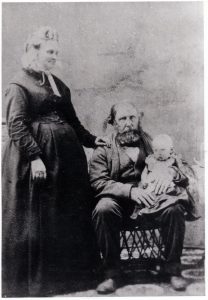
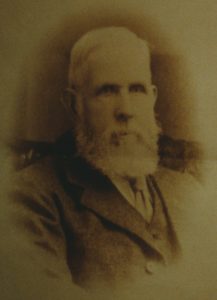
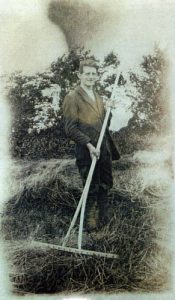


 By 1915 Richard Jones is living at the now named Oviel Garn and in 1918 Albert Adams Williams sold Oviel Garn to Thomas Jenkins of