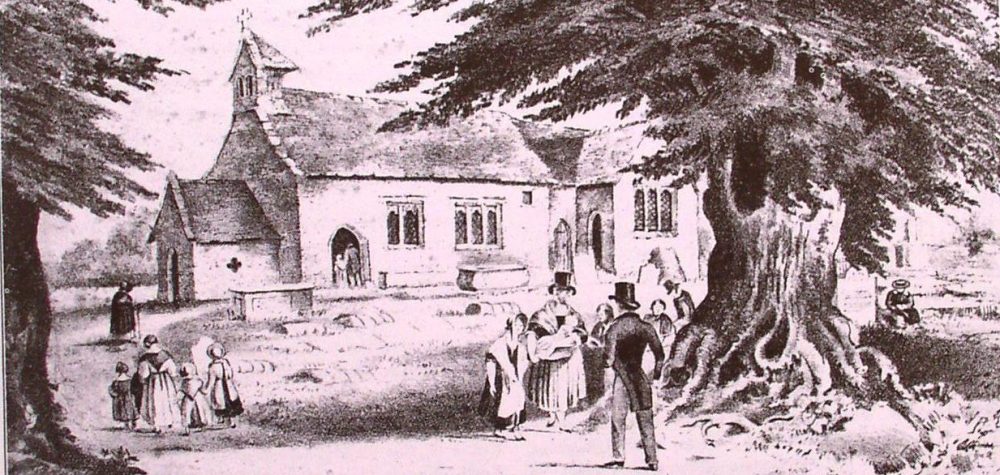
1860 Free Press

June 9th, 1860

GOYTREY AGAIN—Mr. Harris, the assistant overseer, summoned the following persons for nonpayment of poor rates for the parish of Goytrey:—Messrs. G. Lloyd, Abergwelvan; G. Watkins, Church Farm; T. Jenkins, Land; J. Williams, Millin-y-co’ed; J. Watkin, Goytrey Hall; John Ballard, Chappel Head; and D. Fedman, Penpellewny.  Mr. Greenway, who appeared for defendants, then briefly alluded to the recent disturbances at Goytrey, and said that the assistant overseer, in order to “serve out” his clients, went to each of their houses, and (in most of the cases) seeing the mistress, merely said he had come for the rate, and because it was not paid forthwith, took out summonses against them. He contended that under the circumstances, summonses ought not to have been granted. The rates had been raised without the knowledge of the payers, and it was natural that they should feel aggrieved, and the conduct of the assistant overseer would not better the feeling in the parish if the summonses were enforced. It was most iniquitous. A message, and not a written notice, had been given them; and it had not even been demanded in any way from Watkins. His clients were ready to pay the amount of the rate but he must demur to the costs. Order for payment without costs.

County Observer and Monmouthshire Central Advertiser

October 10th, 1871.

TO TIMBER DEALERS AND OTHERS.

GOYTREY, MONMOUTHSHIRE.

TO BE SOLD BY AUCTION, BY

MR. JOHN PHILPOT,

At the Clarence Hotel, Pontypool, on

THURSDAY, the 2nd day of NOVEMBER, 1871, at Two o’clock in the afternoon, subject to the conditions of sale to be then produced;

THE following COPPICE WOODS standing and being in the Parish of GOYTREY, in lots, viz. :—

LOT l.-The Fallage of all that valuable Coppice Wood, situate on the Walnut Tree Farm, near Penpellenny, in the parish of Goytrey, containing by admeasurement 6a. 3r. 26p.

LOT 2.—The Fallage of all that valuable Coppice Wood, situate on the above Farm, containing by admeasurement 28a. 2r. lOp.

The Woods are of about 14 years standing, and will be found of superior quality and growth, and are specially worthy the attention of dealers.

The Timber and Oak Stores will be reserved. The Woods are within three quarters of a mile of Nantvderry Station on the Newport and Hereford Railway.

Mr. Daniel Tedman, tenant of the Farm, will show the Lots, and for further particulars apply to the Auctioneer, Market House Chambers, Pontypool; or at Nantyderry House to Charles Watkins, bailiff to the Rev. Thomas Evans.

Oct. 10,1871. 


 March 30th, 1872.

Goytrey, Monmouthshire.

TO BE SOLD BY TENDER,

ABOUT 235 OAK AND OTHER TIMBER TREES,

The above are on the Walnut Tree Farm, near Penpellenny, and within half-a-mile of the Nantyderry Railway station.

Tenders to be sent to Mr. JOHN PHILPOT, Auctioneer, Pontypool, on or before the 6th day of April next, of whom full particulars may be obtained.

August 15th, 1874.

THE

GOYTREY WELL CASE.

Examination continued.

John Williams said, I am a farmer now living near Usk; I formerly lived in Goytrey; left there in April last; have known the parish 27 years; am 46 years of age; I managed a farm for Mr. Logan, called Penwern; I know the well in question Penwern is from half a mile to three quarters from the well; lived ten years in the farm; some of the land was within 80 yards of the well; everybody in the neighbourhood went to the narrow field well for water; John Prosser, of Penpellenny, went 26 years ago with a cask and cart; I knew many cottagers who went to the well for water; have gone with my horse and cart to the well to wet straw for thatching and took cattle to the pool close under the well; knew there were stones in front of the well, where they stepped for water, and a flat stone where they stood to dip for water; I do not think the flat stone was a yard long; never knew of anyone being prevented taking water until recently; Mr. Evans had a drain cut through the well in draining the land. About two years’ ago, I went to Mr. Evans in January, 1873, and said “I hoped he did not mean to stop up the well, as there was no other water to be had.” He said he did not mean to do so. John Collins, who lived in my farm house afterwards, got water from the well; some time after, in April or May, the well was covered over with stones; I went with Sir Joseph Bailey’s agent, Mr. Meyrick, to see the Rector; Mr. Meyrick asked him his reason for stopping up the well, and he said “because of an impudent woman.” Mr. Meyrick told him he must see Mr. Bailey’s rights were not encroached upon. He took Mr. Meyrick to a well at Black Beech; it was at that time filled with dark water. Mr. Meyrick said the water was unfit for use, and Mr. Evans admitted it. Mr. Meyrick asked where the poor people were to get water; he said they could go to the Star well on Mr. Berrington’s land. After some further conversation; Mr. Evans said he intended to sink a well three feet deep. In August last, early in the morning of a Monday, I saw David Bowen with a shovel, and John Jones, the parish clerk, was with him. Bowen was throwing rubbish into the well; there was a bad smell. A cart came there driven by Mr. Evans’ indoor servant; the cart contained broken glass and cow muck; it was tipped into the well; the gate as well as I can recollect was never locked; it was a swing gate fastened with staple and links; the well was fenced to keep geese from it.

By Mr. Dowdeswell: Lived in a cottage in Llanvair when first married; then went to Penwern, Mr. Logan’s farm, which is near the railway, between the church and Waite’s cottage. There was a pool opposite the plaintiff’s cottage; no stream ran into it; I never remember them going to that pool from Waite’s cottage for water; I levelled the ground and filled up the pool in 1859. It was not a spring; on the other side of the road from the narrow field is a sort of coppice or brake. When my cattle were affected with foot and mouth disease two years last fall, and were tacked at the Black Beech, I carried water from the narrow field well for the cattle; I could not get water any where else: never went after water to Twyn Shin well; do not know whether it is dry or not. Witness then enumerated a number of persons he had seen fetching water from the well.

By Mr. Matthews: Mr. Evans drained all round it to try to dry it but missed. The pool I filled up was about 25 yards from the hedge and opposite Waite’s house.

William Williams, of Burgwm: I was born in Goytrey, as well as my father and grandfather. I am 78 years of age, and remember’ the well for 70 years. All the neighbourhood got water from there; there was no water but there in dry weather; it was free to everyone; it was got to by railings instead of a gate when I was a lad; there were five rails one above another and they drew out; carts went to the well for water, the holly bushes were at the back of the well; a path from Penpellennv came along the road from the chain bridge over a watling stile to the well; the flat stone about the well was there when I first knew it; saw my father put the flat stone at the well.

Cross-examined by Mr. Huddleston: Was about eight years old when the stone was put down. His father was in the service of old Mr. Jenkins, who was then tenant of the Walnut-tree farm.

Ann Jenkins said she was 81, had lived in Goytrey all her life, and was never more than three miles from it until now. She had known this well and had drawn water from it for 70 years. She had never known it to be dry, and it had always been public.

Walter Jones said he was 67 years of age, and had lived in the parish of Goytrey all his life. He had always known the well in the narrow field as a public well. It ivas beautiful water, and he had never known the well to be dry.

William Williams, 64, Ann Daniel, 70, Charlotte Morgan, 52, and Isaac Wilks, all gave similar testimony. The latter, in cross examination, said there was a good supply of water from the shute, but it was never pure. There was also a good supply of water from the Black Well, and he had never known it fail, but when other wells were dry he always used to go to the well in the narrow field because it was nearer, and from the Black Well would have been up-hill.

Owen Davies, father of the plaintiff, said he was 86, and had known the well in the narrow field for 80 years. Forty years ago he used to go to it for water. He re- membered once asking permission of Mr. Rees, the tenant of the Farm at the time, to go to the weil for water, and he said there is the well for anybody that likes to go to it. When the well was stopped up he went to the rector and told him it would be a very bad thing for the poor if the well were stopped up. Mr. Evans said it should be shut up if his daughter did not send her three children back to school.

Ann Evans, who lived for eleven years in the house occupied by plaintiff before the latter went there; Thos. Roberts, Abraham Williams, James Cobner, and Mary Davies, also gave evidence of a public use of the well at various times in the past 50 years.

Lieut,-Col. Byrde said he lived at Goytrey and was a J.P. in the county. He knew the well up to 1834 and since 1860. He had seen many people going to the well and looked upon it as a public well.

Mr. Huddleston: You and Mr. Evans are the only two gentlemen residents in the parish?

Witness: We are.

Mr. Huddleston: And you are not on very good terms with each other?

Witness: Mr. Evans is not on very good terms with me (laughter). I don’t profess to be on bad terms with him.

Charles Watkins said he was a servant in the employ of the Rev. Thomas Evans. By his master’s orders he had the well in the narrow field filled up with stones. When it was re-opened he had it filled up again by his master’s orders. The well was about a foot deep. The well was opened by the neighbours, and then they went to it again for water. He had to get jt filled up again several times. The last time was on the 17th August. On that day his master said he was to bring the men and get the stuff from the little houses to put into the well. He told Mr. Evans he hoped he would not do that, and Mr. Evans said he was determined to do it; they had annoyed him so. He objected to do it, and so did the other workmen. Next day he found the well had been filled up with stones. It was done by the workmen he supposed., The men kept piling up stones on the well for six or seven days.–Cross examined by Mr. Huddleston: Was bailiff to Mr. Evans at the time, and received 15s. per week; left after that and went to Col. Byrde, at 18s. per week; the other workmen were present, their names were, James Lewis, Wm. Price, and John Jones; defendant said the same to them as he did to me; they objected to do it, and defendant said, “You must strike, then,” and they did strike.

Police-constable Allen, No. 19, M.C., said he was present two or three times when the well was opened. He saw it being filled up in June. Saw a large stone put in that was nearly enough to fill the well. Did not hear Mr. Evans give the stone any name. He was present on the last occasion that the well was opened. It appeared to have been filled with privy soil, horse dung, broken glass, and bushes, over that had been a heap of stones. It was a large heap and some people said there must have been a thousand tons there.–Cross-examined: Was present at the well by request of Mr. Evans. for the purpose of keeping the peace.

Mr. Jeremiah said he was a butcher, living at Goytrey, and for 40 years had known persons to use the well. He saw the stones removed from the well three times, and every time the water was there as before.—Cross-examined: Married John Williams’s sister; used to supply the rectory with some butcher’s meat –to the extent of £80 or £90 a year at one time; did not know exactly when he ceased to supply the rectory.

This was the plaintiff’s case.

THE DEFENCE.

Mr. Huddleston, in opening his defence, gave a total and positive denial, to the imputations which had been made against Mr. Evans. There was no proof of any private right. He submitted that there was no public right proved, and said he did not believe there was any spring at all After going through and commenting upon the points of the evidence given by the witnesses for the plaintiff, he stated the nature of the evidence he intended to call, and read an affidavit made by Rees Rees to the effect that he occupied the Walnut Tree Farm, and was living there 30 years ago. While there no one claimed a right to go across his land to the pool in the narrow field. There was no entrance to it from the road. The only entrance to it was through a field gate by the side of the brake. People had asked his permission to go into the field to get water from the well, and he occasionally gave them permission. The learned counsel pointed out how that corroborated the evidence of Owen Davis, who had said he never went to the well for water until he had asked permission to do so.

The following witnesses were then called:-

Mr. T. D. Steele said he was an engineer, carrying on business at Newport, and he had known the parish of Goytrey for more than 30 years. The plan produced was made in his office, and it was a copy of the tithe map. He had himself marked the wells on the plan, also the situations of the houses. There were plenty of spring wells in the parish, and he knew the position of a good many of them. There was no village in the parish. The houses were scattered all about. The distance from this cairn of stones to the farthest boundary of the parish was about two miles. There were houses very near the boundary. He examined this spot last Monday. There was now a heap of stones, and if a permanent spring existed there it would show itself through the stones. The ground around the cairn was all dry, but there were appearances of a boggy nature. He examined the mouth of a drain at the bottom of the field, and no water was coming from it. Looking to the direction of the drain, which appeared to pass close by the cairn he should expect, if a spring existed there, to find water coming from the mouth of that drain.

John Hodgson said he was assistant to Mr. Steele. He had measured the distance from plaintiff’s cottage to the different wells. There was a well at 720 yards, another 36 yards from it on the same road. From the cottage to the cairn of stones was 724 yards. From Penpellenny to the wooden shoot carrying water over the railway was 466 yards. There was an ample supply of water when he was there. From Penpellenny to the cairn of stones was 720 yards, measured from the schools. From the same spot to the black well was 763 yards. There was also plenty of water there, and at the other places he had mentioned.— Cross-examined: It was more than a mile from Wait’s cottage to the black well; had never carried a bucket of water a mile.

Thomas Edmund George said he was a land valuer at Newbridge. In the autumn of 1870 he was instructed by Mr. Walters to make a valuation of the Walnut Tree Farm. He took a tracing of the farm from the parish map, and then went over the land in company of the tenant. In a pasture piece, numbered 687a, he found water for cattle, but no spring. A brake separated this field from the next. There he found water for cattle, also in the next field close by the railway. The tenant told him there was water at that spot all the year round. He afterwards sold the land to Mr. Evans for £1,800 and something. He found no spring, and there was no footpath from the road into the field where there was a pool for watering cattle.—Cross-examined: Could not recollect any stones at either of the places where he saw water; did not notice a holly tree.

William Jones, labourer, said after the well had been opened three or four times he had to assist in filling it up again. They first of all got two or three buckets of soil from under an archway, where cattle went through, and they put that stuff into the pool or reservoir that had been opened. Mr. Evans had not given them instructions to put that filth into the well. They did that without instructions.–Cross examined: Was one of the men who went in the night to do something to the well; Bowen and Harding were also there; volunteered to assist in filling up this well; did not know when Mr. Evans asked him to volunteer, and did not know that he was asked to assist because John Jones and other men had refused to do what Mr. Evans wanted; believed that a quantity of the broken glass and filth that was put into the well came from Nantyderry House (Mr. Evans’s); was his own idea, that of putting in the filth from under the arch; did it because he had been so annoyed by children hooting him, and calling out “water, water;”  they did it, he supposed, because he was a tenant under Mr Evans; had beer given him by Mr. Evans whilst he was filling up the well; was no bad smell from the stuff from Nantyderry House–Re-examined. Mr. Evans had nothing at all to do with putting the filth into the well.

Richard Bowen said he was with the last witness when the well was filled up. Mr. Evans never gave any instructions about putting in the filth.

John Harding, indoor servant, said he helped to carry a bucket of filth from under the arch and put it into the well. His master knew nothing about that.

Thomas Evans, the defendant, said he was rector of the parish of Goytrey, and had been for upwards of 30 years. It was not with his knowledge or consent that the filth was put into the well. Watkins’s statement about the nightsoil was a monstrous falsehood. He purchased the Walnut Tree Farm in 1871. Had known the narrow field for 30 years. Never knew of a footpath to the waterpool. There was no trace of a footpath from the road to the pool when he bought the farm. Never heard of any right to go to that pool for water. The field was a very boggy one, and there was a wet brake below when he bought it. He cleared away the brake, and proceeded to drain the land. He began these alterations about April, 1872. When the draining was begun his attention was called to this pool. It was close by the brake, and the brake was full of holes. There was no spring in this pool because he tried it. He found that the water in the pool came from an old land drain, and he was told if he cut off that drain he would soon find no water in the pool, He had found that no water came. He had what water remained taken out as close as possible, and then he was satisfied there was no spring. He finished the fencing in about a year and a-half after the completion of purchase. In April, 1873, John Wiiiiams called on him to get a bill settled, and he then said he hoped witness would not close up that place so that it could not be opened in dry seasons. He told Mr. Williams it was not his intention to do so. It would be filled in such a manner that it could be re opened. He never heard any claim of a right. In June of the same year he saw plaintiff getting over his fence. Asked her what she wanted, and she said she was going for water. Asked her if she had permission. She said “No, and she did not mean to ask for any.” He turned to Price, and asked him if he heard that. It was the first he had heard of any right, and he told the woman she should not under these circumstances go there for water. The conversation then took a different turn, and he accused her of ingratitude. She said something about his not giving her work, and he told her if he gave her work she could send her children back to school. She then said she would not. He had the pool filled up the same night. It had been closed up before that, but he had it re-opened for the cattle.—Cross-examined by Mr. Matthews: Was by cutting off the drain he got rid of the water from the pool; had never examined the place before June, 1873; could not tell that there had been an unfailing supply of water in the pool for 60 or 70 years during the driest summers; the pool had been shut up once before; saw the water bubbling in it, and was told that it came from a drain he had previously put in; the pool was closed up again within a week, and it was only opened once after that; did not know that on the 18th August his men were going to fill up the well very early in the morning; had not been round to the workmen about it on the previous Saturday; gave general directions to his servant; saw the broken bottles that were taken to the well from his house; did not see any of the filth with the bottles that had been spoken of; so far as he knew’there was no filth; ordered the broken bottles to be put into the heap of stones, to produce a de- terrent effect upon those who said they would open it 100 times; did not cause it to be known that the broken bottles had been put there; had never seen any one fetching water from that place, but had heard they did so in dry seasons heard it from the tenant; did not know that it had been used as a public well; re-opened this pool in the narrow field because he could not get enough from the well in the bank; did not think there was a bucket of water in the pool when it was last covered; did not think he told Mrs. Waite she should go to the well if she would send her children back to the parish school; did say something to her to test her sincerity; promised she should have water if she would withdraw the right she had set up; what he said to the woman about sending her children to school had nothing to do with the question of water; the height of the heap of stones would be about nine feet.

Thomas Prosser said he was a small farmer. His grandfather bought this cottage that Mrs. Waite lives in. The cottage has been his since his grandfather’s death, about 10 years ago. He has known the cottage all his life. The cottagers used to be supplied from the well in the Wern, a field on the opposite side of the road to the cottage. After that was stopped up the cottagers used to get water from the Black Beech well. Never knew of a well in the narrow field, or of a footpath to it. Never knew the well at Black Beech to be dry until now. He knew no right that his tenants had to get water from the narrow field.

William Phillips, farmer and valuer, said some years ago he made a valuation of some land in Goytrey parish, for railway purposes. He made a valuation of the narrow field There was water in the field. He did not consider it a well, but he gave compensation for the loss of water. Any part of the field was a swamp, but there was no well there.

William Bevan, said he used to live at Coalbrook Cottage. He used to get water for his parents from the well in the Wern and the Black Beech well. Never went to the narrow field for water.

Mary Ann Morgan, Elizabeth Bowen, William Matthews, William Williams, John Harris, Wm. James, and Hannah Jenkins were also called to prove there was an abundant supply of good water in the other wells, and that they had never known of any public right to, or common use of, the water in the narrow field.

Thomas Waters, of Caerphilly, owner of the farm before Mr. Evans, said during the time he knew the farm, over 30 years, he never heard of any public right to take water from the narrow field. Rees Rees, of Cwmbran, made a deposition which was put in. he being too ill to appear. It stated that he occupied the Walnut Tree Farm eleven years, and left about 30 years ago. During his tenancy there was no path to the well, and no right of public way to it. Occasionally in dry summers people had asked him for permission to take water from the pool in the narrow field. There was a well under an ash tree by the bank in an adjoining field, and it was from that well his household obtained their water supply.

Alfred Fabian, schoolmaster, of Goytrey. said in July, 1873, he was present when the well by Black Beech was tested. They found eleven springs running into the well, and there was a yield of about 31 gallons of beautiful pure water everv five minutes.

Nathaniel Price, aged 72, said he had known the parish of Govtrey 40 years. He had since drained the field for Mr. Evans and found no spring there. He had never known people go to the narrow field for water. There was a well of good water by the Black Beech, and he had never known it fail. He was one of the men who worked with Charles Watkins as stated, but he had never heard the rector give any directions about putting night soil into the well.

John Jones said he helped to get stone to put in the well, and he never at any time heard the rector give directions for putting night soil into it.

Wm. Edgar said he had lived at Goytrey 25 years, and he never heard of any right to take water from a pool in the narrow field. There was a track for the creatures, but no bound path. He never saw a well in the narrow field and never saw anyone going there for water. He had seen Louisa Waite and the tenant who preceded her, going to the other wells for water.

Edmund Dixon, another old resident, was called to prove that 15 years ago he put in a drain, which led the water from the upper ground into this pool. The pool was in a bogary place.

His Lordship said if they could have gone to the spot, and then examined the witnesses at the nearest public-house, tney might have settled this matter in about six hours.

Mr. Huddleston expressed his willingness to leave the whole question to his lordship’s decision. He thought it was the onlv way ot restoring peace.

His Lordship said he must decline to take it out of the hands of the jury, but if he had known what was coming, he should have suggested a visit to the spot.

Mr. Huddleston said he was afraid whichever way the verdict of the jury might go, it would only lead to more trouble; but if his lordship would consent to settle what should be done, there might be an end of it.

Nothing could be arranged, and the case proceeded.

William Pardoe spoke to working with the last witness in draining this land for Mr. Logan about 16 years ago. He gave very similar testimony to that of Edmund Dixon.

James Dix. an elderly gentleman, said he was a connection of Col. Byrde’s, and forty years ago he used regularly to go shooting over this narrow field. A gutter across the lane conveyed the water into it from the wood above. He remembered the place very well, because on one occasion his horse put a foot into the gutter and fell.

This being all the evidence.

His Lordship made certain suggestions to the counsel, and after a consultation, Mr. Mathews said his clients had decided to consent to the withdrawal of a juror and to waive all questions of victory or triumph, if Mr. Evans would agree to provide a good and sufficient supply of water for the use of the parishioners, at his own expense, and upon terms to be decided by his lordship.

Mr. Huddleston said his client was perfectly satisfied to leave the matter in the hands of his lordship, who had heard the evidence of both sides. Whatever his lordship might think fair and reasonable, and even generous, Mr. Evans would be willing to do, and would in all probability have done so before if he had been appealed to in a proper spirit. If this was agreed to Mr. Evans would leave the court without any feeling of hostility towards anyone, and he hoped that no such feeling would be shown towards him.

His Lordship thought it better for all parties that these arrangements should be made, and that no verdict should be given. It did away with the sense of triumph or victory, and brought out the good feeling of both sides. His suggestion was that Mr. Evans should trace back the water supply to the higher ground, and put in a place by the end of the old culvert where it joined the road. He thought water might be found there in sufficient abundance for all the wants of the parish. He quite exonerated Mr. Evans from any parlicipation in the matter of putting filth into the well, and thought that some too ready instruments thought they were doing what was extremely clever when, in fact, they were doing a very bad act. If Mr. Evans had a right to stop up the well, he had a right to put over it a cairn 9ft. or 90ft., if he so pleased. Whether there was water there from the time of Richard I was a difficult question to solve, and it, had not been solved there, so that none could go away and say they had solved it.

A juror was then withdrawn, and the matter made subject to the Judge’s order. His lordship promised to draw up the order when he arrived at Gloucester. [The foregoing is a condensed report of the remarks of the Judge in this case. Want of space obliges us to hold over the verbatim remarks, which shall appear in our next issue.]

More newspaper articles relating to this story can be found here.

Pandy

In 1754 Abraham Tucker of Monkswood took a lease from the Duke of Beaufort for Gworlod y Pound and half a piece of rough called Coed y pant y tukka.

pandy-map

A child named John was baptised at St Peter’s in June 1760, he was the supposed child of Henry Edwards and Ann Bevan.

A Henry Edwards took the property called Pandy and had further children, Jane, Elizabeth, Henry, and Charlotte.

Henry was overseer of the poor for the parish for the years 1800-1805. He had a brother called Edward Edwards, he also had a son called Henry.

By 1812 the owner of the Pandy Estate was Mrs Ann Pritchard of Monkswood.

In 1817, Henry Edwards the younger intruded into the parish of Llanthewy Vach, he was returned to his legal settlement of Goytrey.

building remains at Pandy

By the time of the 1841 tithe the building was no longer standing.

Old Stores No.1

No 1. Old Stores

As with number two and three Old Stores it has been difficult to make sure I have the correct families in each house.

Old Stores were built in the late 1870’s and early 1880’s, but I don’t know who by.

On the 1881 census Edwin Evans and his family are in residence, Edwin is a wheelwright, born in Panteg, his wife is Sarah, she is 29, a dressmaker and was born in Goytre. Their children are William 16, an apprentice wheelwright, Charles 12, Sidney 10, Lilly 6, Albert 4, and two year old Arthur, all were born in Goytre.

In 1896 the three properties were put up for sale this included a meadow of 3 acres 16 perches, the whole generating a yearly rent of £15. The starting bid was £250, the properties were then withdrawn unsold at £350.

No one was in occupation in 1901 but in 1905 twelve month old Henry Jones died and was buried at Llanover Churchyard.

By 1910 the owner is Charles Jones.

By 1911 the Walton family are in occupation, Henry is 40 and a labourer born in Worcester, he has been married to Ellen for 16 years, they had 8 children one of which had died, their children living with them in their home of three rooms are Rose 13, Herbert 14, Sidney, Lucy, and Edwin.

The family on the electoral register in 1919 are George and Annie Phillips who remained there until 1931 when John Meredith moved in. John Meredith died in 1936 aged 78, he was buried at Mamhilad.

In 1921 George Phillips is a 41 year old clay miner for Southwood Jones but he is out of work, Fanny his wife is 40, their children are Leonard 13, who has left school bit has not started work, George is 11, William 10, Lucy 5 and 9 month old James, all the family except James were born in Pontypool, James being born in Goytre.

There was no mention on the 1939 register of Old Stores, the last entry I have is Stanley Jones.

By 1948 Edwin and Lilian Jones were in residence.

Old Stores No.2

No 2. Old Stores

As with numbers 1 and 3 it has been difficult to ensure I have put the families in their correct properties, as more often than not the property number wasn’t given.

Built sometime in the late 1870’s or early 1880’s but I don’t know who by.

On May 25th 1882 Ellen Lowes, of Old Stores, the wife of Alfred was sent to Abergavenny asylum suffering with melancholia, “being feeble and sore in head”.

There are no entries for Old Stores on the 1891 census.

The electoral register of 1900 says Elizabeth Carpenter is living in a dwelling house in Upper Goytre.

The census of 1901 says Elizabeth Carpenter, a 61 year old widow, born in Goytre is living at number two along with her 34 year old daughter Elizabeth, a dressmaker, and son John, who is 25 and an ironworker, also a niece, 13 year old Rachel A Jones. Elizabeth and Rachel were born in Glamorgan.

On the census of 1911 Francis Lacey, a groom from Worcester has taken residence, he is living there with his 34 year old wife, Louisa who came from Leeds.

The sale of the three properties in 1918 says number two is occupied by Oswald Court, the sale of the properties did not proceed as it appears the offer for all was only £350.

By 1920 James Joseph is paying £7 per annum rent to the owner, Rufus Evans of the Carpenters Arms.

The 1921 census says George James Joseph is 37, an underground repairer at Crumlin Valley Colliery but is out of work,  he was born in Llangarron Hereford. Rose, his wife is 37 born in Ealing, daughters Phyllis 13 and Winifred 11 were born in Abertillery, eight year old Rose was born in Kemys Commander, Edna 5, Eveline 3 and 1 year old George were born in Goytre.

In April 1927, Pearl Morgan, late of Old Stores died, both her parents were dead and she was buried at St Iltyd’s Mamhilad.

By 1928 Tom and Hannah Morgan were in residence, followed by the Thomas family by 1934.

Margaret the daughter of William and Phyllis Thomas of Old Stores was baptised at Mamhilad church in February 1934.

In May 1938 David Thomas aged 69 and living at number 2 Old Stores died.

There are no entries for Saron on the 1939 register, so the next electoral register on 1948 gives Florence Shephard as the resident.

Ash Cottage – Old Stores No.3

Ash Cottage – No.3 Old Stores 

The three Old Stores properties have been very difficult to work out who was living where as on most occasions each house when mentioned was just referred to as Old Stores.

Built in the 1870/1880’s the first mention is on the  1891 census showing the first family in occupation is Thomas Thomas, 39, a Baptist Minister, his wife Catherine is 45, they were both born in Glamorgan.

The 1901 census shows Elizabeth Evans, 40, in residence, Elizabeth was born in Goytre; living with her is Mary 9, born in Pontypool, and Ann Jenkins 75,  also born in Goytre.

By 1911 Horace Morgan and his family had taken residence, he was a 27 year old nurse dispenser, his wife Mabel was a music teacher, they had been married three years and had a daughter Pearl. Sadly Pearl died young and was buried at Mamhilad Churchyard.

In 1918 the 3 properties were advertised for sale, along with a meadow. Living at the three properties were J.H. Walton, O. Court, and William Harris.

In 1919 my Morris family took residence, my grandparents Valentine Evan and Winifred Edith, The last five of their 11 children were born at Ash Cottage, , Ernest Raymond in December 1919, who died the following May, Ronald Herbert born in August 1921, he also died in September the same year, Leslie was born in August 1922, followed by Joan in September 1923, then William in November 1924 and finally Derek John in July 1927.

The 1921 census says Valentine Evan Morris is 34, a journeyman painter, Winifred Edith is 31, their children are Albert Victor 8, Gertrude Eileen 9, Winifred Dorothy 7, Esmerelda May 6 and Edwin Charles 5.

My grandfather, Valentine Evan Morris died in March 1928 and was buried at St Peter’s. He had served in the Welsh Regiment during the first world war.

The children attended Saron Chapel Sunday School in addition to this on a Sunday evening they had to walk to St Peter’s with granny for the evening service.

Winifred stayed at Ash Cottage for many years after the death of Valentine.  On the 1939 register she is at home with her son, Edwin Charles, my dad.

Sometime during the war years she left and went to live in New Inn, I suppose as all her elder children were in the forces, the only one at home was Derek, maybe it was easier for her. She died in December 1976 and was laid to rest with Valentine at St Peter’s.

The 1945 electoral register gives Hugh Lewis as the occupier of Ash Cottage.This had changed by 1947 to Horace Davies, who later moved over the road to Bussey View.

Vine Tree Cottage

392 on the 1841 Tithe Map

Although there is a document which could possibly refer to Vine Tree, I cannot verify it so will start with 1835 when John Waters of Vine Tree Cottage appeared on the assessor list for the parish.

The Usk observer in 1839 mentions John Waters as having ownership of a property called Vine Tree.

The tithe of 1841 says John Waters is a besom (broom) maker and has a cottage and garden of 1 rood 16 perches in hand and is paying 1s 9d tithes to the rector. The census of the same year says John is a 40 year old labourer, Cecilia his wife is 30, their children are Caroline 10, Jonah 8, Enoch 6, Elias 4, and two year old Ruth. Caroline later married a William Brinkworth, they had 10 children, she died in 1913 aged 85 in Newport.

In 1848 Cecelia died aged 37, she was buried at Saron Chapel churchyard.

On the census of 1851 it says John Waters was born in Usk, living at home with him are two of his children, Elias who is now 14 and twelve year old Ruth. Ruth later married Alfred Brooks, they had three daughters, she died in 1925 at Trevethin, she was 85 years old.

By 1861 John Waters is 61 and a green joiner. In 1864 John took William Phillips his neighbour who lived at Castle Cottage to court in Usk for an outstanding debt of £1 7s 8d.

In February 1869 John Waters found himself in court for encroaching on the highway, in his statement he said he had owned the property for more than 30 years, he had left a quantity of mould 15 feet from the centre of the road and said it was his own land, he also said that the late Mr Owen (John Gwynn Herbert, solicitor, Oak Cottage) had tried to get him from there and had issued a writ against him.
The case was now in the Queens Bench and therefore this Bench had no jurisdiction, the case was dismissed.

The census of 1871 says he is now 71 and married to Fanny, living with them is his son Enoch who is 36 and a woodman. Around this time Enoch built High House in the grounds of Vine Tree.

John found himself in trouble again in July 1873 for the same offence, encroaching the highway and ground with besom stuff and was ordered to pay 13 shillings.

Sadly John Waters died a month later in August 1873 aged 74 and was buried with his wife at Saron Chapel churchyard. His will, proved the 3rd November left effects under the value of £100 to his son Enoch.

Mathias Phillips who lived the other side of the lane at The Castle Cottage then purchased Vine Tree Cottage.

The census of 1881 says Mathias is 40 years old and a labourer, Eliza his wife is 52, she has a son William Easton and they have a boarder, 8 year old William Francis.

The updated tithe map of 1888 gives Mathias Phillips as the owner of Vine Tree Cottage.

By 1891 he is employed by GWR as a platelayer. The 1901 census says Mathias is 60 and still employed by the railway and Eliza is 72. Mathias was born in Goytre and Eliza in Mamhilad.

On the census information of 1911 Vine Tree Cottage had 4 rooms, Mathias and Eliza had been married for 46 years, had 4 children, none of which had survived.

Eliza died in February 1917 aged 88, Mathias in December 1920, they were both laid to rest at Saron Chapel.

The new owner of Vine Tree by 1920 was Richard Bowen of Oak Cottage, the rent was £4 10s, the rateable value was £1 6s 8d.

In residence in 1920 was Mr H Gardiner, this was followed in 1921 by my great uncle Edwin Morris with his new wife Harriet. At some point he purchased Vine Tree from Richard Bowen but I don’t know when.

The 1921 census says Edwin John Morris is 31, a general smith for Wilks at Little Mill, Harriet is 30 born in Llansantffraed Brecon. Living with them is William John Gardiner 25, born in Merthyr, he is a colliery engiineman at Abercynon colliery.

Edwin was born at Penwern Cottage in July 1889 and remained in Goytre nearly all his life.

In 1947 Harriet committed suicide by throwing herself off the canal bridge at Park-y-brain.

In 1948 Edwin’s brother, 52 years old Ernest Charles Morris, a painter and decorator was living with him. In a Free Press article of December  that year  Ernest was fined 40 shillings for dangerous driving. Two years later Edwin re-married Nellie Fear, she also died a few years later.

My Morris family went to live at Vine Tree in the late 1950’s, we later moved to Arrow Cottage.

Edwin Morris died in March 1978 at his sister’s in Pontypool, in his will he left £5,210.

Pwllmeyric

No. 368 on the 1841 Tithe Map.

In May 1778 Edward, the son of Edward Jeremiah, a collier, is baptised at St Peter’s Church.

Two years later, in 1780, Martha, the wife of Edward Jeremiah, collier, died and was buried in St Peter’s churchyard, this is followed in 1781 by the death of Edward and Martha’s daughter Elizabeth.

In September 1797 Edward Jeremiah takes a lease from the Earl of Abergavenny for a dwelling house and 5 acres, the document states that Edward Jeremiah is already in occupation of the property, Edward is 36, the lease is for the lives of Richard 10 and Philip 7, the sons of Edward.

The overseer of the poor records in 1798 show Edward Jeremiah has been appointed assessor of the highways for the parish and is paying land tax for the Earl of Abergavenny’s property.

On the 5th June 1818 the church records shows that Benjamin Jeremiah aged 20 of Pwllmeyric was buried at St Peter’s churchyard.

The Earl of Abergavenny’s survey of his properties in 1821 show Edward Jeremiah still in occupation of Pwllmeyrick.

The tithe of 1841 shows Richard, the son of Edward Jeremiah in occupation of Pwllmeyric, he is holding 4 acres, 1 rood and 14 perches, and paying the rector 14s 7d tithe money.

Pwllmerick is missing on the 1841 census so I am unable to give any further details.

I have searched for the death of Edward but cannot find a burial for him.

Richard Jeremiah has moved with his family to to Trevethin by 1851 and Jane Williams, a 55 year old widow from Bristol with her son John, 25 are farming 6a at Pwllmeyric.

Charles Watkins takes the lease in 1860, (he previously lived at Glan-y-nant) for the lives of Charles, son of Charles Watkins of Goytrey aged 4 years, William, the son of William Vaughan, and Charles, the son of William Morgan of Cwm Bran.

The census of 1861 says Charles Watkins is 43, an agricultural labourer, Elizabeth his wife is 47, they have twins, Margaret and Elizabeth aged 9, sons Charles, 5, John 3, and Thomas 2, they were all born in Goytrey.

By the 1870 land tax for Pwllmeyrick was the responsibility of Rev Thomas Evans, rector of Goytrey. So at some point he acquired the lease from the Earl of Abergavenny.

Charles Watkins is still occupying Pwllmeyrick on the census of 1871, he is 54 and now a farm bailiff, Elizabeth, his wife is now 42, she was born in Glamorgan, son John is 11 and a scholar, their daughters are Sarah 9, Ann 6, Emily 5, and a son Arthur who is 3.

Charles Watkins remained at Pwllmeyrick until sometime in the 1880’s. On the census of 1881 he is now a 69 year old labourer, Elizabeth is 59, the only child at home with them is Arthur who is a scholar.

A new family has taken occupation by the census of 1891, the head of the family being Thomas Morgan born in Llanfrechfa, he is 37 a farmer, Jane his wife is 38 and was born in London, their children are Jane, Horace, Harry, and David.

The 1901 census gives Thomas Morgan’s occupation as a market gardener, Jane is now 50, their children, Horace 17, is a domestic gardener, 15 year old Henry is a truck haulier (hawker), Ethel is 13, David 10, and 8 year old William.

In April 1906 Thomas Morgan was fined 5 shillings for allowing his cows to stray on the highway.

Horace Morgan married Florence Bowen (Oak Cottage) in February 1907. They are living at Pwllmeyric on the 1911 census, Thomas and Jane have left to live at the “New House” (the Croft).

The census states Pwllmeyric has 4 rooms, Henry is now 25 and a GWR platelayer, Florence is 24 married for 4 years and they have two children, Ruby 2 and Eileen 1 month. In 1917 their one month old son David died and was buried at St Peter’s churchyard, Goytre.

The Earl of Abergavenny’s sale of his properties in 1920 gives the following details:

A cottage and buildings of 4 acres, 1 rood and 23 perches. It is freehold subject to a life of 64 years, reserved rent of 2 shillings, tithe 10s and 3d. The property was sold to James Ball, Goytre, for £410.’ 

On the 1921 census Albert Edward Higgs is in residence at Pwll Meyrick, he is 24, a railway porter at Pontypool goods shed, Albert was  born in Merthyr, his wife Martha  26  was also born in Merthyr they have a daughter Doreen aged one who was born in Griffithstown.

In 1924 the names on the electoral register had changed once again to the previous tenants, Thomas and Mary Jane Morgan, who remained there until their deaths.

September 1932 saw the golden wedding article in the Free Press of Thomas and Mary Morgan, who were married in September 1882.

Another Free Press article in 1939 says Mrs Mary Jane Morgan of Pwllmeyric had an accidental fall which accelerated her death, she was 88 years old. This was followed in October the same year by the death of Thomas, he was a deacon at Saron Chapel.

in 1945 Elsie M Vimpany was in residence at Pwllmeyric.


Saron Cottage No.2


Saron Cottage number two is owned by Thomas Lewis who lived at Saron Cottage number one.

Documents show that he kept it in his own occupation until he first let it, the first mention of a separate family living there is on the 1871 census when the Morris family from Hereford were mentioned.  Thomas Morris is 29, a hoop maker, Anne his wife is 26, born in Garway, Roseanna 7, was born in Grosmont, Albert 4 and Ada 1, were born in Ewas Harold.

The Morris family had left by 1881 as the new occupier is Thomas Jenkins who is 78, Hannah his wife is 62, their daughter, Elizabeth Hutchinson is 27, David Hutchinson is 27, a labourer. Living with them also is their granddaughter Annie Williams, all the family being born in Goytrey.

The family had changed again by 1891 when John Williams, a widower, working for GWR is living there with his daughter Rachel, they were both born in Goytrey.

John Williams remains at Saron and the 1911 census says the property has 3 rooms, he is now 72, a woodcutter, and he has a housekeeper, Alice Meredith.

The electoral register of 1915 says John Williams is still in residence, but this has changed by 1921 when William Thomas is now in occupation. The census says William is 27,  born in Pontypool and working as a miner (coal hewer) at Blaendare colliery, his wife, Lilly May is 23, Lilly was born in Shropshire, they have a son, William D.M. who is one year and 10months old who was born in Goytre.

 By 1935 the new occupier has change  to Elizabeth Martin.

On the 1939 register the family are Albert and Vera Alexander, Albert is a general labourer born in 1907, Vera was born in 1909.

After the war Harold and Elizabeth Fleming occupied the property, later moving to the village.

Saron Cottage No.1


I have been in contact with Shirley, the present owner of Saron Cottages, which has now been converted into a single property. She has an Indenture dated 1834 in which William Lewis leaves to Susanna his wife the property. The witnesses of this document are Noah and Martha Price and Thomas Lewis (possibly his son).

Donna Hamilton has also sent me a copy of an original document, dated April 1827, In which Thomas and James Lewis are requesting permission from the Bishop of Llandaff  to build a Chapel for worship.  

There is also a document in 1831 which states Thomas Lewis is occupying a building called Saron, and has land by the chapel which is valued at 15 shillings.

On the 1840 electoral register Thomas Lewis owns freehold land near canal bridge no.84.

The tithe of 1841 says Thomas Lewis has a cottage and garden holding 34 perches. The census of the same date says Thomas is 40, a tailor, he is married to Elizabeth who is 35, their children are Thomas 15 and Daniel 5.

This wonderful photo of Thomas Lewis was sent to me by Donna Hamilton.

I have nothing to add until the census of 1851 when Thomas is 51, he was born in Breconshire, Elizabeth, his wife, is now a straw bonnet maker, born in Goytrey, as are their children, Daniel now 14 and daughter Mary who is 8.


I have done a little research on the children, firstly Thomas in 1851 had become a British schoolmaster, he is married to Jane and is living in Llangadock, Carmarthenshire. He died in 1859 aged 33 and was buried at Saron Chapel churchyard.

Daniel married a lady called Eliza, he also moved away and died in July 1908. His will says he left £2,954 14s between his wife and two sons, George Daniel, a schoolmaster and Ernest Albert, a provision merchant. The photograph is Daniel with his wife Eliza.

Mary married Josiah Lewis and they lived at Dan-y-graig.

In 1858 Thomas Lewis becomes an overseer of the poor for the parish.

Lewis Edmund, the local builder, said in his diary that on Friday June 8th 1860 he was at Thomas Lewis the taylor (his spelling) but didn’t say what work he was doing.

The land tax of 1867/8 says Thomas Lewis owns 2 cottage and gardens and that they are in his own occupation.

On the census of 1871 Thomas is now 71, still a tailor, Elizabeth is 66, living with them is Elizabeth Lewis, widow, she is classed as a lodger, is an annuitant and was born in Goytrey.

The following year, 1872, Elizabeth, the wife of Thomas, dies aged 67, she is buried at Saron Chapel churchyard.

The census of 1881 finds Thomas a widower, he is living alone at Saron. Thomas died in January 1888 whilst at Yew Tree Farm, he was  also buried at Saron Chapel churchyard. He leaves the sum of £458 9s 8d to his son Dan, provision dealer of Basford Villa, Basford.

The updated tithe of 1888 gives Josiah Lewis of Dan-y-graig as the owner of Saron Cottages, Josiah is the son-in-law of Thomas, I have tried to find a family connection but it seems it is just a coincidence that he married the daughter of Thomas and have the same surname.

In 1891 the occupier is now John Evans, he is 32, a wheelwright born in Panteg, his wife Minnie is 29, she was born in Brislington, Bristol, their children are Annie 6, Harry 4, and one year old Ivor, all  born in Goytrey.

According to the census of 1901 Saron is now three properties, but I doubt this is correct, I suspect the listing of Henry Jenkins, Baptist minister as a separate entry at No.2, this should have been entered with the family living there. John Evans is still living at No.1 at that time along with his family, Harry is now 14 and a railway porter.

The census of 1911 calls the property, Saron House, it has 4 rooms, this is obviously the larger property and I now know it is No. 1. John Evans and Minnie are still in occupation, they have been married for 27 years, have four children, all are living.

The 1921 census gives  John and Minnie living on their own at Saron House, John  62, he is a wheelwright working for W Evans Little Mill,  Minnie is 60 years old.

John and Minnie remain at Saron on the electoral register until 1923, then William Thomas remains there until 1927, followed by Wilfred and Violet Simons. By 1935 Reginald and Grace Kate Cornish are in residence.

The last electoral register before the war gives Elizabeth and Daniel Mills, Daniel was born in 1874, he is bricklayer journeyman, Elizabeth was born in 1883, their sons, living with them are Daniel born in 1914, he is a builders general labourer and Reece, 22, who is a plasterer’s charge hand.

On the 1945/7 electoral register Daniel Mills is living at No. 1 Saron cottages on his own.