| 1869 |
Goytrey National Mixed Boys and Girls |
|
| Jan-26 |
Opened school with 26 children – Wm Franklin – weather very wet during the week |
|
| Feb-01 |
Admitted 14 children |
|
| Feb-02 |
Admitted 3 children – weather still very unfavourable |
|
| Feb-08 |
Admitted 2 children – much rain and wind, many children absent in consequence |
|
| Feb-15 |
Admitted 3 children – weather much improved |
|
| Mar-01 |
Admitted 5 children |
|
| Mar-02 |
Admitted 1 child |
|
| Mar-03 |
Expelled Mary, Ellen, Annie and John Williams for insolent messages from their parents, also Sarah and Matilda Watkins for the same reason |
|
| Mar-08 |
Miss E Mathews entered upon her duties as sewing mistress |
|
| Mar-15 |
Days paid for sewing, Monday, Wednesday and Thursday |
|
| Mar-17 |
Commenced drawing in the school |
|
| Mar-18 |
Sewing class very well conducted |
|
| Mar-19 |
Very wet, attendance only 33, weekly examination postponed in consequence |
|
| Mar-22 |
Nothing of importance occurred today |
|
| Mar-23 |
Drawing as usual |
|
| Mar-24 |
Miss Mathews applied for permission to stay away on the following day |
|
| Mar-25 |
Broke up school for the Easter holidays |
|
| Apr-05 |
Recommenced school; attendance thin, probably from “potato setting” |
|
| Apr-06 |
Nothing of importance took place today |
|
| Apr-07 |
Sewing as usual |
|
| Apr-08 |
Sewing as usual |
|
| Apr-09 |
Examined children in scripture, found them rather deficient in their knowledge of the geography of Palestine |
|
| Apr-11 |
Attendance still very thin |
|
| Apr-12 |
Nothing of importance happened today |
|
| Apr-13 |
Sewing mistress unwell stayed at home in consequence |
|
| Apr-14 |
All as usual today |
|
| Apr-15 |
All as usual today |
|
| Apr-18 |
Attendance better today |
|
| Apr-19 |
Nothing of importance took place |
|
| Apr-20 |
Same as usual |
|
| Apr-21 |
Same as usual |
|
| Apr-22 |
Gave half holiday to have school cleaned |
|
| Apr-26 |
Admitted no children |
|
| Apr-27 |
Nothing of importance happened today |
|
| Apr-28 |
Nothing of importance happened today |
|
| Apr-29 |
Taught the children a new song |
|
| Apr-30 |
Prepared for drawing examination which is to take place on May 5th |
|
| May-03 |
Admitted 1 child |
|
| May-04 |
Prepared for drawing examination |
|
| May-05 |
Drawing examination. Rev Thomas Evans, rector of Goytrey and the Rev E Evans of Crickhowell attended as committee. 14 children presented |
|
| May-06 |
Nothing of importance took place today |
|
| May-07 |
Examined children in reading, writing, arithmetic and scripture |
|
| May-10 |
Sewing mistress away through ill health. Attendance very fair |
|
| May-11 |
Several children unwell |
|
| May-12 |
Nothing of importance took place today |
|
| May-13 |
Same as usual |
|
| May-14 |
Examined the school |
|
| May-17 |
Whit Monday, gave a holiday |
|
| May-18 |
Admitted 3 children – attendance thin |
|
| May-19 |
Nothing of importance took place today |
|
| May-20 |
Weather very wet, prevented children attending |
|
| May-21 |
Nothing of importance took place today |
|
| May-24 |
Attendance slightly better, sewing as usual |
|
| May-25 |
Recommenced drawing |
|
| May-26 |
Sewing as usual |
|
| May-27 |
Nothing of importance took place today |
|
| May-28 |
Sewing as usual |
|
| May-31 |
Sewing mistress away through illness |
|
| Jun-01 |
Nothing of importance occurred today |
|
| Jun-02 |
Missionary meeting took place in the schoolroom at 7pm |
|
| Jun-03 |
Sewing as usual |
|
| Jun-04 |
Nothing of importance as usual |
|
| Jun-07 |
Admitted child, attendance very thin |
|
| Jun-08 |
Drawing as usual |
|
| Jun-09 |
Nothing of importance took place today |
|
| Jun-10 |
Nothing of importance took place today |
|
| Jun-11 |
Examined the children in reading, writing and arithmetic |
|
| Jun-14 |
Admitted 7 children |
|
| Jun-15 |
Several children kept at home working |
|
| Jun-16 |
Last row of desks, obliged to break the desks open |
|
| Jun-17 |
Nothing of importance took place today |
|
| Jun-18 |
Examined the children as usual |
|
| Jun-21 |
Admitted no children |
|
| Jun-22 |
No children ill at home |
|
| Jun-23 |
Nothing of importance took place today |
|
| Jun-24 |
Nothing of importance took place today |
|
| Jun-25 |
Examined the children as usual |
|
| Jun-28 |
Sewing mistress applied for leave during next week |
|
| Jun-29 |
Nothing of importance happened today |
|
| Jun-30 |
Nothing of importance happened today |
|
| Jul-01 |
Children at home haymaking |
|
| Jul-02 |
Examination put off until next week |
|
| Jul-05 |
Sewing mistress came as usual as her visit to friends put off till next week |
|
| Jul-06 |
Nothing of importance took place today |
|
| Jul-07 |
Nothing of importance took place today |
|
| Jul-08 |
Nothing of importance took place today |
|
| Jul-09 |
Examined the children |
|
| Jul-12 |
Attendance on the first day thin, one girl with inflammation of the lungs, sewing mistress still in attendance, visit put off another week |
|
| Jul-13 |
Nothing of importance took place today |
|
| Jul-14 |
Nothing of importance took place today |
|
| Jul-15 |
Nothing of importance took place today |
|
| Jul-16 |
Examined the pupils today by myself |
|
| Jul-19 |
School treat announced for Friday, sewing mistress still at school |
|
| Jul-20 |
Nothing of importance took place today |
|
| Jul-21 |
Full school this week |
|
| Jul-22 |
Nothing of importance took place today |
|
| Jul-23 |
School treat took place on the lawn of the rectory, numbers present including Sunday school scholars, 86 |
|
| Jul-26 |
Sewing mistress away for the week |
|
| Jul-27 |
Nothing of importance took place today |
|
| Jul-28 |
Nothing of importance took place today |
|
| Jul-29 |
Examined the children |
|
| Jul-30 |
Attendance low on account of the treat of the British school taking place today. Breaking up for the summer vacation, 4 weeks |
|
| Jul-31 |
School thin |
|
| Sep-01 |
Sewing as usual |
|
| Sep-02 |
Nothing of importance, no sewing |
|
| Sep-03 |
Nothing of importance today |
|
| Sep-06 |
Attendance still thin, sewing mistress absent through ill-health, school visited in afternoon by Mrs Bernard and her sister |
|
| Sep-07 |
Sewing mistress attended instead of the previous day |
|
| Sep-08 |
Sewing as usual |
|
| Sep-09 |
Five boys late through going into the wood to gather nuts, cautioned them not to go as far again at dinner time |
|
| Sep-10 |
Examined the children, arithmetic not good altogether In the second class |
|
| Sep-13 |
Weather extremely wet and boisterous, very thin attendance and no sewing in consequence, window blown in Friday evening |
|
| Sep-14 |
Weather slightly improved, sewing as usual |
|
| Sep-16 |
Sewing as usual |
|
| Sep-17 |
Examined the children, arithmetic not up to the mark, scripture deficient |
|
| Sep-20 |
Better attendance owing to improved state of the weather, a few away picking nuts, admitted no boys, sewing as usual |
|
| Sep-21 |
Nothing of importance today |
|
| Sep-22 |
Sewing as usual, children rather noisy during sewing |
|
| Sep-23 |
Sewing mistress absent |
|
| Sep-24 |
Examined the children, slight improvement in the subjects mentioned on the 17th |
|
| Sep-27 |
Several children present for the first time since the harvest vacation, sewing as usual |
|
| Sep-28 |
Children rather noisy in school |
|
| Sep-29 |
No sewing |
|
| Sep-30 |
No sewing |
|
| Oct-01 |
Examined the school, scripture much improved, arithmetic defective among the girls |
|
| Oct-04 |
Sewing as usual, mistress being unwell last week |
|
| Oct-05 |
Taught a new song to the children |
|
| Oct-06 |
Sewing as usual, school very dirty for some time past on account of a small stream of water in the playground |
|
| Oct-07 |
Sewing as usual, girls rather noisy |
|
| Oct-08 |
No sewing, the sewing mistress away on business |
|
| Oct-11 |
Nothing of importance took place today |
|
| Oct-13 |
Sewing girls noisy |
|
| Oct-14 |
Girls quieter during sewing as I kept out the noisiest |
|
| Oct-15 |
Examined the children, progress in arithmetic since last Friday, not sound in the second class, the first class did well in that subject |
|
| Oct-18 |
Sewing as usual, placed children in standards 1, 2 and 3 |
|
| Oct-19 |
Save geography lesson to the first class, not able to give a good idea of the world surface as there is only a map of Europe |
|
| Oct-20 |
Sewing as usual, requested they must prepare for the examination |
|
| Oct-21 |
Sewing as usual |
|
| Oct-22 |
Examined the children in standards 1,2 & 3, not up to the mark |
|
| Oct-25 |
Sewing as usual, prepared children for examination |
|
| Oct-26 |
Nothing of importance happened today |
|
| Oct-27 |
Sewing as usual |
|
| Oct-28 |
Sewing as usual |
|
| Oct-29 |
Examined the school in standards 1 & 2 |
|
| Nov-01 |
The inspection deferred until the time originally specified; viz June 1870, no sewing as usual the mistress suffering from severe cold |
|
| Nov-02 |
Nothing of importance happened today |
|
| Nov-03 |
No sewing the mistress still being too ill to attend |
|
| Nov-04 |
The master suffering from sore throat unable to attend to his duties properly |
|
| Nov-05 |
Tithes collected in the school house; the master still suffering from cold |
|
| Nov-08 |
No sewing |
|
| Nov-09 |
Mistress came today |
|
| Nov-10 |
Sewing as usual, master still suffering from severe cold |
|
| Nov-11 |
Sewing as usual |
|
| Nov-12 |
Resigned charge of the school – Wm Franklin |
|
| Nov-15 |
Mon: opened school today with 41 children: George Thomas Bright: Admitted Charles Rosser Pengroesoped |
|
| Nov-16 |
Attendance this morning 44, girls sewing this afternoon as usual from 2.30-4 |
|
| Nov-17 |
Small attendance owing to the treat at Llanover |
|
| Nov-18 |
Attendance 44; examined the first two classes in ready, writing, catechism and geography |
|
| Nov-19 |
Attendance 45 this afternoon, taught the first class reduction |
|
| Nov-22 |
Tues: Annie Bevan wrote very badly this morning at the commencement of her copybook |
|
| Nov-23 |
Attendance 46 this morning, girls very noisy for which they were reproved before the whole school |
|
| Nov-24 |
Examined the first two classes in scripture from the creation to the flood |
|
| Nov-25 |
Examined the children in scripture, ready, writing, arithmetic, dictation and catechism today, the life of Abraham principal topic |
|
| Nov-26 |
No sewing, the mistress having gone to Crumlin, attendance 44 |
|
| Nov-29 |
Sewing mistress came to day |
|
| Nov-30 |
Mrs Evans visited the school this afternoon |
|
| Dec-01 |
The attendance today rather low owing probably to the slippery weather |
|
| Dec-02 |
attendance small, examined the children in arithmetic, taking the whole together the 2nd class results were better than the first class, in the first class the girls were better than the boys |
|
| Dec-03 |
sewing as usual, attendance 42 in the afternoon |
|
| Dec-06 |
Expelled Annie Bevan for her determined disobedience and insolent language to the master |
|
| Dec-07 |
Having seen Mrs Bevan, I received Annie on certain conditions with her respect to her behaviour |
|
| Dec-08 |
Sewing as usual, attendance same as the 6th |
|
| Dec-09 |
Examined the boys and girls of the upper classes, dictation and arithmetic in the first class very much better than the 2nd class, required considerable improvement in both subjects, catechism is but fair in the first class, reading slightly improved |
|
| Dec-10 |
Sewing mistress absent today and weather being exceedingly rough attendance rather thin |
|
| Dec-13 |
Nothing particular to record today |
|
| Dec-14 |
Sewing as usual |
|
| Dec-15 |
Sewing mistress absent today, weather exceedingly boisterous, attendance rather thin |
|
| Dec-16 |
Sewing mistress came today instead of yesterday which interfered with our usual Friday examination, the 1st class on the whole was pretty fair, arithmetic in both classes require improvement, especially the 2nd class girls |
|
| Dec-17 |
Sewing as usual |
|
| Dec-20 |
Nothing particular to record today |
|
| Dec-21 |
Sewing as usual |
|
| Dec-22 |
Closed the school today for Christmas holiday, Christmas holiday 1 week |
|
| Dec-23 |
|
|
| |
|
|
| 1870 |
Resumed school duties, attendance only 18, sewing as usual in the afternoon |
|
| Jan-03 |
Gave the 1st and 2nd class a few general questions in geography this afternoon, attendance in morning 24 |
|
| Jan-04 |
Sewing as usual attendance 25 |
|
| Jan-05 |
Corrected some of the 2nd class boys and girls for playing on the road and consequently were late |
|
| Jan-06 |
Examined the children in scripture and elementary subjects |
|
| Jan-07 |
Sewing as usual attendance 28 |
|
| Jan-10 |
Gave 1st and 2nd class exercise in dictation and spelling words pronounced alike but spelt differently, introduced a letter writing form |
|
| Jan-11 |
Attendance 27, sewing as usual taught 1st class the rule of practise |
|
| Jan-12 |
Examined the children as usual on Friday, dictation and reading pretty fair on the whole, arithmetic in the 1st and 2nd class needs improvement |
|
| Jan-14 |
Sewing as usual, admitted 2 children |
|
| Jan-17 |
Attendance 34 today, cautioned about late coming |
|
| Jan-18 |
Sewing as usual from 2.30 – 4 |
|
| Jan-19 |
The Rev T Evans, rector of Goytrey and Mrs Evans visited the school this morning. Rev T Evans examined the children in writing and arithmetic, recommended the cip learning books |
|
| Jan-20 |
Examined the children as usual, the dictation much more careful done in the 2nd class, arithmetic still falls very short of the mark |
|
| Jan-21 |
Admitted 3 children today, cip learning books in 1st and 2nd class |
|
| Jan-24 |
The 1st class, CIP learning books from 10.15 to 11 then from 11.15 – 12 second class |
|
| Jan-25 |
Attendance 36 |
|
| Jan-26 |
Sewing as usual |
|
| Jan-27 |
The regular examination was not carried out as the weather was very cold and also gave notice to the children about the school free from Monday January 31st |
|
| Jan-28 |
Children admitted free today |
|
| Jan-31 |
Fri: 6 boys stayed away from school without leave viz: Joseph + Oliver Charles: John Morgan: John Harris: James Jones: Charles Rosser |
|
| Feb-18 |
Admitted 6 children today: reproved John Morgan, James Jones + Charles Rosser for staying away last Friday: The remaining 3 mentioned did not come today |
|
| Feb-21 |
Admitted 2 today: attendance 53: Catherine Meade and her 2 sisters left, the distance being so far as they lived in Monkswood parish |
|
| Feb-22 |
Joseph + Oliver Charles cautioned today about truant playing the 2nd time |
|
| Feb-24 |
Admitted Frank and Reece Prosser |
|
| Mar-28 |
Admitted Emily + John Deakin |
|
| Mar-29 |
Admitted Sarah, Annie + Emily Watkins |
|
| Apr-04 |
Admitted John + Mary Morris |
|
| May-09 |
Mathew and John Heath played truant today |
|
| May-10 |
John and Mathew Heath played truant 2nd time |
|
| Jun-29 |
Anne Morgans mother used insulting language because the girl was confined yesterday for bad behaviour and used several threats |
|
| Jul-14 |
Rebecca Phillips who was reprimanded for having told many falsehoods absented herself this afternoon and went home |
|
| Jul-21 |
Rebecca Phillips was sent by her parents to school this morning |
|
| Jul-26 |
attendance 22: sewing mistress absent it being very wet: admitted Annie Griffin |
|
| Sep-05 |
Margaret Rosser, James Jones and John Evans not in school today |
|
| Sep-08 |
admitted Wm Evans in 3rd class |
|
| Oct-04 |
Fri: att. 14: two boys, John + Wm Morris came at 10.35 after the register was marked: Rev Thos Evans visited |
|
| Oct-14 |
Admitted Ruth Phillips |
|
| Oct-17 |
Eliza Evans, Ruth Phillips and Matilda Mathews reproved for loud laughing during masters absence for 2 minutes |
|
| Nov-17 |
Reproved the boys and girls for their disorderly conduct yesterday evening and especially Elizabeth Bevan for not telling |
|
| |
|
|
| 1871 |
|
|
| Jan-25 |
nothing particular to record today |
|
| Feb-04 |
attendance low all the week, sewing attended as usual |
|
| Feb-08 |
attendance a little larger |
|
| Feb-11 |
School visited by Mrs Evans and two others |
|
| Feb-18 |
Ladies one afternoon this week, Mrs E heard the children spell and work as well |
|
| Feb-22 |
Sewing mistress absent and about to resign her duties on about it being inconvenient to attended to the sewing |
|
| Oct-01 |
Revision of back work |
|
| Oct-06 |
Two girls admitted this morning |
|
| Oct-09 |
Several children absent on account of potato gathering |
|
| Oct-10 |
Gave a grammar lesson |
|
| Oct-12 |
Gave another grammar lesson, a specimen of easy parsing |
|
| Oct-15 |
Spelling lessons arranged alphabetically with meaning attached |
|
| Oct-16 |
Attendance 19 today |
|
| Oct-17 |
Examination in the elementary subjects |
|
| Nov-03 |
Rev T Evans visited the school |
|
| Nov-10 |
Revision of the book work in arithmetic |
|
| Nov-17 |
Same as usual |
|
| Nov-24 |
Attendance low throughout the week |
|
| Dec-01 |
General examination in each subject |
|
| Dec-08 |
Sewing as usual three times in the week |
|
| Dec-15 |
Break up for Christmas vacation |
|
| Dec-21 |
School commenced this week |
|
| |
|
|
| 1872 |
|
|
| Jan-12 |
Little improvement in attendance |
|
| Jan-19 |
Examination in each subject |
|
| Jan-26 |
Sewing on Monday, Wednesday and Friday |
|
| Feb-02 |
Revision of the book work in arithmetic |
|
| Feb-09 |
Attendance very low |
|
| Mar-01 |
Resigned my office today – George Thomas Bright |
|
| Mar-22 |
School re-opened today with 33 children – Richard Henry Darlington |
|
| Apr-08 |
Found the school in a very backward state and discipline almost unknown. Announced to the children that I shall call on each of their parents in the course of the week. |
|
| |
I find that little can be done this week, owing to the want of books, etc. |
|
| Apr-09 |
Miss Bowen takes the children in sewing in the afternoons. Gave a lesson on the climate to the boys in the first class. |
|
| Apr-10 |
About the same attendance. Caution the children about coming late, Miss Bowen takes sewing |
|
| Apr-11 |
Examine the writing in copy books of the first class, the average for this week has been very good |
|
| Apr-12 |
Admitted three children this morning, Miss Bowen takes sewing in the afternoon |
|
| Apr-15 |
Attendance still continues very fair |
|
| Apr-16 |
Ditto |
|
| Apr-17 |
Francis Prosser ran home after being kept behind the other boys |
|
| Apr-19 |
Very wet, attendance consequently low, made example of Francis Prosser for running home on Friday |
|
| Apr-22 |
Same unfavourable weather and attendance is rather low |
|
| Apr-24 |
Gave a half holiday, Mr Bright the previous master having come back to assist to put the registers straight and only being able to stay one day |
|
| Apr-26 |
Admitted 5 children |
|
| Apr-29 |
Admitted one child |
|
| May-06 |
Engaged the children actively in the preparation of home lessons this week |
|
| May-10 |
The school is steadily increasing and the average is very good |
|
| May-16 |
Looked over the home lesson books and find that they are improving very much. I offer to buy the most creditably worked books when finished |
|
| May-23 |
Half-holiday, the Rector having paid for the children to attend a tea-party in the neighbourhood |
|
| May-30 |
Receive notice of the inspectors visit |
|
| May-31 |
Admitted one child |
|
| Jun-03 |
Gave a holiday, the school having wanted by a person who collects the land tithes |
|
| Jun-04 |
Admitted two fresh boys |
|
| Jun-10 |
Fresh desk for master and boys arrived, the average is remarkably fair – home lesson work proceeds nicely and several of the books are worked so carefully that I keep them by me as patterns for more careless children |
|
| Jun-13 |
Examination – gave a holiday |
|
| Jun-19 |
School not so full, hay harvest commencing |
|
| Jun-24 |
Average for the week – 46, very fair considering the season |
|
| Jun-28 |
Admitted 5 children |
|
| Jul-01 |
School has been very low during the week owing to the hay harvest |
|
| Jul-05 |
School still continues rather low – raining |
|
| Jul-11 |
Admitted one child |
|
| Jul-15 |
Broke up for five weeks |
|
| Jul-19 |
Re-opened school – attendance very low on account of the harvest not being finished |
|
| Aug-26 |
Attendance rather better than in the preceding week, admitted five children |
|
| Sep-02 |
Called at the houses of several of the children, many have been absent on account of the weather, received the following report from H.M. Inspector of school |
|
| Sep-06 |
“There is no special instruction in Form and Colour or on objects for the Infants: but a little gallery has been erected for them. Under the standards only eight children had attended the full number of times. Discipline is satisfactory, needlework creditable. Excellent new desks have been put up, new hat pegs supplied and a ventilator. In the wall to separate the approach to the offices, the opening should be closed by a door to be kept locked. No approved copy of a time-table was hanging up in the room.” More maps and Apparatus must be provided without delay. |
|
| |
Attendance continues rather low, admitted one child |
|
| Sep-09 |
School very full this morning |
|
| Sep-16 |
The average has been over 50 for this week |
|
| Sep-20 |
Histories arrived for the boys and objects for the infants |
|
| Sep-23 |
Very rough day – attendance consequently low |
|
| Sep-27 |
A new school opens in an adjoining parish on 2nd October and several of the children leave this school on account of the distance |
|
| Sep-30 |
Rather low school today, commence taking history as one of the special subjects |
|
| Oct-07 |
Commence taking geography as another extra subject |
|
| Oct-14 |
Speak to the Rector concerning the maps. The Rector orders a map of europe and another of the British Isles |
|
| Oct-18 |
The average has not been very high for this week. I find that the 4th 5th and 6th standards especially are progressing fairly |
|
| Oct-26 |
Weather still continues very unfavourably |
|
| Oct-29 |
Admitted 4 children |
|
| Nov-04 |
Commence finding copybooks, pen/pencil etc., for the children |
|
| Nov-07 |
Admitted 4 children – one of the girls leaves the school on account of the distance, she being lame |
|
| Nov-11 |
Admitted 7 children |
|
| Nov-17 |
Very wet day – only 32 children present. Send a note after Jane Jones who has been absent for some time |
|
| Nov-25 |
The average for the week rather low owing to the weather |
|
| Nov-29 |
Francis Prosser and William Scammels were punished severely for stealing 6d off a little boy. I then refused to receive them into the school again until they brought 3d each. I gave half-holiday in the evening, the school being occupied by the tithes collector |
|
| Dec-03 |
Francis Prosser came without the 3d and I therefore sent him home again. |
|
| Dec-04 |
Francis Prosser again comes to school without bringing the 3d with him and is again sent home. William Scammel is admitted into school again after paying his share of the plunder. |
|
| Dec-10 |
Rev Evans calls and examines the first class in history |
|
| Dec-16 |
Rev Evans again calls and takes the first class in the geography of North America |
|
| Dec-17 |
Brake up for the Christmas holidays |
|
| Dec-20 |
School opens, attendance rather low |
|
| |
|
|
| 1873 |
|
|
| Jan-06 |
Average for the week about 41 |
|
| Jan-11 |
Very wet day attendance very fair notwithstanding |
|
| Jan-13 |
Admitted one boy, attendance very low |
|
| Jan-20 |
Obliged to give a holiday owing to the school being decked for a concert |
|
| Jan-23 |
Gave notice of my intention to leave |
|
| Jan-24 |
Attendance very low owing to the weather, snow having fallen |
|
| Jan-30 |
Heavy fall of snow – the attendance has not been so low for the past 10 months |
|
| Feb-03 |
Ditto |
|
| Feb-07 |
Sewing mistress absent |
|
| Feb-10 |
School full this day – the weather fine |
|
| Feb-17 |
Average for the week, very fair |
|
| Feb-21 |
Little work done this week owing to the school being very low |
|
| Feb-28 |
Started the 4th standard in short division (weights and measures) sent word that if William Morris did not attend more regularly I should strike his name off the register |
|
| Mar-03 |
Examined the 4th standard in long division and found them rather deficient |
|
| Mar-10 |
Average attendance. The infants between 6-7 years of age have been taught simple addition |
|
| Mar-14 |
Attendance not taken today owing to the small number present |
|
| Mar-17 |
Weather still unfavourable and attendance low |
|
| Mar-24 |
Kept about 20 children in for being late – gave them to understand that I should use corporal punishment if they were late next day |
|
| Mar-26 |
Examined 1st and 2nd classes in mental arithmetic, result not satisfactory, I find that the children are beginning to stay at home with various excuses which are considered satisfactory at this time of the year such as setting potatoes. I have of late given up extra subjects the rector would prefer the ordinary subjects being attended to as this was against my wish as they are all well grounded in those subjects and have ample time for extra ones |
|
| Apr-02 |
Gave notice of a holiday on the morrow, also Easter Monday |
|
| Apr-10 |
Sent after 4 boys (brothers) to ask the reason of their absence. Each was engaged in farm work |
|
| Apr-15 |
Admitted Elizabeth Heath, several of the children absent last week are present today |
|
| Apr-21 |
Resigned charge of the school – Richard Henry Darlington |
|
| Apr-24 |
Commenced my duties as master of this school today with only so few few in attendance at the commencement. I suppose my having taken charge at the end of the week has had some effect upon this, there were but 20 children in school at prayers, 9 girls, 11 boys. Alfred Fabian |
|
| Apr-25 |
Monday commenced with rather better attendance this morning, 15 boys in the standards and 16 infants. I hope that these numbers will be increased very shortly, 36 were present in the afternoon. Received notice that the examinations would not take place until November. |
|
| Apr 28th |
I think the examination having been put off until November will have but little effect upon the school either way. I find boys and girls are inclined to be disobedient and they do not seem to understand any other system of order than that produced by means of the rod and to this I shall be compelled to resort! I never had so much trouble in making children understand that when I say I will have no talking or playing that I actually mean this. |
|
| Apr-29 |
To speak to the Rector concerning giving away quarterly prizes to those who excel in the home lessons as I think it may be an inducement for home lessons. Mrs Evans called in the afternoon with Mrs Barnard from Bristol. She expressed herself as particularly pleased with the order of the school |
|
| Apr-30 |
Beautiful day but a very small attendance, many children are required by their parents for home work. In no place is the compulsory attendance act more needed than in this neighbourhood. But a very few girls in the afternoon. Children more than ever troublesome today |
|
| May-01 |
Several girls absent |
|
| May-02 |
A very wet day, as a consequence a very few children in attendance, only 11 were present, no sewing as the mistress did not come, gardening is still in full operation and this no doubt causes the slack numbers to a great extent. |
|
| May-05 |
A rather better attendance today again especially in the lower classes. See April 2nd where it appears the late master Mr Darlington has made an entirely erroneous statement. The Rector gave no intimation whatsoever that extra subjects should be discontinued, it has always been his wish that the boys should be brought forward in these subjects, in short Mr Darlington’s statement is untrue, Thomas Evans, Rector. |
|
| May-07 |
No better attendance today |
|
| May-08 |
A very poor attendance today, several children having put in an appearance who have been absent for the three or four weeks. Admitted Clara and John Pritchard aged 9 and 7 |
|
| May-12 |
No schooling in the afternoon as the room required preparation for a concert which was given by the church choir. The attendance still keeps very irregular, caused, I presume by the parents requiring assistance of their children in garden at this time of the year |
|
| May-15 |
Their knowledge of geography is barely superficial |
|
| May-16 |
Admitted Maretta Griffiths aged 10 years and re-admitted John Deakin after considerable time absent, many children came late. There were 20 children in the lower classes this morning, this is the highest attendance for a Monday morning |
|
| May-19 |
Admitted Rose Pritchard aged 13, this is the first time she has attended school and she is deplorably ignorant |
|
| May-20 |
Children attended the Nantyderry picnic party today having been kindly treated to the same through the liberty of the Rector and his Lady |
|
| May-22 |
Re-admitted Wm Williams to the 2nd class after a lengthened absence and admitted Sydney Hammonds to the infants class |
|
| May-26 |
A showery day and reduced attendance as a consequence. The weather is unusually severe for the time of year |
|
| May-27 |
First and second class wrote some songs in their exercise books for learning at home prior to singing the same at the school. John Waite punished for sticking pins into Joseph Hook. Mrs Price called concerning conduct of same John Waite |
|
| May-28 |
Whit Monday, no holiday as the school will be required on Wednesday by the person who collects the tithes. Sent some specimens of the boys drawings to the Rector for mrs Evans to decide which was the best as I promised one who did the best work that I would give him a prize |
|
| Jun-02 |
Admitted Thomas and Josiah Lewis to the 3rd class, neither of the lads know their age. A very wet morning, raining in torrents, only 28 present |
|
| Jun-03 |
No schooling in the afternoon, |
|
| Jun-05 |
This weeks attendance has been the most irregular that has occurred since I took charge of the school. Spoke to the Rector concerning the bad conduct of the Waites |
|
| Jun-06 |
Admitted Lewis Lewis and John Havard |
|
| Jun-09 |
Several children away but satisfactory reasons |
|
| Jun-10 |
The Rector called and examined the children, there were only 30 present |
|
| Jun-12 |
Monday, several children again absent, some are engaged in farm work |
|
| Jun-16 |
The Rector called again the in morning |
|
| Jun-18 |
Very wet day and a low attendance, only 17 in the morning |
|
| Jun-19 |
Admitted Annie Rosser aged 8 & 9 and Rachel Rosser aged 6 years. The first class nearly empty, only two present in the morning. Joseph Charles and George Jones are absent, engaged in farm work |
|
| Jun-23 |
Charles Rosser returned this morning after being absent about three or four weeks, engaged in garden work, Joseph Charles also returned. Wet morning only 11 at prayers |
|
| Jun-24 |
Complaints have been made that the boys have been robbing the Railway station master of his strawberries from his garden. I warned the boys of the same and I only hope the station master will take the law into his own hands |
|
| Jun-25 |
This weeks average is in excess of last weeks. Haymaking has now commenced |
|
| Jun-27 |
Commenced with a fair attendance there being 33 present in the morning |
|
| Jun-30 |
Examination on paper as usual this morning, I have noticed a marked improvement for some weeks past, Joseph Charles especially doing his work in a most creditable manner. |
|
| Jul-01 |
Commenced this week with an attendance of 12, no scholar present in the first class and only 4 in the second. I presume this fine day has caused the parents to keep their eldest children at home gathering in the hay |
|
| Jul-07 |
Attendance improving in fast in 1st and 2nd, there were 15 in those classes today as compared with 4 last Monday, one girl Anne Williams has left having to go to the school of the parish she is living in, her parents living at Bettws |
|
| Jul-14 |
All the 1st class boys are again absent taking advantage, I presume of the few fine days helping their parents carry their hay crops, only 22 attendance today |
|
| Jul-17 |
Commenced harvest holidays. This weeks attendance has been very low, from 24th July to Sept 1st harvest holidays |
|
| Jul-24 |
Commenced school after 5 weeks holiday with an attendance of only 12. The harvest is not half over as the weather has been so unfavourable for the same |
|
| Sep-01 |
Better attendance today, 30 present, many however still away and harvest far from finished owing to the wet and unfavourable state of the weather |
|
| Sep-08 |
Mrs Evans has now fixed the annual school treat for Thursday next, Sept 11th. Admitted Arthur James aged 8.9, probably drawn hither by report of school treat |
|
| Sep-09 |
Annual school treat at Nantyderry, 50 children present |
|
| Sep-11 |
A few children returned from harvest work, many however still absent |
|
| Sep-15 |
We have again commenced sewing with the girls during this week, the first time since the holidays as so many have been absent |
|
| Sep-19 |
Admitted two children, Fanny Lawrence aged 8 and Edward Lawrence aged 5.3 |
|
| Sep-22 |
Abergavenny pleasure fair taking place today causes many absentees |
|
| Sep-25 |
This week’s attendance better than that of last week |
|
| Sep-26 |
James Rosser returned today after being absent 9 weeks, Francis Prosser also returned |
|
| Sep-29 |
Slight improvement in attendance, suffering from a bad face and eye and as a consequence unable to properly attend to the school works |
|
| Oct-06 |
Yesterday and today being wet attendance very thin, there were only 7 in the lower class out of an average of 22 |
|
| Oct-10 |
Charles Jones, Wm Price, Josiah Lewis & Thomas Lewis returned today after an absence of 9 or 10 weeks. Admitted George James aged 6 years and 4 months |
|
| Oct-13 |
Attendance slowly improving as one or two old scholars return. |
|
| Oct-20 |
John Jones, after an absence of 3 months returned to school again today |
|
| Oct-27 |
Severe frosts having occurred during the past week I presume have caused the attendance to be much lower during the same |
|
| 28/10/29 |
Many children absent today, very wet. John Jones again gone to work. Spoke to children about their irregular attendance, sent notes to most of parents of same |
|
| Oct-30 |
Expelled Susan and William Scammel for bringing a very insolent message from their mother. These children receive perhaps more kindness than any other of the school children and this the result |
|
| Nov-04 |
Very bad attendance again today |
|
| Nov-06 |
Admitted Thomas John and John Thomas Reed aged 6.8 and 5.4 respectively from the British School. Finding the children to be most backward in their arithmetic |
|
| Nov-10 |
Weekly average a little better. Children still away apple picking, four of one family and three of another so employed |
|
| Nov-15 |
No school today, the person who collects the tithes requires the school room |
|
| Nov-19 |
Admitted John Lewis aged 10 years and Thomas Pardoe aged 8 years |
|
| Nov-24 |
John Pardoe was admitted this morning. Received notice from the parents of Josiah and Thomas Lewis that the children will be unable to attend the school during the winter months as they have to come from the mountain side, a distance of quite 3 miles. Nothing preventing they will attend again in the spring. The parents of Rachel Prosser made a complaint against John Jones of pushing the former child down on their way from school on Friday evening last |
|
| Dec-01 |
School inspected today by Mr Waddington Esq., and his assistant Mr Meggs, number present 51, presented for examination, 37, the children seem to pass a very fair examination |
|
| Dec-02 |
I gave notice yesterday that the “Act regulating the attendance of children in agricultural districts will come into force next month and it will be strictly enforced.” |
|
| Dec-05 |
Susan Scammel returned to school after being expelled from the same |
|
| Dec-08 |
A very cold day and many children absent. Commenced teaching geography again as an extra subject |
|
| Dec-18 |
The attendance still keep very fair |
|
| Dec-15 |
Commenced holidays for Christmas on Friday last |
|
| Dec-22 |
Commenced school after Christmas holidays with very poor attendance, sickness being very general amongst the children of the parish, not any attendance marked as a consequence |
|
| |
|
|
| 1874 |
|
|
| Jan-12 |
A slightly better attendance but many still absent |
|
| Jan-19 |
The children did drawing today |
|
| Jan-26 |
The average for the week is much better but the amount of sickness is still large |
|
| Jan-30 |
The Griffiths children returned to school again today having been absent since Christmas |
|
| Feb-02 |
School was conducted by Mrs Fabian for two hours today |
|
| Feb-03 |
A few other absentees returned today, Oliver Charles amongst them |
|
| Feb-09 |
Children came in at 1.30 and left at 3.30 in order to prepare the room or a concert in the evening |
|
| Feb-16 |
This weeks average much better |
|
| Feb-20 |
Commenced with an attendance of 10 in the 1st class and in the second the highest numbers in these classes since Christmas. Many infants still absent owing to sickness |
|
| Feb-23 |
Children came more regularly than usual |
|
| Feb-27 |
The report of HMI came today this is a copy: Reading and spelling very fair except in the 1st standard. Arithmetic is imperfect throughout the school. The infants are fairly taught in the elements of reading, writing and numbers but scarcely of form and colours. |
|
| Mar-03 |
Gave the children a small prize for drawing. C Jones and O Charles obtained it |
Finish full article |
| Mar-31 |
Commenced Easter holidays of 1 week today |
|
| Apr-02 |
Paper examination as usual today in the upper class |
|
| Apr-17 |
I had concern to speak to the children today concerning their pence |
|
| Apr-20 |
Gave an extra half hour to examinate today as the attendance was better |
|
| Apr-24 |
Drawing today I gave one who did the best a small prize. H Mathew gained it |
|
| Apr-30 |
Attendance rather low again, especially in the lower classes |
|
| May-04 |
The Rector and Mrs Evans called this morning, I gave them a list of absentees |
|
| May-07 |
The Rector gave notice to parents of the children concerning irregular attendance, this was given out before sermon yesterday and the result was 8 absentees returned this morning |
|
| May-11 |
Pence very badly brought by the scholars |
|
| May-25 |
Holiday for the Whitsun week |
|
| May-29 |
Highest attendance today for a long period |
|
| Jun-01 |
The room was required by the tithes collector |
|
| Jun-02 |
No attendance made as the children were treated to the annual picnic at Nantyderry Station |
|
| Jun-04 |
Everything as usual as regards school but pence was badly brought |
|
| Jun-08 |
Examination on paper today, arithmetic shows an improvement |
|
| Jun-12 |
During this week the attendance has been more regular and notwithstanding the splendid weather we are having for the haymaking the attendance on the whole was very fair |
|
| Jun-19 |
The Rector called yesterday and examined the writing of the children |
|
| Jun-26 |
The attendance for this week was much lower than last as haymaking and much picking are engaging the children |
|
| Jul-03 |
The Rector called this morning, there were very few in attendance today as quite half the children were engaged in fruit picking for tomorrow’s market |
|
| Jul-10 |
The state of the weather which causes so many absentees and which will cause a very early corn harvest thus bringing the hat and corn harvest together, will, I think necessitate our having our harvest holidays earlier than last year and I think we shall be compelled to commence this week. I also have been compelled to give up singing for arithmetic |
|
| Jul-13 |
Commenced school today after 6 weeks harvest holiday – very poor attendance. The school treat is fixed for Thursday week next, Sept 3rd 1874 |
|
| Aug-24 |
Rector called in the morning |
|
| Aug-26 |
Rector called and examined copy books. Attendance still keeps small as the harvest is not yet over, Charles Jones returned today |
|
| Sep-01 |
Today the children had the annual school treat at Nantyderry. It was a very wet day and only about 20 children came and a very few parents, so those that came had tea and were told to come again on Monday |
|
| Sep-03 |
Today the children again met and though towards evening it rained slightly yet not sufficient to mar the sports which were concluded with friends |
|
| Sep-07 |
Today we commenced with a better attendance for a Monday, than for a long time past |
|
| Sep-11 |
The paper examination was a trifle better this morning |
|
| Sep-18 |
I have given up drawing until after the examination as the children are so often engaged in garden work &c that it is more than I can manage to keep them up to the ordinary subjects of reading, writing and arithmetic |
|
| Sep-25 |
Several absentees sent after today, the old tale returned, must help in garden |
|
| Sep-28 |
Find a slight improvement in the 2nd standard especially in their taking down numbers. Reece Prosser in particular has much improved |
|
| Oct-02 |
Only 6 brought as priced this morning |
|
| Oct-05 |
I gave the children an extra half hour in music this afternoon as I have been compelled during this past week or two to depart slightly from the timetable in order to work up those who have been irregular in their attendance |
|
| Oct-09 |
The usual school work during the past week. Fair attendance |
|
| Oct-16 |
John Williams, an old scholar, has returned to the school after an absence of 10 months at Llanover school |
|
| Oct-23 |
Paper examination was omitted today and the children had an extra half hour in singing in the afternoon |
|
| Oct-30 |
Received notice of the intended visit of H M Inspector for Friday Nov 13th at 9.30 |
|
| Nov-02 |
Paper examination omitted today, also copy book writing |
|
| Nov-06 |
The Rector called in the morning and informed the master that H M Inspector visit was altered from Friday Nov 13th to Thursday Nov 12th at 2.30. Attendance slightly better |
|
| Nov-09 |
Today the school was inspected by H Waddington Esq., inspector of schools for the district and his assistant Mr Meggs: 33 were present, several were away owing to sickness |
|
| Nov-12 |
The weekly average is improving but many are still attending very irregularly |
|
| Nov-20 |
Wm Price went home from the playground this morning owing to some dispute with another boy. A more quarrelsome set of children it has never been my lot to have in any school than the children of this parish. The children bid fair to keep up the reputation of the parish in that respect – when the said Wm Price returns I shall certainly give him a slight remembrance of his return journey |
|
| Nov-23 |
Wm Price returned and had his remembrance. Lewis Lewis returned after an absence of several weeks |
|
| Nov-24 |
A heavy fall of snow having occurred in the night only 3 children came to school in the morning so I did not commence school until 10.15 as it was not worthwhile making the registers for so small numbers of children |
|
| Nov-26 |
Commenced this morning with a number of children |
|
| Dec-03 |
No examination on paper today |
|
| Dec-06 |
The usual school work was done this week, the attendance, being for the time of the year very good |
|
| Dec-11 |
Pence badly brought. The price being so low there should be no difficulty in the matter |
|
| Dec-14 |
A heavy fall of snow having taken place during the night, covering the ground to the depth of 5 or 6 inches, there was no schooling as only 2 came |
|
| Dec-16 |
Snow still deep and consequently broke up for Christmas holidays |
|
| Dec-17 |
Commenced school today after three weeks holidays caused by very severe weather. A very few children were in attendance |
|
| Jan-11 |
This week there was a better attendance, 21 having put in an appearance at prayer time |
|
| |
|
|
| 1875 |
|
|
| Jan-18 |
Rev T Evans called this morning and examined the children in reading and writing |
|
| Jan-19 |
Paper examination this morning, very fairly done |
|
| Jan-22 |
Yesterday was a very wet day, to that but a few came |
|
| Jan-26 |
Only 7 children were present at prayers this morning, the worst attendance for a very long time and considering it was a very fine morning I thought to have mentioned that on this day last wee. The Rector received a communication from the committee of Council on Education |
|
| Jan-28 |
Rector called this morning and examined the children in arithmetic |
complete letter |
| Feb-01 |
Wm Morris returned this morning after an absence of several weeks, many children are still away however and their parents seem to take no notice of the notes I sen requesting the attendance of the children. Spoke to the rector about leaving this school as the salary is not sufficient |
|
| Feb-02 |
There was about the usual Monday attendance today, we did not have our annual paper examination on Friday as there was no foolscap paper at hand |
|
| Feb-08 |
Attendance very irregular, cold weather again setting in, it has been the cause I propose. I shall this week depart a little from the time table as regards secular subjects |
|
| Feb-10 |
Half holiday on account of a concert in the school room which requires cleaning. Attendance very slack again |
|
| Feb-15 |
Mr Pape called concerning the re-admission of his son Henry who has been absent since I commenced my duties here having left with the late master. He is to come as a commercial class boy |
|
| Feb-16 |
Snow again upon the ground and as a consequence a very slack attendance. Re-admitted Henry Pape after an absence of nearly two years |
|
| Feb-22 |
Attendance today the lowest for some time as a fresh fall of snow took place early in the morning. There were only 10 present at prayers in the morning |
station masters son |
| Feb-24 |
Snowing still and every prospect of a continuance of same, so this weeks average will be very low |
|
| Mar-01 |
Sent in my resignation as master of this school. Rector away and no paper for weekly examination at hand in so compelled to do without same |
|
| Mar-03 |
Received a reply from the Rector accepting my resignation and also a communication from the Education department respecting the incorrect entries |
|
| Mar-08 |
Attendance keeps both slack and irregular. Sickness is very prevelant out of the small number on the register about 12 or 15 are absent from that cause |
|
| Mar-10 |
Weekly examination as usual, writing of late has much improved |
|
| Mar-12 |
Fair attendance, every thing conducted as there were 28 |
|
| Mar-15 |
Attendance has again been most irregular as on no day since Monday has it come up to 29 although the total number in attendance is in excess of that |
|
| Mar-19 |
John Reed returned after an absence of 4 weeks |
|
| Mar-22 |
Susan Scammel returned after being absent three weeks, sickness still keeps many away from school although the weather is all that can be denied. The three Mathews are absent, three Rosser’s and many others |
|
| Mar-23 |
Commenced holiday one week for Easter tide |
|
| Mar-25 |
School commenced today after easter holidays with an with an attendance of 12 |
|
| Apr-05 |
Several absent at work in the garden 25 present today |
|
| Apr-07 |
Weather very favourable, poor attendance |
|
| Apr-09 |
The Rosser’s are away working in the garden and three of the Mathews are absent |
|
| Apr-12 |
The three Morgan’s and the three Prichard’s are also away |
|
| Apr-14 |
James Rosser again returned after a prolonged absence & deplorably ignorant |
|
| Apr-19 |
Rector sent concerning delay in report |
|
| Apr-20 |
Slight improvement in the attendance but great irregularity still prevails. In three families with a number of 8 of an age to attend only one is present and in other families it is as bad |
|
| Apr-27 |
Admitted Rachel Williams aged 6 years to the infants class |
|
| May-03 |
Very few children present (only 14) so gave them arithmetic best part of afternoon |
|
| Mar-06 |
The report arrived but have not yet seen it |
|
| Mar-11 |
Commercial holiday (Whitsun) for one week |
|
| May-14 |
No schooling as tithes will be taken in the schoolroom.
Copy of HMI report for year ending October 31st 1874:
The infants did fairly in reading and writing, but were imperfect in knowledge of number, objects and form and colour, under the standards and spelling in the fist and second standards. Arithmetic is a failure, only one scholar passing in it.
The discipline was fair, some object cards are needed. The singing was bad |
Report 93 |
| May-24 |
Commenced with an attendance of 14, admitted Wm Edgar aged 7 years |
|
| May-25 |
A heavy thunderstorm having occurred about the time most of the children would start to school prevented them from coming, there were but 4 present in the morning |
|
| May-28 |
Slight improvement in the attendance, James Rosser again at school, this is how things have been going on, one set of scholars are here one week then another set comes the following week and so it is a continuous scrabble to keep the children from falling back, there’s no chance to work them up. The Morgan family are here on average about 1 day in the week and the same with many others |
|
| May-31 |
There was such a poor attendance in the 1st & 2nd classes that I did not give them a paper examination today |
|
| Jun-04 |
A wet morning and small attendance as a consequence |
|
| Jun 07 |
Charles Jones returned to school today after an absence of 15 weeks during which time he has been engaged at farm work. The 3 Morgan’s, 3 Mathews and 2 of the Reeds are away agin this week |
|
| Jun-08 |
A whole holiday as I met Mr Evans in Abergavenny to settle a/c’s between us, not a very friendly meeting, but on the contrary a stormy one |
|
| Jun-09 |
Only 3 children present this morning, a very wet and miserable day |
|
| Jun-14 |
Received a letter from the Rector of Goytrey enclosing copy of one rec’d by him from “My Lords” and in which I e my sentence for my share in the affair of the registers |
|
| Jun-18 |
The annual picnic at the Refreshment rooms Nantyderry, many away at the same. Nothing has been said about the children going to same this year so I suppose the Rector does not treating them there |
|
| Jun-21 |
A very irregular attendance this week. Hay making in full operation |
|
| Jun-25 |
A wet morning and a few children in attendance, only one girl present in the afternoon |
|
| Jun-28 |
Sent to the Rector asking to his plan with regards to the school after I leave so I may know something as to the share of grant falling to me. His reply was that he proposed keeping the school on and that my portion of the grant when made should be duly forwarded to me. |
|
| Jun-29 |
Resigned charge today – A Fabian |
|
| Jun-30 |
|
|
|
|
|
|
|
|
|
|
|


 should she die then it is left to Roger’s daughter Margarett on the same conditions.

 Mary Lewis mentions that two of Pruett’s daughters are still living, she also refers to Greenfield as the “two old cottages and 11/4 acres” that adjoins ours.
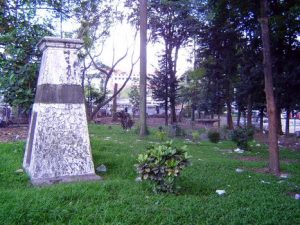 A completely stripped monument to Henry Byrde (1837-1907).