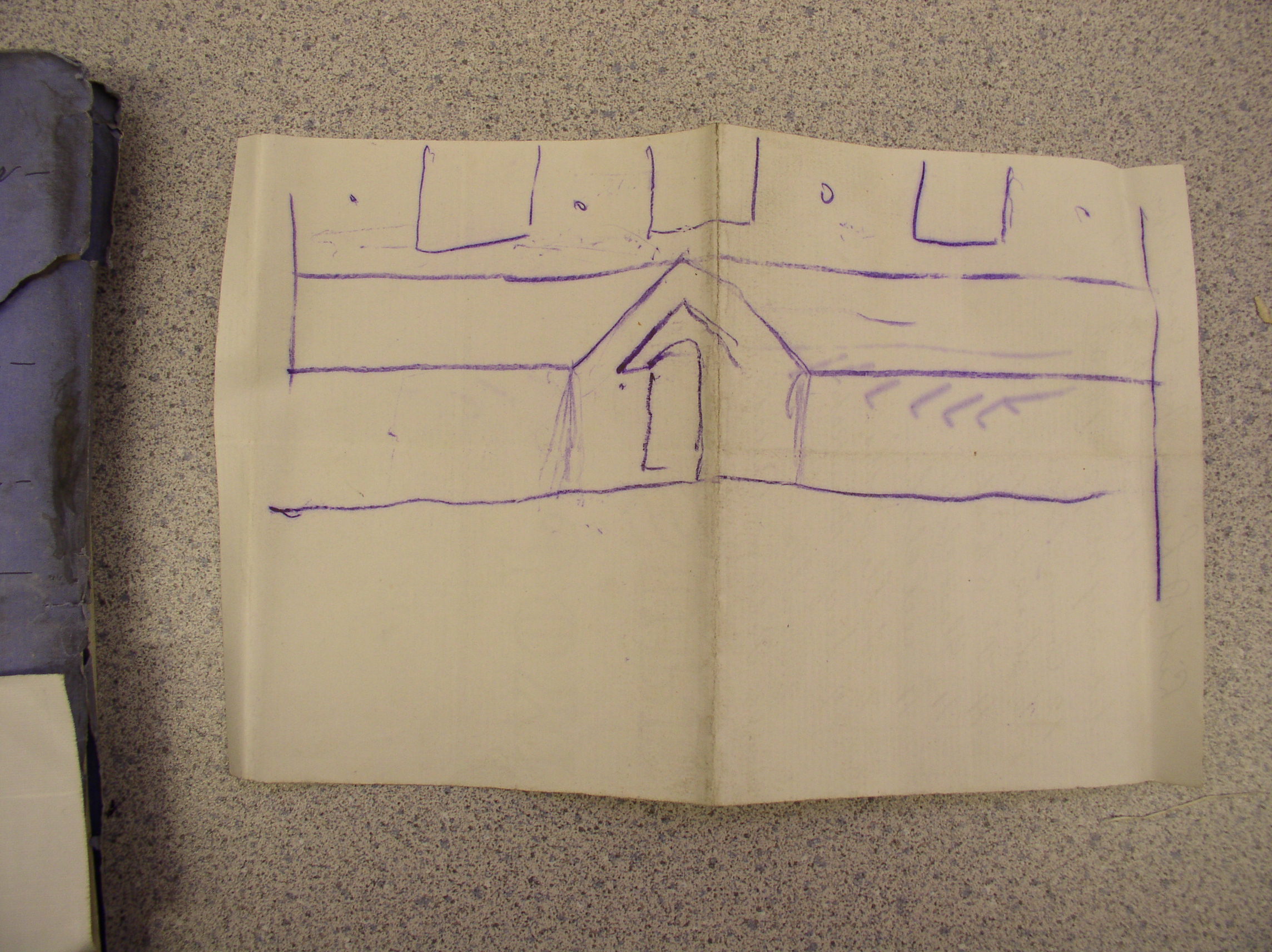
Ty Arrow

Ty Arrow

Ty Arrow is on Newtown Road,  it was built in 1909 by the then owner Arthur Jenkins.

Arthur Jenkins placed an advert in the Free Press on October 22nd, 1909

New house to let, cheap and convenient, half a mile to the station, with garden. (I think this is Arrow Cottage)

The census of 1911 shows 80 year old Elizabeth Jenkins in occupation, Elizabeth was born in Llansoy,  a retired farmer. Living with her is 12 year old scholar Richard Meyrick Taylor Jenkins.

The 1921 census says Arthur Messenger is 31, born in Pontypool and a retail dairyman on his own account, his wife Florence, born in New Inn is 29 they have a daughter Eileen who is 1.

From the Electoral Register:

Thomas James and Gertrude Ethel Morgan in 1925.

There is no entry for 1930, but by 1936 Benjamin and Gladys Bishop were in residence.

Goytre Lodge – Nantyderry House

Goytre Lodge – now Nantyderry House 

No 680 on the 1841 Tithe Map. 

The estate comprised of 45 acres:
Cae’r eglwys (the church field)
Cae’r thin
Cae-pen-carreg (the field at the top of the stone)
Cae’r –defaid (the sheep field)
Cae’r-pen-yr-heol (the field at the end of the road)
Cae’r glwyd (the gate field)
Cae pump cover (the 5 acre field)
Cae’r wern-isaf (the field of the lower alders)
Cae’r-felin (the mill field)
Worlod-isaf-dan-y-ty (the lower meadow below the house)
Venhallog-dan-yr-ardd (possibly the sunny spot under the garden)
Cae’r-garth-haidd (the field of barley enclosure)
Cae-bach (the little field)
Cwm-cae-glwyd (the dingle of the gate field)

Goytre Lodge was owned in 1746 by the Bazley family of Bristol. James Bazely married Margaret Griffiths at St Iltyd’s, Mamhilad on April 15th 1746.

In his will James Bazley said he was a glover and an undertaker, he left his freehold estates to his son John Griffiths Bazley and Benjamin King.

An indenture of 18/19th September 1778 from John Griffiths Bazely and Jeremiah Osborne, transferred Goytre Lodge to Joshua Davies, the then curate of Goytre.

During the years 1821-3 the property was let to James Lewis of the Wern, Goytre.

The following three years it was rented by George Averill who was paying £20 per year, at the end of the lease in 1825 the Averill family moved to Abergavenny.

The same year Robert Farquhar of Pontypool, purchased the Lodge from the nieces and co-heirs of Joshua Davies.

Robert Farquhar was born in Ayrshire in 1764, the son of Robert Farquhar and Sarah Hill, he came to Pontypool in 1801, where he acquired the Blaendare Ironworks near Pontypool,he was living close by at Trosnant House.

In January 1803 he married Sarah Hill in Shoreditch, London, they had eight children:

Ann born in 1806, she married John Evans, a clerk from Trelleck Grange when she was still a minor. Ann died in 1845.

John, born in 1808 married by license Mary Winnifred Upham in September 1844 in Taunton, the census of 1851 says he is a 43 year old gentleman his occupation is a merchant and he is living in the square at Bridgewater. His wife Mary is 22, they have 5 children.

Their third child, James Henry born in 1812, became a Reverend, he married by license on the 26th June 1840 Georgiana Louisa Vaux. The census of 1851 says he is the perpetual curate of Llangoven and Penyclwdd, he and Georgiana have 4 children.

James Henry died in 1879 at Llanddewi Skirrid. The entry in the church register reads: Died suddenly when preparing to take a baptism in the new church, not yet open for service. W. P.

(W. Price, the rector of LLanvetherine.)

Daughter Sarah was born in 1814, she died aged seven in 1821 and was buried at Trevethin Church, the register entry says she is a daughter of Robert, coal merchant, Trosnant.

Elizabeth, born in 1816, married John Lloyd, a gentleman of Brynderry, Llantilio Crossenny in June 1844 at Llangoven, the service was conducted by her brother James. The census of 1851 says John Lloyd is a farmer of 67 acres and that they have 3 children. Elizabeth died aged 54 in 1870.

Jane, born in 1819 remained a spinster, she died in 1874 and was buried at Trevethin Church.

Their last child is another Sarah born in 1823, she married Andrew Hair in Raglan in 1846, they moved to Scotland then returned to the Pontypool area. Andrew Hair was manager of the water works and gas company, also a Major in the Army.

Sarah died in March 1883, her obituary reads: On February 26th at Trosnant House aged 69, Sarah the beloved wife of Major Andrew Hair. Sarah is the youngest daughter and last surviving child of the late Robert Farquhar Esq of Trosnant house and Blaendare.

It was Robert Farquhar who enlarged Goytre Lodge into a substantial home. He died in December 1832 aged 69 and was buried at Trevethin Church. His wife Sarah died in December 1844 whilst staying at Cefn Coch, Raglan.

Following Robert Farquhar’s death his eldest son John inherited Goytre Lodge, the electoral register for the years 1835/9 name him as the owner.

John Farquhar sold Goytre Lodge and 45 acres in 1839 to the Rev. Allen Morgan the new rector of Goytrey for £1600. Allen Morgan paid a deposit of £160, a further £440 to be paid on the execution of the conveyance and that the remainder £1000 of the purchase money at interest of £4 10s 0d per annum.

Trinity College Dublin

Allen Morgan was born in Tullow, Ireland in 1789, the son of the Rev. James and Mary (nee Ashenhurst) he attended Trinity College Dublin in 1806 when he was 17.

His father James is understood to be one of the Morgan family from Tredegar House, Newport, although I am unable to confirm this.

Allen Morgan married Margaret Dyne (also known as Bradley) at St Mary’s, South Stoneham, Hampshire on the 6th March 1827.

The census of 1841 says he is 45, from Ireland, his wife Margaret is 30, their six children are, Eusebius 10, Allen 8, Edward 7, Cosby 5, Thomas 3, and two year old Emily.

Their servants are Elizabeth Higgins 20, Joseph Hotham 15, Judith Conolly 35, Catherine Pritchard 30, Elizabeth Phillips 15, and Ann Evans also 15.

Their first son Eusebuis Hamilton born in 1829 in Kildavin, Ireland, went to Rugby school aged 15 after the death of his father, his address at school is given as Nantyderry Lodge.

In 1851 he went to Ceylon as a coffee planter (I assume this will be from his connection with Col. Henry Bird who also had coffee plantations in Ceylon.)

Eusebius died aged 21 in March 1851, at sea, whilst on his return journey from Ceylon. His will says he has under £800, which he leaves to his brother Dr Thomas Morgan.

Cosby William Morgan

Dr Allen Bradley Morgan

Cosby William Morgan was born in 1834 and died in 1909 in Petersham, New South Wales.

On the census of 1851 he is a medical pupil in Carmarthen, he then went to New Zealand in 1851 aboard the “Joseph Fletcher,” from there in May 1854 he went to Australia aboard the “Mary Parker.”

He married Janet Patterson in July 1860.

I would like to say a sincere thank you to Lesley Morgan in Australia, for all the Morgan family history, her late husband Allen is a direct descendant of Cosby Morgan. (photo above).

Allen Bradley Morgan, another son, trained as a doctor. He was living in Abersychan as an assistance to Dr Andrew Davies in 1851. He emigrated to Wagga Wagga, New South Wales in 1856 where he was the surgeon and gaol vaccinator. He made several trip back to the UK during his lifetime.

Thomas Cecil Morgan, born in 1837 was educated in Edinburgh, he also went to Australia in 1859 to 1861 when he returned to Salisbury. In 1870 he is an assistant surgeon in HM Army, he died on November 24th 1885 at his brothers residence.

On the 26th July 1844 the Rev. Allen Morgan died, his will states he is of Nantyderi, he leaves all his estate to his wife Margaret to dispose of at her discretion. The witnesses of his will are Mary Eliza Dickinson, Elizabeth Philips, Owen T Philips and Emma Donkin.

Margaret and Emily Morgan

The census of 1851 shows Margaret Morgan, Allen’s widow, living in Newcastle Emlyn where she says she is a fund holder, Cosby and Emily are with her, along with Emma Donkin, their governess.

After the death of Rev. Allen Morgan, his wife Margaret, sold Nantyderry Lodge to the Rev. Thomas Evans, who had been living with the Bird family at Goytre House.

The census of 1851 says he is 32 years of age, unmarried and was born in Carmarthen, staying with him on the census night is Thomas Cochrane a 24 year old Lieutenant in the English Con Rifles, born in Ireland, also John Lewis a 31 year old Clergyman born in Carmarthen, his servants are Elizabeth Page and Elizabeth Saunders.

Rev. Thomas Evans is not on the 1861 census, due I suspect to the fact that many parts of the census for that year are missing.

On the 6th March 1862 he married Ann Corfe at St Andrews Church, Clifton, Bristol, Thomas’s brother John Evans, the rector of Crickhowell taking the service.

Ann is the only child of James and Charlotte Corfe, nee Fidlin. Ann was born in Marylebone, London in 1827.

His bride, Ann was the beneficiary to her uncle John Fidlin’s fortune of £12,000 in 1860, this money was held by trustees who were most reluctant to release it to her.

On return from their bridal tour the Rev Thomas Evans and his lady arrived at Nantyderri Station to be greeted by loud cheers, they then walked to their home through a flower laden floor and archways of evergreens.

Rev Thomas and Ann’s first child, a son, Reginald was born on the 6th December 1862, he sadly died in September 1863 and was buried in St Peter’s churchyard.

There was a major fall out between Col. Henry Byrde (who just changed the family name from Bird by deed poll) in 1864 and the Rev Thomas Evans.

Col. Byrde was made High Sheriff of Monmouthshire, on choosing a Chaplain, it was custom apparently to use the Rector of your home parish, on this occasion Col. Byrde chose a friend. This caused great anguish to Rev. Thomas Evans who wrote several letters to Col. Byrde, culminating in a loss of friendship and great animosity.

Following this Col. Henry Byrde wrote a booklet for his friends perusal in 1865 with all the letters that had passed between the two parties.

Lewis Edmunds, the local builder who lived in Llanover, wrote in on March 4th 1864 that he was at home drawing a plan of a house for Thomas Evans Nantyderry and on the 9th November he said he was slating the house.

The building could have possibly been the new school and school house.

Thomas and Ann’s second child, a daughter Charlotte, was baptised on the 10th July 1864.

This was followed by the birth of their second daughter Catherine in April 1867, in July 1868 their third daughter Mabel was born.

About now Thomas Evans built the Cottages at Nantyderry.

In March 1867 Col. Byrde applied to Pontypool and Usk Highways Board have the Penystair road closed. This caused a very long and protracted disagreement with Rev. Evans, letters being written to the Free Press, sides being taken in favour of both parties and acts of vandalism by Rev. Evans or his workers  destroying the new gates erected on Penystair road.

On the 13th July 1868,  29 children attended the opening of the Rev Thomas Evans school at Nantyderry, each paying 1d per week.

The census of 1871 says Thomas Evans is 51, a rector and JP, he was born in Carmarthenshire, his wife Ann is 44, their daughters Charlotte 7, Catherine 4 and Mabel 2 were all born in St. James, London.

Walnut Tree Farm was purchased by Thomas Evans in January 1871.

The following year his schoolmaster, George Thomas Bright resigned his post at Nantyderry School. The new schoolmaster is Richard Darlington, Richard’s post was not held for long, he was caught with a house-maid by Mr Evans’ gardener, who threw water over them. Richard left and went to Stafford, the census of 1871 says he is 28 and unmarried.

Arthur Fabian took charge of the school in April 1873.

A tea party for the entire neighbourhood was held in August 1872, the children of Nantyderry School all attended, the Rev. Evans paying for them.

In June 1873 is the start of the very well known “Vicar and the Well” saga. This is very well documented in various publications. About this time Thomas Evans was purchasing many properties in the parish, including Goytre Hall and Pentwyn Farm in addition to building cottages.

The census of 1881 says Thomas Evans is 59, a rector and JP, Annie his wife is 54, their three daughter are Charlotte 17, Catherine 14 and 12 years old Mabel. They have four indoor female servants, one groom and a gardener.

Five years later Thomas Evans died, on the 16th April 1886 in Cheltenham, he left the sum of £24,000, plus real estate to his wife, then to their daughters. Ann Evans died on the 12th February 1896 in Cannes, probate amounting to £93,3313-11s-1d was left to Charlotte Mary Evans, spinster of Nantyderry.

Clara Denny was staying at Nantyderry House with three servants on the census of 1901, I am unable to find Charlotte Evans.

Again in 1901, Charlotte had Nantyderry House enlarged, the plans being drawn up by Thomas Wyatt of London.

On the 10th October 1904 at St Peter’s Church Catherine Anne Evans, one of the daughters of Rev. Thomas Evans married John Brunsdon Fletcher, a Clerk in Holy Orders, they were both living in Goytre

The electoral register of 1905 gives Catherine Annie Evans and Charlotte Evans as joint owners of Nantyderry House.

The census of 1911 gives that Charlotte is not at home, but Clara Denny is still there with two of Mabel’s children, (Mabel married Charles Williams and lived at Goytre Hall) Catherine Loyd 6 and Margaret Lesley Williams 4.

The electoral register of 1918 is the last time I find Charlotte Evans listed as the owner. Zulekia Carsley is the name given on the electoral register of 1920.

The Abergavenny Chronicle advertised an objects sale to be held at Nantyderry House on the 18th July 1919.

Some interesting prices were realised by Messrs Straker, Son & Chadwick on Thursday last week.

At the first day’s sale at Nantyderry House, this included the antique effects, china, silver, glass &c., dealers and buyers being present from all parts.

The Georgian silver made up so 29s an oz., and silver salver of 60oz 261/2 gs. Glass was very dear, opaque spiral stem glasses up to £6 6s. A set of eight Chippendale chairs were secured by a Cardiff buyer at 100 guineas and a quarter chime grandfather clock made the same figure.

Oaks buffets up to 33gs.  A pair of Dutch cabinets, 66gs. A wither’s safe realised £32.

Nantyderry House in 1920 became a home for unmarried mothers, the maximum allowed at any one time was 15. The founder of this scheme was Lady Mather-Jackson and a few like-minded ladies. She saw the dilemma of young girls who had no support whilst in this predicament and decided to do something about it.

To qualify to enter the home ladies had to fit a certain criteria, they had to be working class and aged under 30.

The census of 1921 for Nantyderry Maternity Home and Hostel.

Agnes Mabel Lamb is the matron, she is 32 and was born in India, nurse Lilian Gwendoline Norton also 32 was born in Caerwent, there is one servant, Martha Hopson aged 57, Martha was born in Hereford.

The following young ladies were called inmates:

Alice Louise Davies 24 born in Glamorgan, place not known and her daughter Myrtle aged 3 months.

Dorothy Victoria Hobbs aged 21 born in Pontyydrun and her daughter Masie Doreen aged 2 months.

Ethel Gwendoline Davies aged 18 born in Usk and her daughter Olive aged 2 months.

Olive Mary Nethercote aged 23 born in Monmouthshire, place not known and her son, Francis Valentine aged 4 months.

Gladys Watkins aged 18 from Walterstone and her son Jack aged 2 months.

Hetty Joy Stevens aged 21 born in Henllys and her son Raymond George who is under 1 month of age.

Lily Chick aged 19 from Somersetshire and  Ann Cotterrill aged 17 from Llandenny.

(My husband was born in Nantyderry and aged about 4 he walked to the home and asked could he have a ‘coloured’ baby. The staff walked him back to his mother.)

A wedding took place at St Peter’s church on the 3 May 1924 between Herbert Arthur Voke, a widow and Hilda Caroline Ruffles both of Nantyderry House, Herbert’s occupation was a Missionary Evangalist.

The home closed in 1948 after helping approximately 500 girls. It then became a home for elderly gentlemen in about 1950. I’m not sure when it closed as a home for elderly gentlemen but then it once again became a private home.

A death occurred at Nantyderry house on the 11th May 1980 of Archibald Trevor Hunt, Archibald was a retired butcher, probate was granted in August for the sum of £14,714.
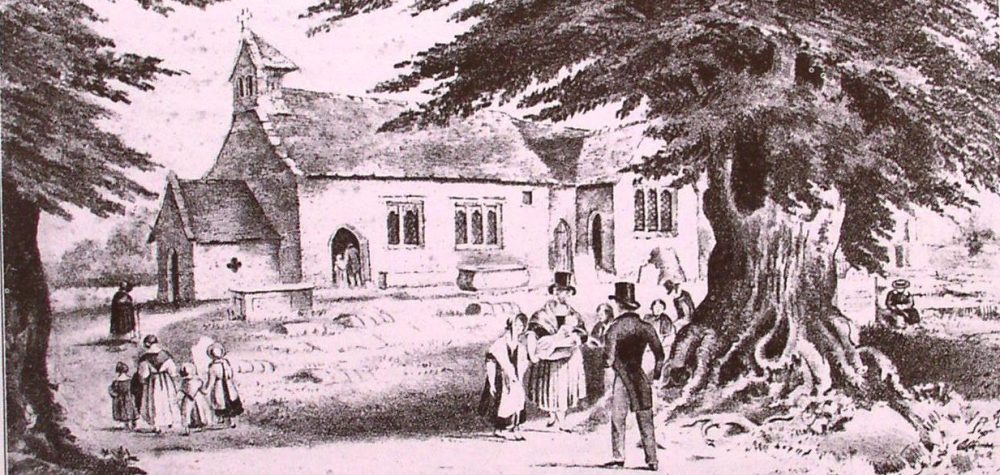
Ivy Cottage – Y Tee Bach

Ivy Cottage – Y Ty Bach – 436 on the 1841 Tithe Map. 

On the 2nd February 1701, William Pritchard, Goytrey victualler, held lease no. 1079 of  a cottage and 4 acres of land near the blacksmiths shop in Pellenny. The lease was granted on his life and that of his son Richard and daughter Mary, who later married Thomas Rosser Jenkin. The cost of the lease was £5 and the yearly rent being 2s. This lease expired in 1740.

The next mention is in 1749 when lease no. 1051 previously held by William Pritchard was granted to Francis Morgan on the lives of his children, William aged about 5,  Mary, aged about 11 and Francis aged about 2. Francis is paying 2s 6d yearly rent and 2 fat hens at Christmas yearly.

Francis Morgan is next mentioned in the overseer of the poor records for Pelenigg in 1783.

Francis Morgan the elder died in 1800, his will states he leaves the messuage where he lives to son Francis Morgan and his wife Ann, then to granddaughter Ann.

Ann Morgan, daughter of Francis and Ann married John Prosser, it is they who remained at Y Tee Bach, John Prosser being mentioned in the parish records as an overseer of the poor. I can only find one child of John and Ann Prosser being baptised,  Ann born in 1816.

Francis Morgan the younger died in 1836 in Goytrey workhouse aged 90. In his will he left, to his grandchildren, Mary Harris, £7; to Margaret Morgan £7 plus his dresser and shelves; to Ann the wife of John Prosser a writing desk; all remainder of his belongings shared between John and Ann Prosser, he was buried in St Peter’s churchyard.

Ann Prosser died in 1835 aged 46, she is also  buried in St Peter’s churchyard.

In 1838 John Prosser is holding the lease for Y Tee Bach. On the census of 1841 John is a 45 year old carpenter. The tithe of 1841 says there is a garden, a house and garden, a lower orchard, another house and garden (the Carpenters Arms) and an upper orchard.

John is paying 6s 7d tithe to the rector. Living with John on the census is his 34-year-old niece, Margaret Morgan.

By 1851 John is still at Y Tee Bach, he is now a 64 year old widower and still a carpenter. His niece Margaret is still his housekeeper, she is now 44 years old.

I am unable to find John Prosser on the census of 1861, most of the census for that year is missing. I do know John died on the 23rdJune 1873. He left a will bequeathing everything (under £100) to his grandson and sole heir William Williams.

The census of 1871 shows 67 year old Margaret Morgan is in occupation, she is an annuitant.

Margaret died in 1881 aged 81 and is buried in St Peter’s churchyard.

On the census of 1881 living with Margaret Morgan is her nephew William Williams and his family. William is a 34 year old engine driver in the iron works, he was born in Goytre in 1846, the son of Walter and Ann Williams. His wife Clara is 32, their children are John 11; Henry 9; Margaret Ann 7; David 5; William 3 and Charlotte who is 6 months old.

In July 1882 William Williams was summoned for not sending his children to school, Henry had not attended for 3 months. The following year the same happened, on this occasion William said that Henry was in service at Pentwyn Farm, Mamhilad.

The death of Margaret Morgan occurred in 1885, she was buried in St Peter’s Churchyard.

By the time of the 1891 census William has become an engine fitter, he is 45 years of age, Clara is 45 and born in Trevethin. Living with them are their children, Harry now 19 and David 15, both  labourers, attending school is William 10, Charlotte 10, Clara 8 and 6 year old Elizabeth, there are two younger children, George 4 and 2 year old Lilly. (The photo is of William Walter Williams, kindly provided by Sophie Sharland)

The census of 1901 says William is now a farmer, he is 57 years old and working on his own account, Clara is 56. Living with them is 29 year old Henry who is a carter on the farm and 15 year old George who is a cowman and daughter Lilly who is 12.

William’s wife Clara  died in 1903 and was laid to rest at Chapel Ed.

The census of 1911 says William is a 66 year old market gardener, he is living on his own at Ivy Cottage.

Several of Wiliam and Clara’s children were married after her death, Charlotte married William Jay and lived in Abertillery.  Henry married Laura Kate Jenkins in 1906.  Clara married John Humphries and lived in Caerleon, Elizabeth married married Arthur Henry Brandes and later Reginald Sutton, she lived in London then moved to Australia.

William had re-married by the time of his death in December 1914 to Elizabeth.

William died on the 8th December 1914 aged 70.

Probate of his will dated 25th January 1915 left all his personal and household belongings to his wife Elizabeth, then to be shared equally between his five daughters, Margaret, Elizabeth, Clara, Charlotte and Lilly.

In the gallery are photographs of the Williams family.

Unfortunately I am unable to follow the history of Ivy Cottage any further than this date.

The Haven, Nantyderry

Haven, Nantyderry

The first mention I can find of the Haven, Nantyderry is a newspaper advert placed by Miss Byrde for the sale of the property,  on the 5th November 1920.

Miss Byrde was selling the property to relocate to Weston-Super-Mare.

In 1921 the owner of the property was Mr John Williams, he again placed a for sale advert in the Free Press in November 1921:

“The House stands in its Own Grounds of One acre or thereabouts with Lawns and Kitchen Garden and is surrounded by a large collection of very fine Shrub and Fruit Trees. The House consists of Hall, Drawing Room, Dining Room, Kitchen, Pantry, China Pantry, Scullery, a Convenient Office with Greenhouse attached, Four Bedrooms, Bathroom and upstairs W.C.  There are several Outhouses.

The Property is Freehold and is situated within three minutes walk of Nantyderry Station abutting onto the main road from Penpellenny to Nantyderry.  It commands a beautiful view of the best parts of Monmouthshire.  The House was built quite recently and is fitted out with all modern conveniences.  There is a splendid supply of water.”

Further particulars from:  A DENSLEY

On the 1926 electoral register Evan and Ann Jones are living at the Haven

In June 1930 Mrs Annie Jones of the Haven had a rug stolen from her motor car whilst parked outside the house.

The 1939 register gives the residents as Evan Jones, a master mariner born in 1878 and his wife Annie who was born in 1884.

Myrtle Cottage

Myrtle Cottage – 427 on the 1841 Tithe Map.

In October 1879 Ann Jenkins, the widow of William (who was killed in an accident whilst working for Col. Byrde) was mentioned at this address in the school log book. Her husband William was out exercising horses in March 1878 with a young colt attached to a cart, whilst crossing the canal bridge on Park-y-brain lane the young colt startled and overturned the cart onto William’s chest, sadly he died from his injuries.

Ann was in residence on the census of 1881 she was a 52 year old annuitant, living with her is her 16 year old nephew Thomas Turner who is still a scholar,  Ann and Thomas were born in Pontypool.

Ann and Thomas remained at Myrtle Cottage, the census of 1891 says head of the household is now Thomas Turner, he is a 26 year old grocer’s assistant. Ann is now 62 and living on her own means.

On the 1901 census Ann Jenkins is residing at Myrtle Cottage on her own, she is now 73.

Lot 29 of the Goytre Estate in 1910 gives a lease to Miss Mathews for 99 years from March 25th. The freehold ground rent is £2 6s 8d. The property on that record is called Myrtle House.

By 1911 the resident of Myrtle Cottage is Sarah Mathews, she is an 86 year old retired farmer (late of White House Farm, Mamhilad.) Sarah was born in Llanbaddoc, living with her is  Lily, 40 and 16 year old apprentice carpenter Henry Guest. Henry was born in Pontypool, the son of Richard and Clara Guest

Henry Guest joined the military and went to France in 1914, very sadly he was killed on the 11th December 1914, he is buried in Calvair Military Cemetery Belgium.

In 1915 Matilda Mathews is listed as the resident of Myrtle Cottage.

The 1921 census says Miss Mathews is 57, born in Goytre,she has taken in borders, Charles Cox from Withington, Hereford, he is a stationary engine driver, Amy Royson 34 from Ottershaw Surry, a head housemaid and L Davies 44, from Carmarthen.

The electoral register in 1920 says Edward Morris was living at the property along with Miss Mathews, in 1925 Charles Ernest Cox is living here, this had changed by 1930 to Victor Albert Jones,  Miss Mathews was still taking in a lodgers.

By the 1939 register this had changed back to Matilda Mathews. The information given on this register says she was born on the 11th September 1862 and that she is incapacitated, she has a live-in domestic called Ellen Thomas.

Matilda remained at Myrtle cottage until her death in 1955.

Gable Cottage

Gable Cottage – 794 on the 1841 Tithe Map.

Gable Cottage has now been demolished and replaced by two new homes.

This was an Earl of Abergavenny property.

There is a John Morgan, born 1715 mentioned at Gable Cottage holding the lease.

In 1754 and 1755 John Morgan was witness to the marriages of William Jones and John Pritchard.

During the years 1760 to 1763 John Morgan, mason was an overseer of the poor for the parish.

John Morgan died in 1807 aged 92.

The 1821 survey of the Earl of Abergavenny says John Morgan is holding a cottage and garden, I assume John junior holds the lease from his father.

In 1834 John Morgan was paying £2 12s house rent and was fined for selling beer without a license.

John also obtained a loan from Mr Thomas James and James Gwatkin (overseers of the poor) in 1837.

The electoral register in 1840 says he is holding a lease for lives, the tithe of 1841 says he is paying 10d to the rector and leasing field numbers 745, 746 and 747.

On the census of 1841 John Morgan is a 60 year old labourer, Martha, his wife is 65.

John and Martha Morgan are still living at The Gables on the census of 1851, John is now 77 and Martha 80.

Parts of the census of 1861 are missing; this includes part of the village. Again on the census of 1871 I am unable to ascertain who was living at The Gables, but by 1881 the lease is taken by John Hopkins with Amy Jenkins being the occupier.

The occupier had changed by 1891, this was now 45 year old Edward Owen, Edward was a boot maker from Cwm Du, Radnorshire, Harriet his wife was 42, from Pontypool. Edward and Harriet had 8 children, Mary Elizabeth, Louisa, Albert, Annie, David, Josiah, Harriet and Henry.

By 1910 the cottage’s gross value was 6s and the rateable value 4s 10d, the owner is the Marquis of Abergavenny of Eldridge Castle, Sussex, Edward Owen is still renting the Cottage and garden called Gable Cottage.

The census of 1911 says Edward and Harriet along with their son Harry are living at Rose Cottage, which has confused me but I will say they are at Gable with their 24 year old son Harry who is a mason. Edward and Harriet had been married 44 years, had 8 children one of which had died.

Edward is mentioned again on the 1914 poor rate, the owner being the Earl of Abergavenny.

In 1920 the Earl of Abergavenny sold most of his Monmouthshire holdings, Gable Cottage being one of the properties was sold to Edward Owen, the tenant for £150, Edward had been paying a rent of £6 p.a. to the Earl and a tithe of 10d.

The 1921 census says Edward Owen is 77, a boot repairer on his own account, Edward was born in Cwmddu, his wife Harriet is 74 born in Pontnewynydd.

In November 1921 Harriet died, aged 74 she is buried in St Peter’s churchyard.

Headstone St. Peters Church


Edward survived her by 9 years, he died in February 1930 aged 85.

The 1939 register says William and Minnie Griffiths are in residence at Gable Cottage, William is a permanent way labourer.

Gardeners Cottage Nantyderry

I don’t know when Gardener’s Cottage was built and I have very little information about the property.

The cottage was part of the estate of the Rev. Thomas Evans.

The property was occupied by John Harding, gardener to Nantyderry House, or Goytre Lodge as it was first known.

John Harding was born at the Four Horseshoes Inn, Checkendon, Oxfordshire in 1858, the son of Thomas and Martha Hope Harding.

He married Elizabeth Bowen on the 11th January 1876 at St Peter’s Church, Goytrey. Elizabeth, born in 1855 at Trevethin, was daughter of David, a mason and Elizabeth Bowen.

By 1871 the Bowen family had moved from Trevethin to Coalbrook Cottage, where I assume Elizabeth met John Harding. Their first child Hope was born in Goytre.

The rateable value of Gardener’s Cottage in 1910 was £7, the owner was Charlotte Evans of Nantyderry Mansion.

On the 1921 census John Harding is 74, a widow, born in Checkendon Oxfordshire, a retired gardener, late Miss Evans Nantyderry House. Living with him are his children, Richard 38, a masons labourer for Mrs William Wicks, Hawthorn Cottage, born in Abergavenny, Harry, a son who is visiting he is 35 and a railway clerk for GWR, Harry was born in Usk. Daughters Gertrude 33, Viola Amy 24 and granddaughter Eileen Isabel aged 11 who’s father is dead.

John and Elizabeth then left Goytrey and moved to Cae Kenfy, Monmouth Road, Abergavenny, after a few years they returned to Nantyderry where they remained until their deaths.

Their children were Hope, Millie, Laura, Richard, May, Harry, Gertrude and Alicia.

John Harding’s obituary in 1941 says he died aged 93 at his home in Nantyderry where he had lived for many years. He is survived by three sons and three daughters, Mrs Jack Rosser, Goytrey; Mrs Davies, Blackwood; Miss Harding, Nantyderry; Messrs Harry Harding, Station master, Abergavenny; Richard Harding, Nantyderry; and Sam Harding who is abroad.

On July 30 1914 at St Peter’s Church May Harding, 30, married Robert John Rosser 29,  a painter.

May’s sister Alice married Gilbert Flower, 31, a solicitors clerk also at St Peter’s church on September 17th 1917.

On the 1939 register John Harding, born on the 28th May 1847 is a retired gardener, living with him is Richard, a general farm labourer born on the 27th September 1882 and Gertrude born the 5th November 1887.

The family chose St Peter’s as their final resting place, David Thomas and Hope in 1882, John’s wife Elizabeth in 1917, Viola Amy in 1923, John aged 93 in 1941, Bessie, who was living at Llanvair Grange Cottage in 1945 and Gertrude in 1951.


Ty Port

Ty Port is now in the parish of Llanover.

Mary Port of Ty Port died aged 56 and was buried at Llanover church on the 5th August 1837.

I am quite sure it is the niece of Georgina Ann Port who married Benjamin Waddington. Georgina Waddington (photo) is shown as the owner of Ty Port on the 1841 tithe, the land adjoining Ty Port is 8 acres 2 rood and 17 perches, she is paying 5s 10d tithes to the Rector of Goytrey.

On the census of 1841 living at Ty Port is Catherine George and her 15 year old daughter Georgina, Temperance Deakin 20, Jepsey 2 months, Pheobe 6, Hannah Adler 30 and Elizabeth Phillips 85.

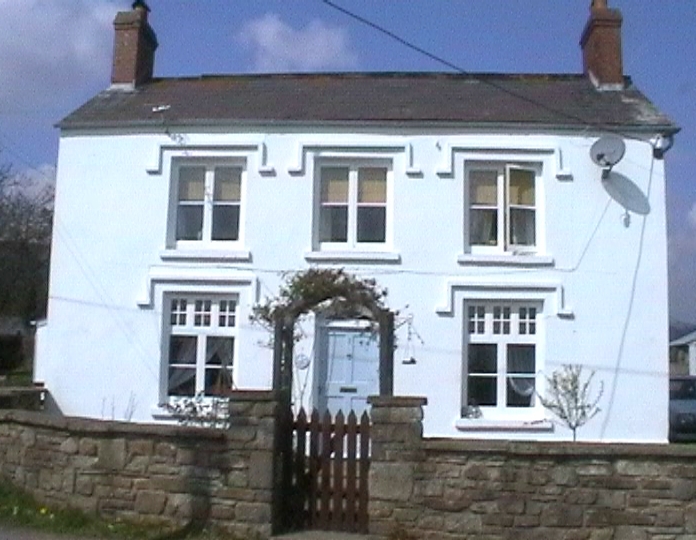
By the census of 1851 Miss Maria Collins aged 63, annuitant, is residing at Ty Port along with her widowed sister Charlotte Warne and her 13 year old niece  Georgina Warne, they all came from Middlesex.

An undated document in the name of Mrs Warne says the rateable value of Ty Port was £7 15s.

Maria Collins died in April 1852 and was buried at Llanover Church. Her will, stated that all interest, dividends, profits to be given to her sister Charlotte, then to her niece Georgina.

On the 1861 census Isaac Edwards 35, his wife Susannah 33, and Ann Jones a 17 year old servant born in Goytre were in residence. Isaac Edwards was Chaplain to Lord Llanover, he and Susannah came from Cardiganshire.

From 1865 the occupier was John James and his family, he had several children baptised at Llanover Church, John in 1865 and a second child in 1866, he was also called John, so I assume the first son John had died.

I’m not able to find who was living at Ty Port on the census of 1871.

In 1876 Lady Llanover wrote from her London residence “Dafydd Williams is welcome to settle at Ty Port.”
This was followed a few years later by another letter from Lady Llanover whilst residing at her Mayfair house to Dafydd Williams telling him to take the things out of the house, she also tells him to send Mrs Evan Jones and Mrs Chubb and that they are to send for Mrs Watkins.

In 1877 E. Bevan, the rector of Llanellen wrote to Turner (Lady Llanover’s agent) informing him he had employed Mrs Parker for 4 weeks to look after Ty Port.

A second letter written in 1878 from the Rev. Bevan said that he had repaired a window at Ty Port at  his own expense when it should have been done by the previous tenant, David Evans, when he had the loan of the place and that he was expecting Mr Watkins to have everything delivered up in good order.

On December 10th 1879 Thomas James paid the income tax for Ty Port.

The Minister of the Calvanistic Church was in residence in 1881, he was 39 year old Thomas Miles and his 37 year old wife Evelyn, they were both from Glamorgan. They had a son Stanley in 1882 who was baptised at Llanover Church.

On the 3rd  of June Turner wrote to Lady Llanover informing her that damage was done to the property by ladders.

The 1891 census  census shows John Prys, his wife Katie and their two year old daughter Myfanwy in occupation of Ty Port, John is a Presbyterian Minister.

John Prys remained at Ty Port through the censuses of 1901 and 1911. On the 1911 census he is aged 52 and was born in Brecon, he had been married to Catherine for 23 years and had one child, Myfanwy who was now 22 years of age. The family was still in residence at the time of the 1914 poor rate.

John Prys is not at home on the 1921 census, Mary Catherine his wife is, she was born in Liverpool, daughter Myfanwy is also at home. Living with them is 26 year old Annie Marjorie, a poultry farmer.

John Prys is listed on the Electoral register until 1924, after this date I cannot find any reference to Ty Port.

Haymeadow

Number 491 on the 1841 Tithe Map

Tucked away in the parish of Goytrey, Haymeadow has a history stretching back more than two centuries. Though never a grand property, it was a place that witnessed the lives of generations of ordinary working people whose stories reflect the changing fortunes of rural Monmouthshire.

The earliest known reference to Haymeadow comes from the mid-eighteenth century. In 1765, Mary, believed to be the daughter of William Jenkins and Mary Williams of Haymeadow, was baptised at St Peter’s Church. After this brief glimpse, the historical record falls silent for several decades. [

Haymeadow reappears in 1807 when a lease was granted to Joshua Griffiths, an elderly blacksmith, for part of the dwelling. Another section of the property was occupied by labourer William Williams and his family, the lease is for the lives of his wife Cecilia 60 and their daughter Mary 24.  Over the following years, the lease passed through several hands before eventually becoming associated with Colonel Henry Bird of Goytrey House, linking the humble holding to one of the area’s prominent landowners.

By 1821 Joshua Griffiths lease had been assigned to Thomas Prosser, on the 29th January 1823 it was further assigned to John Prosser. There is a mention of Thomas Prosser holding his lease (now dead) on the 1831 land valuation. The present holder of the lease, Col. Henry Bird of Goytrey House, holds a cottage and 2 acres, 3 roods  numbered 189 on the tithe map.

Not all of Haymeadow’s residents enjoyed comfortable lives. In 1838, Mary Williams, daughter of William and Mary, was ordered to the Pontypool Workhouse. Records show that she later sought permission to leave temporarily, a request that was refused. Despite these hardships, she eventually returned to Haymeadow, where she was living with relatives at the time of the 1841 census. She died two years later and was buried at St Peter’s Church. Her story offers a poignant reminder of the difficulties faced by the rural poor during the nineteenth century.

By the census of 1841 Mary Williams had returned to Haymeadow and was living with her nephew William, a 35 year old farmer, Mary is now 75, living with them is an 8 year old labourer called John Blunt. Mary died in 1843 and was buried in St Peter’s churchyard.

The census of 1851 says 70 year old labourer William Jenkins has taken occupation along with his wife Ann, who is 52, their children John 31, Thomas 29, William 21, James 15, all were born in Goytrey, they all had the same occupation, woodcutters. Their 20 year old daughter Elizabeth is their housekeeper.

In 1852 William Jenkins of Haymeadow is mentioned in the Rev. Thomas Evans tithe accounts.

Local diarist Lewis Edmund recorded spending time at Haymeadow making gates, roofing the beast house and pig house, plastering walls and slating roofs. His diary entries provide a rare glimpse of the day-to-day maintenance required to keep a rural holding functioning.

The Jenkins family remained at Haymeadow for many years. By 1871, William was employed as a gardener, probably working for Colonel Bird, while his growing family occupied the cottage. Ann his wife is 45, their children are Mary Ann 18, Walter 15, William 14, John 12, Elizabeth 8 and twins Rachel and Philip 8.
Their lives, however, were marked by sorrow.
In 1874 their fourteen-year-old son John died and was buried at Saron Chapel. Twelve years later another son, William, died at the age of twenty-nine and was buried beside his brother.

The Jenkins family remained at Haymeadow, the census of 1881 says William is still a gardener, Ann is now 54, Williams is a 24 year old railway signalman, Philip is a labourer in the steelworks, Elizabeth and Rachel are both at home.

Another family death occurred in in December 1886, that of William Jenkins jnr, aged 29, he too was buried at Saron with his brother.

William, by the date of the 1891 census is still a gardener, Ann is now 64, Rachel 26, all the family were born in Goytrey.

Despite these losses, the family remained at Haymeadow into the 1890s. When William Jenkins died in 1892, he too was laid to rest at Saron Chapel. His widow Ann survived him for several years, eventually leaving Haymeadow to live with family elsewhere in the village.

At the start of the twentieth century, new occupants arrived. The 1901 census records James Green, a blacksmith from Hereford, living at Haymeadow with his wife Caroline and their daughter Ellen. A few years later, official records described the old cottages as having been restored. At that time, the owner was the Earl of Abergavenny, and Haymeadow was valued as a modest but productive rural property.

A document  in 1910 says the old cottages are now restored, the owner is the Earl of Abergavenny, the gross value is £10 10s and the rateable value is £9 10s.

In 1920, the Earl sold Haymeadow as a smallholding of just under three acres. The property was purchased by Mr Purnell of Pontnewynydd, although the purchase price was not recorded. Around this time, Thomas Jones, Ruth Jones and Ernest James Jones were living there, remaining in residence until the mid-1920s.

Although Haymeadow was never a large estate or a grand country house, its history tells the story of the ordinary families who shaped rural Wales. Through baptisms, leases, hard work, family joys and personal tragedies, the little holding endured, adapting to changing times while remaining a familiar part of the Goytrey landscape.

The census of 1921 Says Thomas Jones is 76, a market gardener born in Llangrove, Herefordshire, his wife Ruth is 60, daughters Winnie 24, is an assistant foster mother at Coedygric Institution, Irene 21 is at home helping, as is 17 year old Sedley, their sons are Ernest 28, who is assisting his father and 39 year old John who has been an invalid from birth, all the children were born in Goytre.

A decade later, the Vimpany family made Haymeadow their home, moving from nearby Cefn Mynog. They remained there throughout the 1930s and 1940s. Tragedy struck in 1943 when Flossie May Vimpany died at Haymeadow at the age of just thirty-two.


Pengroesoped Tavern

Few buildings in Goytre have a history as closely tied to one family as Pengroesoped Tavern. Built around 1852 by John Rosser of Pantglas Farm and Mill, the tavern stood on a field known as Cae Coed beside the turnpike road between Pontypool and Abergavenny. Research into the Rosser family suggests their connection with the locality extended back as far as 1635.

The construction of the tavern was financed through a loan of £100 obtained by John Rosser. By 1854 parish records already described him as both a farmer and innkeeper, demonstrating that the business quickly became established.

Around 1859, occupation passed to John Rosser Junior, who lived there with his wife Amy Rosser. Like many local residents, he signed the 1859 petition opposing taxation for the widening of Newport Bridge. The 1861 census records John, aged 35, as a publican, living with Amy and their children Ellen, Thomas, John and Margaret.

Sketch of the Tavern before building commenced.

The Rosser family suffered two major losses in quick succession. On 30 October 1861, local builder Lewis Edmunds recorded in his diary that “old John Rosser died suddenly this morning.” He was seventy-six years old and was buried at Mamhilad. Just over two years later, on 10 January 1863, John Rosser Junior himself died at the age of only thirty-eight and was buried at St Iltyd’s Church, Mamhilad. [

Following these deaths, ownership arrangements were reorganised. In May 1863, Ann Rosser, widow of John Rosser Senior, secured the mortgage in fee for herself and her sons Aaron, James and William Rosser. That same year, Amy Rosser arranged for all of her children to be baptised at St Peter’s Church. [

The following article appeared in the Usk Observer on 16th January 1864:

Pugilism at Goytrey

Thomas Jenkins, Thomas Griffiths, John Allgood and Henry Painter were charged with committing a breach of the peace by fighting.

William Rosser gave evidence that John Jenkins and Thomas Griffiths began fighting on the night after Christmas day at Mrs Rosser’s house at the Goytrey and the other two acted as their seconds, after which they began a “set to.”

Mr Ralph (of the Bench) said if the occupier would not sell too much drink at once disturbances would be less frequent.

Fined 9s each.

Tragedy struck again when Amy Rosser died in January 1867 at only forty years of age. Her funeral was held at Mamhilad, and Lewis Edmunds noted in his diary that he attended the service.

By 1871 the inn was being run by William Rosser, then a thirty-two-year-old unmarried publican. Living with him were his nephews John and Charles, together with his niece Ellinor, who acted as housekeeper. William became active in parish affairs, serving as Overseer of the Poor and joining opposition to the proposed transfer of Quarter Sessions from Usk to Newport.

Ownership of the tavern became the subject of family discussion in 1877. A letter written to Lady Llanover by E. Francis records meetings with the Rosser brothers, discussing the proposed sale of the old public house. The owner at that time was John Phillips, grandson of Ann and John Rosser through their daughter Ann, who had married John Phillips of Lower Hendre, Llanover. The correspondence also reveals the Rosser family’s desire to keep ownership within the family if possible.

Later that year, legal conveyance records show the sale of the property. A deed dated 30 October 1877 describes the tavern as a dwelling erected on land formerly called Cae Coed adjoining the main turnpike road. The property, then occupied by William Rosser, included outbuildings, a yard and a garden.

William Rosser ultimately succeeded in purchasing the inn from his nephew John Phillips. By the 1881 census he was recorded as an innkeeper living with his wife Elizabeth Rosser and their young daughter Alice. [

A major turning point came in 1885 when William sold Pengroesoped Tavern to Lady Llanover for £850. He subsequently rented Kiln Farm before moving to the Halfway House at Little Mill, where he died in 1893. [

Lady Llanover immediately transformed the public house into a coffee and temperance house. She let the Tavern to Robert Bassett at a quarterly rent of 10s.Records survive listing the household goods she supplied, including bedding, crockery, cutlery, cooking utensils and cleaning equipment. The inventory provides a rare insight into the furnishing of a rural refreshment house during the Victorian period. Account books for the establishment survive from May 1885 onwards.  

The building nevertheless continued to attract local incidents. In June 1883, James Meredith was reported to have become so drunk at Pengroesoped Inn that he remained unconscious for three hours before being taken to the railway station. He was later fined 10 shillings or 7 days.

The census of 1891 says John Morgan and his family are in occupation he is 67,  a mason, his wife Ann is 51, they came from Glamorgan. Emma their daughter is 27, living with them is 27 year old William Powell,  a weaver.

John Morgan remained at the Inn through to 1911 when he says he is the manager of the refreshment rooms.

The 1921 census of Pengroesoped Temperance House gives the following information, Emma John a 57 year old single woman born in Cardiff is a boarding house keeper. Boarding with her is John Price 76 from Crickhowell, a wood cutter and Melsom Constance 74 from Gibraltar near Monmouth both are working for Llanover estate trustees.

A separate entry also for the Temperance house is Charlotte Mabel Brace aged 29 she is single and was born in Sirhowy. Charlotte is the district sick nurse.

From its origins as a Victorian roadside tavern to its later role as a temperance refreshment house, Pengroesoped Tavern reflects changing attitudes to leisure, drink and community life. Above all, it tells the story of the Rosser family, whose association with the property spanned several generations and left a lasting mark on the history of Goytre.