Penpedairhewl

Number 978 on the 1841 tithe map. Although I have seen Penpedairhewl spelt in many different ways I will keep to one spelling.
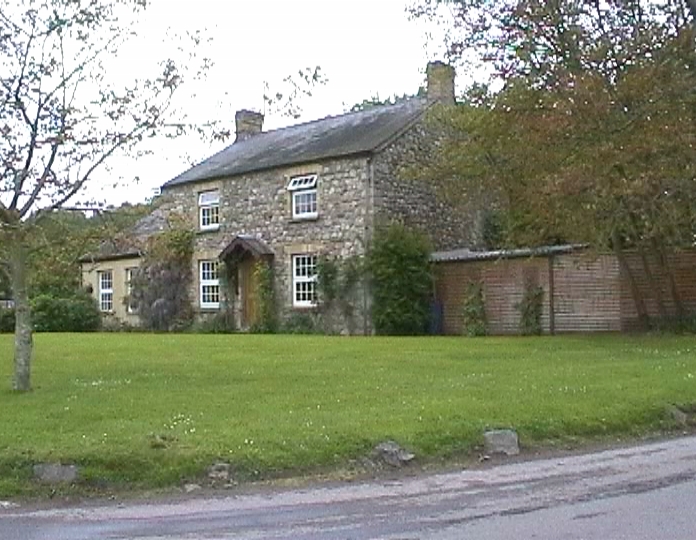
The earliest mention is in 1726 when the parish records show William Mathews is the constable for Penpedairhewl, the next mention is 1791 when Philip Jeremiah is given as constable for Mr Phillips, Penpedairhewl.

A marriage took place at St Peter’s Church Goytre between William Jenkins, a labourer and Ann Jones on the 13th  May 1819. William and Ann started their married life at Penpedairhewl. Their family grew quite quickly with the birth of John who was baptised at St Peter’s in March 1820 followed by Thomas, July 1821, William, August 1823, Mary, March 1826, Philip, July 1828, Elizabeth, April 1831, Walter November 1833 and James in June 1837.

In 1828 William Jenkins is listed as the Constable for Penpedairhewl but by 1833 William had moved his family to the Walnut Tree Farm.

The tithe of 1841 says the owner is still Thomas Phillips, the census of the same year says Roderick Roderick is the occupier, a widower, his wife Margaret having died in 1838. He had married Margaret at Monkswood church in 1814. Living with him are his children, John and William both aged 20, Roderick, John and William are all shoemakers, also living with him ishis  daughter Mary  aged 8.

Roderick Roderick died in 1848, his son John and family are now living at Penpedairhewl. John is married to Sarah Pritchard, the wedding took place at Monkswood church on July 22 1843. On the census of 1851 their children are Jane 7, Margaret 5, Mary and Sarah 2, and two month old Ann.

John, Sarah and family remained at Penpedairhewl for the next 20 years, their family increasing by Thomas, Emma, John, Alice, William and Harriet. John had changed his occupation by 1871 to wood collier.

By the census of 1881 John and Sarah had moved to Llanover village where John’s occupation is an agricultural labourer, John and Sarah are both aged 60. It is here in 1882 that John died, followed by Sarah in 1888.

On the census of 1881 at Penpedairhewl is 80 year old farmers widow Mary Watts and her granddaughter Emma Watts. Mary had been married to Thomas Watts who had a fight with Thomas Morris outside the Royal Oak in 1845, the outcome being that Thomas Morris died of his injuries.

William Rees, a 41 year old farmer had taken up residence by 1891 along with his wife Sarah, 37. This had changed again by 1891 to Thomas Pitt from Hereford, Thomas was 27, a carter on a farm, his wife Florence is 23 they have one daughter Florence who is one year old.

By 1911 Florence Sarah Richards was in occupation of Penpedairhewl, she was born at Chapel Farm Monkswood, the daughter of Henry and Sarah Stinchcombe (nee Mathews.) Florence had married Thomas Richards in Newport in 1903. On the census their children were Edward 7 and John Anthony 6, they were both born at Six Bells Abertillery, daughter Florence, 6 in Monkswood.

Florence remarried Benjamin Thomas in December quarter 1916, her family on the 1921 census are Edward 17, John 13, Molly  10, Clarice 4 and Leslie 1. Edward is employed by his mother in the market gardens that she runs.

In 1925 a dreadful occurrence took place with Gwendoline, the daughter of Florence.

The following is a copy of the Free press artiicle from August 1925. 

Death of Goytrey Child Accelerated by Malnutrition

Evidence “Sufficient for Prosecution under the Children’s Act”

Very great interest was taken by the people of Goytrey in an inquest held by Mr R W Dauncey and a jury of seven [with Major F E Craven-Jones as foreman] at the Carpenters Arms in that parish on Friday evening on the body of the 9 year old illegitimate daughter [Gwendoline] of Mrs Florence Richards of Rumble Street, Goytrey, who died on March 16th.

Police Superintendent I Spendlove was present with P S Cotterell and P C Taylor, and the proceedings lasted over four hours, the mother being under examination a considerable time.

At the onset, the Coroner warned Mrs Richards that she need answer no questions, nor make any statement that would tend to incriminate her, but whatever she said would be taken down in writing and might be used in evidence against her hereafter.

Mrs Richards elected to give evidence. All her children, she said, were more or less delicate. A couple of weeks ago she noticed that Gwendoline was shaking as if her nerves were bad but she would not tell witness how or where she felt ill. Her appetite was as good as ever, and she never complained of not being satisfied, nor of not having had enough food. She had never been refused breakfast to witness’s knowledge, nor had she been made to carry large bundles of sticks before breakfast. Molly was witness’s eldest daughter, 14 years of age.

The Coroner: Witnesses are going to say that five or six weeks ago the child was seen crying and that when spoken to she said that Molly would not give her any breakfast.

Witness: I always left them to their food; they fed themselves.

You do not know about her being refused breakfast? No sir; but I don’t think she would be refused other than the other children.

Another witness is going to say that she saw the child about a month ago, about 9 o’clock in the morning carrying sticks, and that she had complained that she had had no breakfast, and that you had refused to give her any, is that true? no sir.

Why has she been crying so much? She often cried and many people would think I had been beating her, but I have never done so. I don’t know why she has been crying so much.

Another witness is going to say that the child has complained that she did not get enough dinner?, the children are all dealt with equally, and at no time, to my knowledge has she had insufficient dinner.

Have you sent her out with a bottle to fetch paraffin at dinner-time so that she had no time for dinner? No sir.

In categorical reply to questions, Mrs Richards denied that she had sent the deceased out on errands to prevent her having dinner: that she had never threatened to “bash her brains in”, that deceased cried frequently from want of food; and that she had forbidden the school teachers providing the child with a cup of cocoa.

The Coroner: why did this child go home to dinner while her sisters remained at school to dinner?; – Because they accused her of stealing dinners.

Was that because she was hungry and had not sufficient food? – I don’t think she stole the dinners and I thought if she came home she could not be accused. It was not because she had insufficient food.

Do you know that people have given her food? – Not until today I have known that other people gave her a mouthful of food.

And if a witness comes forward and says that she has given your child food several times and that when you found it out you kept her from the house, is that not correct? No sir.

Why have you always sent this child and not the other children for wood? – I have one to help me in the house and the others are too young.

You have a boy? – Yes, aged 17.

Why not send him? – Because he is at work, he does casual work.

The Girl’s Illness

In reply to further questions witness said she had no knowledge that deceased had been heard crying when going to the wood and saying that she had had no breakfast; nor that her son Jack had ill-treated and threatened the child. Deceased did not carry all the sticks, but she got them every day for the morning. When witness noticed her shaking on March 9th she got her into the house and seeing no improvement later, she sent for the doctor. That was on Thursday week. Deceased went to school a couple of days after the Christmas holidays, but she had not gone regularly because witness objected to the child being kept in the infants’ class. She knew she was under an obligation to keep the children at school until they were 14, and the magistrates had made an order against her. Deceased was in a made up bed in the kitchen when the doctor came on the Thursday and she did not go out afterwards to her knowledge. Witness kept the child downstairs because her legs would not allow her to go up and downstairs to attend to her. Deceased was about the same, and she sent a message to that effect to the doctor on the 13th.

The Coroner: But she seemed very ill, didn’t she? – I could not understand her because her appetite was so good. She seemed better witness continued and said she was better on the Sunday but witness did not understand her shaking and her hands trembling so much. She seemed to be the same all day on Monday.

“I was going to pick her up, then I thought I would put the children to bed first. I had partly raised her and then her head fell forward and she died immediately”.

In reply to questions as to diet, witness said that deceased had hot milk on the Monday. She wanted jam and was cross, but witness did not give it to her as she thought she ought not to have it. She had only bread and butter on the Sunday for breakfast and milk for dinner. She had milk just before she died, but nothing solid to eat. During the time she was ill- from March 9th to the 16th – she had toast and bread and butter and milk. At other times she had had the same as the other children, bacon and bacon and fat, and bread and butter etc.

The Coroner: Now I am going to put it you, and you need not answer it unless you want to, that this child has been systematically underfed for a very long period? – no sir, not at all.

That, perhaps without actual violence that you have systematically ill-treated this child? – No sir, I have never marked the child.

That you have under-clothed the child? She has been clothed in the same way as the others. I know their clothes are scanty, but I have little money.

That you have treated this child quite differently from the other children? – Not at all sir, – she is my child, and I have had the same thought for her as for the others.

Had the children as much milk as they wanted? – No sir, I could not afford it.

How much did they have? – I get a quart a day. I have only 15s a week besides my earnings as a general thing.

Do you keep cows? – No sir, I keep goats and when they have milk I make most of it.

The Coroner put questions as to the ordinary daily diet of the family, and witness re-asserted that Gwendoline had the same as the other children. Deceased ate two or two and a half rounds of bread from a 2lbs loaf at a meal except when it was a cooked one with potatoes and other vegetables. Deceased took an average day’s food up to the Saturday before she died. Then a friend, Mrs Cutter advised her to give the child more milk and less food. On the last Sunday deceased asked her for an orange, and witness peeled it and she ate it contentedly. On the Monday – the day before she died witness cooked her an apple before dinner, she ate that and had three half cup-fulls of milk after.

The Coroner: Do you seriously tell me that the child has been fed like this up to the Saturday before she died? – Yes

Do you know that the doctor says there was not an atom of fat on the child’s body? – It was not for the want of food sir.

That the condition of the body could only have been brought about by the systematic lack of food.

Florence Richards remained at Penpedairhewl until her death in 1963, she made a will leaving her estate of £1443 18s 5d to Alfred Llewellyn Richards.
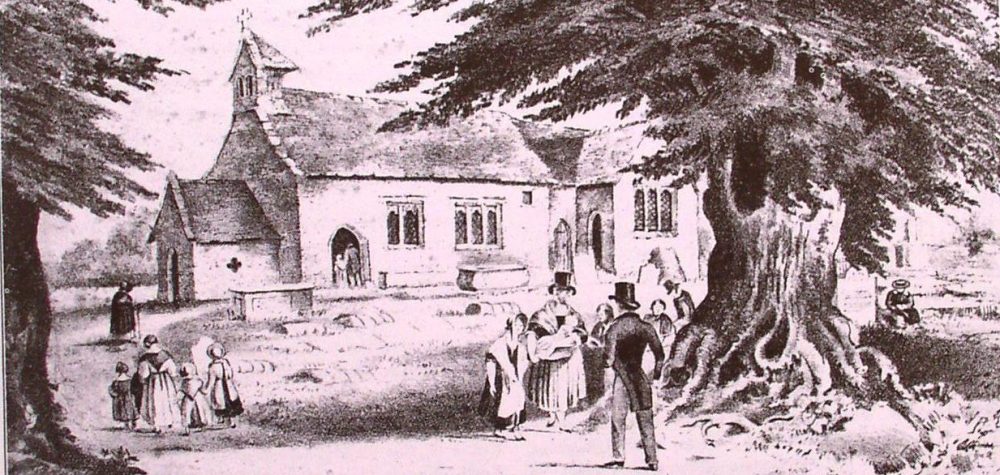
School House Goytre

Goytre School House

The School House was built at the same time as the school which was opened on July 13th 1868 by Col. Henry Bird, there were 170 parents and children attending the momentous occasion.

The first master was Arthur Hutchinson, Arthur was born in Lichfield, the son of James, a clock maker and Sarah his wife, on the census of 1861 when Arthur was 13 his occupation was given as pupil teacher, he didn’t remain long at Goytre British school as by 1874 the new teacher was William Pady.

William Pady came from Crewkerne, Somerset with his wife Eleanor and family but again did not stay long at the school.

By 1881 Henry England was the master, he was 26 born in Merthyr Tydfil in 1855, the son of John and Jennet Evans. He was married to Elizabeth and had a daughter Elizabeth Gertrude. He had left by 1883 to become headmaster of the school at Pontnewynydd.

William John Croot became the new master on the 1st June 1885, he remained at the school for many years. He was born in Bedminster Bristol in 1859, the son of William , a tanner labourer and Ann (nee Martin.)

William John Croot 

He was apprenticed as a pupil teacher to the Bedminster Boy’s British School, Bristol in 1873 and in 1877 he gained a Queen’s Scholarship, First Division and proceeded in due course to Borough Road Training College, London, where he spent two years, after which he was appointed headmaster of Govilion British School and held this post for five years.

In 1885 he became the headmaster of Goytrey British School and in April the same year married Phoebe Ann Pritchard in Crickhowell.

Their son Benjamin William was born on 14th October 1889, he also became a school teacher and remained living in Goytre.

Benjamin married Margaret Ann Jones in 1916 at St Peter’s Church Goytre.

The census of 1921 says William John Croot is 62, Phoebe Alice is 61, William’s occupation is head teacher elementary school for Monmouthshire Education Committee.

William Croot retired in 1932 after 43 years of teaching in Monmouthshire. He moved to Llanvihangel, Abergavenny where his wife Phoebe died in March 1932, leaving her estate valued £4,136 to her son Benjamin. William John Croot died in 1945, also leaving his estate of £2505 6s 6d to his son Benjamin.

Benjamin William Croot died in a convalescent home in Redditch in December 1978, his wife Margaret died much earlier in 1941.

On the 1939 census Ernest Sobey is the master, he was born in Swansea in 1895, the son of Thomas a railway shunter and Ellen. On the 1911 census he is an elementary school teacher at Forest Vach, the following year he married Elizabeth Myfanwy Thomas.

He died at Goytre School house on the 9th December 1943 leaving £1501 to his daughter Nita Mary Kathleen Sobey, a spinster.

Trinidad

Trinidad was built before 1911.

On the 1911 census William Kidner and his wife Lucy are in residence, William is 43, an iron moulder born in Glascoed, his wife Lucy is 44 born in Abergavenny.

William married Lucy Thomas in Abergavenny in December 1899.

The poor rate of 1914 is issued to William H Kidner.

An advert was placed in the Free Press in 1914 selling point of lay leghorn pullets at 4s 6d each – apply Kidner, Trinidad, Goytre.

By 1915 William and Lucy had moved to Pentovey Place, Little Mill where William died on the 28th October 1915 aged 44. He left £159 2s 3d to his wife Lucy May.

On the 1921 census Lucy is a housekeeper for two brothers at 7 King Street Abergavenny.

The Marquis of Abergavenny sold his properties by auction between 1918-1920 property no 37 is Trinidad, this was purchased by Mrs Mary Walker for £60, she paid a deposit of £6, leaving the sum of £54 payable.

On the 1921 census at Trinidad is a 51 year old widow Mary Walker, a retired farmer born in Llangwm, living with her are her two daughters, Mary Rhoda 25 and Gladys Clara 22, both were born in Goytre.

Gladys Clara Walker married William Arthur Evans a motor proprietor of Clarence Street Pontypool at St Peter’s Church on June 11 1923, followed by Rhoda Mary who married Frederick Joseph Walters also at St Peter’s on August 6 1923, Frederick was a collier and lived at Glan-y-nant Little Mill.

On August 8th 1925 at St Peter’s Church Ethel May Walker of Trinidad Goytrey married Charles Henry Denner, Charles was a butcher from Finchley.

It appears the Walker family left Trinidad late1925 as the electoral register gives Sarah Ann Voyce in residence. Sarah Ann (nee Williams) was born in Goytre, she had married James Voyce.

On the 1911 census they were living at Gafr Llwyd. Sarah Ann died in 1926.

In 1930 Fred and Polly Walters were in residence.

On the 1939 register John Roberts, a general labourer, his wife Ann and Anthony B Crump are living at Trinidad.

Ty Twmpyn

Ty Twmpyn

On the Earl of Abergavenny’s 1821 map Ty Tympyn is listed as number 89. On the 1841 tithe map it has the number 495.

The holder of the lease in 1755 was John Morgan a taylor (sic), of a cottage, 3 acres 2 rood 3 perches. The owner was the Earl of Abergavenny. The lease was renewed in 1770 again to John Morgan, aged 60, for the lives of his nephews, John Morgan and Thomas Lewis both aged 13.

John Morgan had a brother Charles. His sister Rachel married Thomas Prosser.

John Morgan, taylor (sic), died in June 1775, he was buried in St Peter’s Churchyard.

Unfortunately I cannot find any further mention of Ty Twmpyn until the Earl of Abergavenny’s survey of his estates in 1821 when it says William Williams and Thomas Prosser are both lease holders of Haymeadow and Ty Twmpyn.

Thomas Prosser is the occupier of Ty Twmpyn in 1821, a cottage and land, numbers 495 – 496 – 500, containing 2a 0r 21p.

By 1824 the occupier had changed to John Powell and his wife Diana, (nee Morgan) John and Diana had a son Thomas baptised at St Peter’s Church on 11 April 1824, John’s occupation was given as farmer.

John Powell was born in Bettws Newydd, his wife Diana in Nash.

By the 1841 census this had changed to John Williams, a 60 year old labourer, his name also appears on the tithe apportionment, stating the Earl of Abergavenny is the owner of 2a 3 rood 26 perches, paying 7 shillings to the rector.

Living with John Williams is the Walters family. John Walters is 50, Mary his wife is also 50, their children are Harriet 14, William 12 and eight year old Ann.

On the census of 1851 John Williams is still residing at Tee Twympin, he is now a 72 year old widower born in Llanvrechva.

On the Rev. Thomas Evans tithe accounts for the years 1855/7 the lease for Ty Twmpyn is held by Walter Williams with John Williams still in residence., the leaseholder in 1857 is changed to Henry Edwards.

The Earl of Abergavenny gave notice for John Williams to quit the property by 29th September 1857.

Unfortunately I am unable to work out who was at Ty Twmpyn on the 1861 census, part of the parish census is missing and the part which is available the enumerator decided not to name most of the properties. Although it must have been John Williams as in the overseers accounts of 1863 John Williams  of Ty Twmpyn was given three shillings poor money.

On the census of 1871 George Coles and his family had moved from the Old Cider Mill to live at Ty Twmpyn. George was a 51 year old miner born in Somerset, Susan his wife is also 51 born in Bettws. Living with them are their children Emily 21, George 19 and Eliza 17, they were all born in Trevethin. They also had a visitor, 8 year old John Jones born in Llanvihangel.

George Coles died in March 1875 followed by Susan in March 1879.

Daniel Crompton took the lease for Ty Twmpyn from the Earl of Abergavenny , lease 16 containing numbers 507, 716 and 811 on the tithe map.

The 1881 census says Daniel Compton was a 62 year old agricultural labourer born in Wiltshire, his wife Mary is 40 born in Goytre, they have three children, born in Lanvair, John 9, Sarah 6 and two year old Matilda.

On the 24th February 1884 Sarah was punished for missing school when sent by her parents. (Penperlleni school log book page 333)

Also written in the school log book on the 7th January 1889 page 415

William Crompton has been stricken with paralysis.

On the census of 1891 Daniel Crompton is 62, Mary is 50, children Sarah 16, Matilda 12 and William 8.

In 1898 poor William Crompton is sent to the workhouse with pneumonia, no date of release was given.

By 1901 the census says Daniel is 80 years of age saying he is a retired coachman, Mary his wife is 60, son John is 29 and single, Matilda is now 22, a school teacher and William is 18.

On the 18th November 1904 William Crompton died, he was only 22 years old.

Daniel Crompton died in February 1908 followed by Mary in January 1911, they were buried in St Peter’s churchyard, as was William in 1904.

Son John is still living at home on the 1911 census, he is single, aged 39 he works as a corrugated iron pickler. Living with him is his sister Matilda who married Albert Edwards (33) of Bettws Newydd, they had been married for 8 years, have two children Clara Josephine 7 and Hilda Constance 2, sadly they also had another child, John Reginald who died in 1907 aged one month.

The Earl of Abergavenny sale of properties in 1920 included Ty Twmpyn, says the new house was built in 1913, has 3 acres 2 rood 25 perches, rental is £14 per year, tithe 9s 11d, the property was sold to Mrs Watts of Llandewi Rhyderch for £650.

The information given on the census of 1921 says John Crompton is head of the household, he is now 50 years and two months old, a farm labourer working for David Morgan. Living with him is is brother-in-law Albert Edwards who is 44 years old, a blacksmith,

His sister Matilda Edwards, who is 42 years and four months old and their children, Josephine 17, Hilda 12 and William 9, all born in Goytre and all in full time education.

By 1925 there is a new resident at Ty Twmpyn in Gerald Cornish and his wife Ann, (nee Price) they had married in 1916. Previously living at number 2 Chapel Ed, they left in 1930 and moved to Sunnyside.

On the 1939 Electoral register they were living at Roselyn, Mamhilad, where Gerald’s occupation is a GWR signalman.

I am unable to find any further information about Ty Twmpyn.

Coalbrook

Coalbrook Cottage 681 on the 1841 tithe containing 3 acres 1rood 34 perches

In 1784 the parish records say Francis Valant was the constable for Coalbrook which contained a house and garden, field behind the house, little field he was paying the rector 10 shillings tithe.

On the census of 1841 the owner is Ann Jones and the occupier of Coalbrook is William Bevan 55, a labourer, born in Trelleck (he married Mary Williams in Llanover Church) Mary is now 40, their children are John and Isaac 15, Ruth 13, William 12, Abraham 9, Hester 6, Moses 4 and one year old Philip, they were all born in Monmouthshire.

William Bevan is still in occupation of Coalbrook on the census of 1851 where he is now a 64 year old woodcutter, living with him is wife Mary and children Isaac, Ruth, Hester, Philip and Mary.

In 1861 William Bevan is still at Coalbrook, he is now a 72 year old labourer living with him is daughter Esther (Hester) who has now married Thomas Cobner who is a shoemaker, they have a 3 year old son called Jacob, both Thomas and Jacob were born in Goytre.

On the 1st of March 1864 when he was 28, Isaac Bevan was taken to Abergavenny Asylum, he was said to be in good bodily health, a labourer said to be suffering from congenital imbecility, he remained in the asylum until his death in May 1900.

William’s wife Mary Bevan died aged 65 in 1866, she was buried at St Peter’s Church Goytre,

Coalbrook was put up for sale by auction on the 5th July 1867, cottage, garden and 3 pieces of meadow land arable land.

In February 1869 poor William Bevan was drowned in the canal at Mamhilad, full article in the Free Press.

This meant that by the time of the 1871 census a new family are in residence, Thomas Jenkins and his family, Thomas is 63 a labourer born in Goytre, Anna his 49 year old wife is also born in Goytre, their children are David and Isabella Hutchinson,  (Thomas’s step-children) Elizabeth Jenkins, 25, a laundress, 3 year old granddaughter Elizabeth James.

In 1874 the Well Dispute began when the Rev. Thomas Evans refused a widow to collect water from a well at Black Beech as she had removed her children from his school at Nantyderry to the new school at Goytre.

One of the witnesses William William stated he was over 78 years of age and was born at Coalbrook Cottage where both his father and grandfather had lived there before him, his father was in service to old Mr Jenkins, tenant of Walnut Tree Farm.

On the census of 1881 William Williams a 34 year old haulier along with his wife Sarah 44, born in Somerset and their children, Martha Jane (4) and Anna Marie (7) were now in residence.

This had changed by 1891 to Edward and Martha Williams, they were both aged 68, Edward says he is a farmer born in Whitchurch, Martha was born in Graton, Somerset.

By the census of 1901 Edwin and Sarah Ann Evans were in residence, they were both 49, Edwin was a wheelwright from Sebastapol, his 26 year old son William is also a wheelwright, daughter Catherine 16 is at home, fourteen year old Albert is a house boy, Arthur 12 is in school, all the children and Sarah Ann were born in Goytre.

An advert was placed in the Free Press on the 27th September 1901 by the owner of Coalbrook, Joshua Davies of Greenmeadow Farm Glascoed, offering Coalbrook for sale saying the rent is £7 10s per annum, the occupier is John Jones.

The new owner of Coalbrook in 1910 was Oliver James Lawrence, a butcher from Crane Street Pontypool he paid £455 for the cottage and 3.5 acres, he let the property to Edwin Evans of Little Mill for £15 per annum.

The 1914 poor rate says Frederick Williams in occupation, the owner Oliver J Lawrence.

The census of 1921 gives two separate families in occupation of Coalbrook the first family is Frederick Williams 44 from Lansoy, a general carpenter at Mrs Wilks’ building firm, his wife Hannah is 36 from Laugharne, Reginald 12  was also born in Laugharne, Stanley 10, Wilfred 4, Alfred 6 and Victor 1 were born in Goytre.

The second family are Mary Ann Mainwaring an 80 year old retired market gardener from Radnorshire, her son Sidney 45 was born in Llanover, he is a farm worker for Mr Lewis of Tyr Ewen, daughter Edith Isaacs is 46, son in law Arthur Isaacs is also a farm worker at Mr Pritchards Ty llwyd Farm Mamhilad, living with them is 11 year old granddaughter Estelle Davies who was born in Goytre.

In December 1935 Reg Williams caught his leg in a thrashing machine whilst working for Evan Davies of Penwern, a court case followed.

The electoral register of 1939 gives Charles Williams a smallholder and carpenter with his wife Hannah in residence at Coalbrook, their children are sons, Herbert, Arthur, Victor, Francis and John all helping in agriculture and poultry farming in their family business.

Lynwood

The first mention of Lynwood is on the 1911 census when Alfred Thomas a 66 year old widower from Llangattock, son Edgar 34, a blacksmith born in Lanvair Kilgedin along with his daughter Edith 29 who had married George Sexton 29 from Hereford and grandchildren Annie 2 and Edith 3 both were born in Kemys Commander.

The 1914 poor rate says the owner is Edgar Thomas.

Lynwood was sold to L R Bowen of Oak Cottage in 1920 for the sum of £260.

The property is not mentioned on the census of 1921 but in 1923 Sidney and Laura Jenkins are in residence.

The 1939 electoral register says George and Nellie Ricketts are at Lynwood, George was born in 1896 he is employed as an underground labourer, Nellie was born in 1904, children Fred and Donald are both attending school while Ellis and Edmund are under school age there is also one closed account. Ellis died in 1945 in Pontypool. The photograph is George and Nellie Ricketts.

I remember the James family at Lynwood in the 1950’s/60’s they kept a small shop on the premises.


Nantyderry Railway Cottages No.4

Number 4 Nantyderry Cottages was not occupied on the census of 1891.

On the 1901 census 26 year old William Powell a signalman from Hereford with his wife Harriet 24 also from Hereford were in residence, staying with them is their 9 year old relative from Ebbw Vale, Sophie Hart.

In 1911 Sarah Taylor a 72 year old widow, her son Jesse Taylor and his wife were in residence, Jesse was 34, born in Rhyd-y-meirch Llanover the son of George, a carpenter, he gave his occupation as a butler, Sarah his wife was born in Bristol.

In 1921 gardener Eli Henry Jenkins with his family have moved into number 4.

Eli came from Ledbury he was 33, his wife Viola, 33 from Swansea, as was a visitor, Annie Solomon aged 55. Eli and Viola’s children are Joan Viola 2 and 2 month old Eric Henry.

The electoral register of 1939 says Ernest Rouse, a gardener and chauffeur born in 1913 and his wife Mary Ellen born 1913 and their son Anthony who is under school age are in residence. Ernest Rouse died in Cheltenham in 1994.

Nantyderry Railway Cottages No.3

Nantyderry No. 3

The census of 1891 says Henry Neate aged 25, a railway signalman born in Hereford is residing at number 3 with his family, wife Clara, 23 from Llanvihangle Crucorney and their son Albert Henry 2, born in Goytre, Living with them is Clara’s sister Sonia Harrison aged 17.

Henry Neate married Susannah Mills and had three children, Harry, Edwin and Hannah, he was moved to Cheltenham with his occupation as a signalman, he died in Cheltenham in 1930 leaving probate of £1278 0s 5d to Alfred Roberts assistant post superintendent.

By  1901 the new occupier of number 3 was Charles Southam also a signalman, Charles was 25 from Hereford, his wife Sarah 23 was from Abergavenny, they have a one year old son Charles who was born in Llanvihangel Crucorney.

By 1911 Tracy Leeworthy 30 a GWR signalman and his wife Maud, daughter Mollie Gwendoline along with their niece Madeline Florence Sweet and boarder Albert Price were in residence.

They remained at  Nantyderry until about 1918 as the new family who took residence was Charles Wagher and his wife Annie, followed shortly in 1921 by Emma Collet a widow, her husband John having died in 1918, Emma and John’s children were John 25, a gardener working for D Knight, Nantyderry, Blanche Maria 14, and a boarder Sandford George 34 from Gloucester. They moved back to Worcestershire at some point.

By 1935  Percy, Doris and George Jones lived at number 3.

By 1937 William Rouse and his family took residence, they remained in Nantyderry for many years moving into the station house by 1939 as on the 1939 electoral register for number 3 is Reg Gwatkin, a tiler and plasterer born in 1914, with his wife Winifred born in 1909.

Reg Gwatkin died in 1964

William Rouse died in 1960 aged 83 and Harriet in 1940 aged 76.

Nantyderry Railway Cottages no.1

I am unable to ascertain who is at number one until the census of 1891 when Stephen Gregory 76 from Corsham and his 75 year old wife Mary from Ireland are in residence.

This had changed by 1891 to Maria Taylor 63, she occupied the grocer’s shop, living with her are her sons Benje 32, a tyler and plasterer, Jesse 24, a groom and 22 year old daughter Eliza, all the family were born in Llanover.

By 1901 David Hughes, 28 year old from Carmarthen employed as a cattleman on a farm was in residence along with his family, Ellen his wife was 30 from Conwy, children Alice 7, Winifred 4 and one year old Griffith, who were all born in Carmarthen.

In 1911 Martha Thomas a widow born in Goytre is in residence, she is 71 years old.

By 1921 the Allchurch family had taken up residence, Charles Tasker Allchurch married Beatrice Ellen Salter in 1909 at Badsey church Herefordshire.

Prior to coming to live in Nantyderry Charles had a military tribunal relating to his exemption from military service, the document dated 17th October 1916 says he is 34 and working at Mr Blakes market gardens of 9 acres and being the sole labourer on the establishment was granted temporary exemption until 1st January 1917.

On the census of 1921 Charles Tasker Allchurch is 39 from Bredforton Hereford, he is employed by D Knight’s market gardens in Nantyderry, Beatrice his wife is 30, their children are Hilda 11, Alfred 9, Margaret 5, Florence 4 and two year old Wilson, all the children were born in Badsey.

By 1926 the Allchurch family had moved to Little Mill where they were successful market gardeners.

Charles Tasker Allchurch died in November 1947, probate of £2694 1s 9d was left to Beatrice., he is buried in St Peter’s church.

For a very short while Alice Flowers lived at number 1 but had left by 1927.

On the 1939 electoral register says Thomas Edward Fay, a retired GWR platelayer born in 1874 and his wife Laura born in 1870.

Thomas Fay was born in Havant, he married Laura Reed in 1911 and lived with his father-in-law, a general haulier in Llangibby. Thomas and Laura had a daughter Caroline Maud who was 2 in 1911. They moved from Nantyderry to St Helen’s Lancashire about 1950 where Thomas died in 1956 followed by Laura in 1960.


Nantyderry Railway Cottages No.2

Nantyderry Railway Cottages No.2

The Rev. Thomas Evans about 1869 built the cottages. Living at number two in 1881 was Edwin Poole, Edwin was born in1843 a few miles away in Kemys Commander, the son of Dennis an agricultural labourer and his wife Elizabeth.

He married Elizabeth James at St Woolos in 1875, on the census Elizabeth is 40 she was born in Llanelly.

On the census of 1871 Edwin was a servant at the Cross Inn, Lanvair.

Edwin and Elizabeth Poole remained at the cottage for many years, in 1891 he was a gardener, living with him on the census besides his wife Elizabeth was a boarder called William Beard who was a railway porter born in Westbury Gloucestershire.

Ten years later on the census of 1901 Edwin had become the second gardener, possibly at Nantyderry House.

Edwin was still a gardener in 1911, he is now 67, living with him and Elizabeth is Charles Ecott a coachman aged 35 from Hereford.

Elizabeth Poole died in January 1915, she was buried at St Peter’s Church. Edwin remains at his cottage although on the census of 1921 it says Edwin is living on his own at number 4. (I have had difficulty in establishing who lived in the cottages due to the enumerators having different ideas as to the way they were numbered, or in some cases, no numbers whatsoever).

Edwin died in August 1927 and was buried along with Elizabeth at St. Peter’s Church Nantyderry.

I have searched the electoral registers for the new residents of the cottages but once again the house numbers are missing which means I would have to guess who lived where.

In 1939 the electoral register says Archibald Rosser, his wife Anne and their 4 children were living at number 2.

16 May 1945 Western Mail – for sale,  3 cottages owned by Mr M O’Sullivan

There is an adult baptism at St Peter’s in July 1951 of Glyn Harvey Charles Arthur born in 1928, Glyn is living with his parents Henry and Frances at number 2. he is a British railway employee.