Star – Chapel Ed

No. 796 on the 1841 Tithe Map.

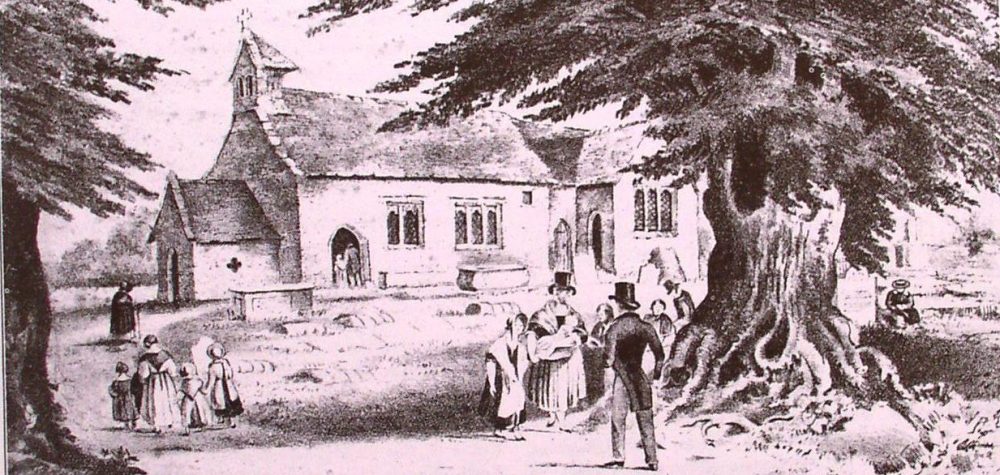
In 1776 John Stephens took the lease for the property from the Earl of Abergavenny for a cottage, garden and 3 parcels of land for the lives of John 38, Catherine his wife 38 and son William aged 2.

John and his wife Catherine had several children baptised at St Peter’s church, John in 1776, Mary in 1779 and James in 1780.

John Stephens died in 1793, he was buried at St Peter’s church Goytre, His wife Catherine remained at Star, she paid the land tax for the property in 1798. (Catherine died in March 1832 also being buried at St Peter’s.)

A new lease from the Earl of Abergavenny was granted in 1820 to Philip Jenkins (but says now deceased) on the lives of John, son of William Jeremiah then aged 9, John Stephens, the son of William Stephens of Goytre, then aged 8.

The tithe of 1821 says William Stephens is in occupation of Star and the owner is the Earl of Abergavenny. On the electoral register dated 1832/4 says William Stephens near the Chapel.

The census of 1841 gives more information, William Stephens is still living at Star, he is 65, a labourer, Mary his wife is also 65, living with them are sons William 30, a labourer, Thomas 20, no occupation given, Elizabeth Lewis 70 and Joanne Ricks 14.

On the 1851 census William is 77, a labourer born in Chepstow, Mary is 74 born in Llangibby, they have a servant, 20 year old Jane George from Trevethin.

The lease for Star changed in 1859 to 51 year old John Ballard, for the lives of himself, his wife Mary also 51 and William Stephens of Pontymoile aged 12.

In 1860 John Ballard voted for Thomas Jenkins to become highways assessor for the parish, a position Thomas Jenkins won.

The census of 1871 says John Ballard is an annuitant aged 66, Mary his wife is also 66, they were both born in Monmouthshire. In September the same year John Ballard died and was buried at Chapel Ed. Mary remained at Star until her death in 1882 aged 77.

The next family to occupy Star is the Stinchcombe family, on the 1891 census William is 37, a farm labourer born in Monkswood, Annie his wife is 30, born in Llantilio. William and Annie were married at Frogmore Street Church Abergavenny on December 29th 1879. In 1894 they sadly lost a month old baby boy, Henry George who was buried in Chapel Ed churchyard.

In 1901 William is 47, he is now a cider maker and market gardener, Annie is 42, their children are William 14, engaged at home, daughter Lilly is 12, at school and Charles who is 10, all the children being born in Goytre.

The Earl of Abergavenny sold most of his properties in the parish in 1920, Star Cottage was up for sale, with the tenant, William Stinchcombe paying 10s rent, land tax 3s 9d, tithe 9s 4d, sitting tenant William purchased Star for £180.

William Stinchcombe remained at Star until his death in 1940, on the 1911 census he is 57, a market gardener, Annie his wife is 51, son Charles is 20, a blacksmith. In 1921 William is still a market gardener, being helped by his wife Annie, Charles is now 30, still a blacksmith, living with them is their grandson Reece Charles Cook aged 16, he is a labourer at the clay pit in Little Mill but out of work at the time of the census.

William and Annie Stinchcombe celebrated their Golden Wedding in 1929, having lived at Star for 47 years, Annie having taken their produce to Pontypool market every Saturday during those years. William had been a lay preacher at Saron Chapel where he was buried when he died in 1940.

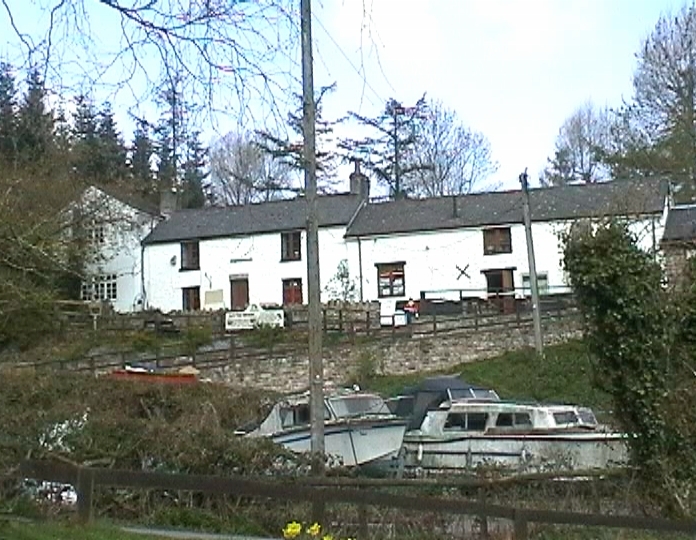
Goytre Wharf

No. 306 on the 1841 Tithe Map.

Goytre Wharf was built on land previously belonging belonging to Mr Sparrow but sold to the Brecknock and Abergavenny Canal Company in 1810. On February 9th the same year a decision was made for a new coal and lime kiln wharf at Goytrey in Mr Sparrow’s wood.

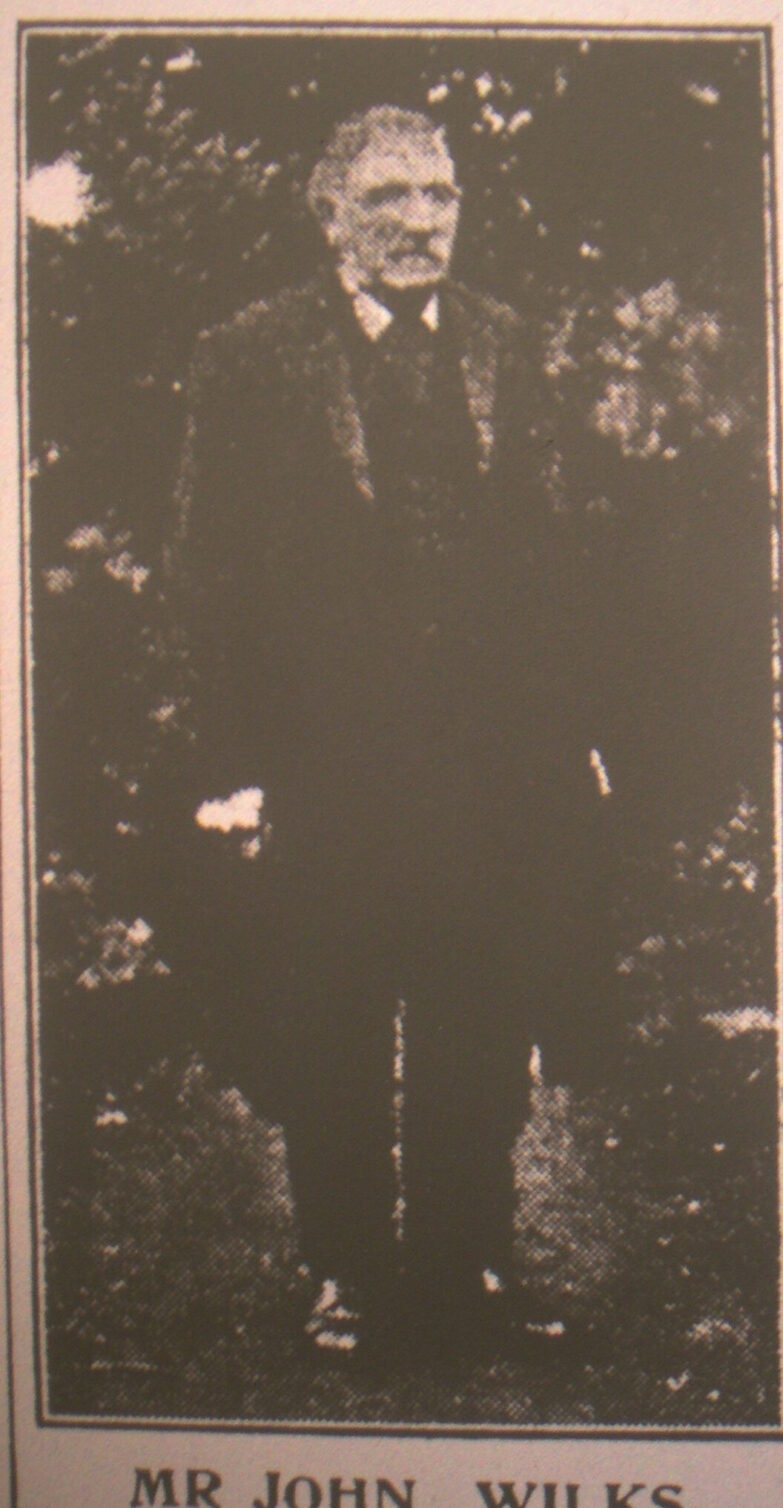
In 1809 John Wilks was employed as a counter on the canal to keep check on labour and attend to the execution of the unfinished part of the canal under the engineer. He was paid £75 per year. John Wilks was about 35 years old and came from Northgate in Gloucestershire.

Canal cutter Thomas Dunn was to complete the Goytre section of the canal by November 1811 at a total of 7060 yards at a cost of £2280.

In June 1810 John Wilks salary was increased to £90 as the other counter, David Jones, is dismissed. In July Mr Crossley is ordered to proceed with building the wharf at or under the estimate.

Thomas Dunn’s name first appeared the the parish overseers account in 1811 stating he was the agent for the wharf and he be empowered to purchase Richard Pruett’s house on the Goytrey wharf provided it does not exceed twenty guineas.

Morgan Francis was appointed machine clerk on the 26th June 1812 at a salary of 14 shillings per week plus house rent and small firing, Thomas Phillips was appointed to erect another two kilns identical to the first two.

John Wilks applied for an alehouse license in 1812, the surety of £5 was paid by Thomas Lewis and David Thomas, the alehouse or Inn to be called the Kings Arms, the license was approved for one year from September 18th, the surety had increased from £5 to £10, this was paid  by Thomas David. The license for the alehouse was rescinded in 1815, no alehouse being allowed on the premises.

An iron weighing machine was purchased from Whitmore and Sons in September 1812 at a cost of £103 2s 6d.

In 1812 John and Eve Wilks had twins, Enoch and Elias  baptised at St Peter’s Goytrey on December 6th, sadly both twins died, Elias at two months and Enoch at 3 months.

Wharfinger Morgan Francis and his wife Elizabeth had a son baptised also at St Peter’s in 1814. The same year Ann, daughter of William and Ann Edwards, coal and lime agent, was also baptised at St Peter’s.

In February 1815 Thomas Dunn was permitted to occupy the house which he had erected on company land at the wharf and be allowed to build a wattled workhouse and stable between the cottages now occupied by William Edwards and John Wilks, and 15 yards of garden. The same year Thomas Dunn is said to be in debt and is now advertising his boats and wagons for sale.

Susannah, a daughter of Morgan and Elizabeth Francis was baptised at St Peter’s in 1816.

John Farquhar took a seven year lease on the wharf in 1817, at a cost of £50 per year, it was to include Machine House, the limekilns and the cottage occupied by Thomas Dunn but not the house occupied by John Wilks, he also had to pay an extra £25 to build a stone wall to separate the coal and timber yards.

By 1818 Thomas Dunn had left the area, John Farquhar is the out-occupier, he requested secure fencing to separate the wharf from the canal, the request was refused.

Morgan Francis in 1818 is being paid £28 for a quarter year, John Warner, machine man, is being paid £40 per year in 1822.

John Farquhar’s lease expired on December 31st 1824, he is given notice to repair the premises. Prior to this on the 28th September, the premises were put up for lease at The Greyhound Inn. This new lease for the premises was taken by John Mound, it is said that repairs were needed for one part of the counters house.

A new name appears at the wharf is 1826 when John and Elizabeth Prosser have their child John baptised at St Peter’s church, the church register says John Prosser is a labourer at the wharf. The following year their son William is baptised, also at St Peter’s.

After working at the wharf for eighteen years John Wilks is discharged from his post with one month’s notice. He remained living at the wharf until his death in February 1835, and he was buried at St Peter’s, (Eva, his wife died in Abergavenny in November 1855.)

Following the death of John Wilks his son Samuel took the position of coal merchant at the wharf. He and his wife Mary had several children, Samuel, William and Mary but sadly Mary died at a young age of 29 in April 1839.

The census of 1841 says Samuel Wilks is 35, a coal merchant, living with him are his children William 4 and two year old Mary (two other children had died, Samuel and Eliza) servant Hannah Williams and 15 year olds Elizabeth Lewis and Mary Evans. The tithe says the wharf is owned by the Monmouthshire Canal Company.

In 1843 William Williams from Llanvihangel is at the wharf, it is from this date he starts his accounts book, the following year he married Susan Gould from Lanvair Kilgeddin, Susan had been a servant at the rectory.

In 1850 William Williams signed the petition against the police (there was no reason given for this petition) he said his religion was a dissenter, (a member of a non-established church.)

The census of 1851 says William Williams is 43, a coal merchant, his wife Susan, 39, is from Devonshire, their children, all born in Goytre, are Mary 6, George 5, James 3 and John 2,  living with them are servants Thomas Eatons 25 from Llanellen and Thomas Brooks 17 from Clytha.

At the wharf number 2 on the 1851 census is Margaret Jones 26, wife of a baptist minister with her son Edwin, one year old; a servant Mary Jones 16; and visiting her on the night of the census was E Williams, a minister born in Peterchurch

William Williams was paying tithes to the rector for the wharf and three other properties.

Edmund Lewis, the local builder wrote in his diary in 1852 that he was slating the thrive at the wharf for William Williams and that he was also slating and whitening inside.

William Williams left the wharf in 1854 and moved to Park-y-brain.

Richard Prosser became the new tenant from year to year starting from the 25th March 1857 for the wharf, a cottage at Brecon and a warehouse at Abergavenny at a cost of £87 p.a.

Martha Jarret, a 79 year old widow was living at the wharf on the census of 1871, she was a straw hat maker born Mary Lewis in Goytre, she had married Abraham Jarret of Llanfrechfa on the 9th May 1813 at St Peter’s church.

There is an entry in St Iltyds Mamhilad church records in September 1872 which says Henry Jeremiah, son of William Jeremiah of Goytre wharf married Hannah Thomas,

In the mid 1870’s the Gwatkin family had moved to the wharf, his children, Alice and Edwin were attending Goytre British school, an entry in the school log on 1st May 1878 says Edwin fell into the canal and was nearly drowned but was rescued by the Misses Byrdes.

On the 1881 census Edwin Gwatkin is 34, a master carpenter employing one man, his wife Louisa is 35, their children are William 9, Edwin 7, Annie 4, Laura 2 and William Parry a 53 year old carpenter.

Edwin Gwatkin and his family are still at the wharf on the 1891 census, he is now an overseer for the parish, living with him is his wife Louisa, children Edwin 14, Annie 12, Laura 8 and Mabel 7.

New families are living at the wharf by 1911, at number 1 is Arthur Ffoyd, a signalman from Ledbury with his wife Lizzie from Cardiff, their children are Annie Maud 7, Ronald Arthur 6 and 2 month old Gordon Raymond.

At No. 2 is William Evans a farmer from Cheltenham, Mary his wife and daughter Elizabeth.

This had changed again by 1921 when Henry Probert and his family are at No.1, Henry is 55 a farmer from Hereford, Emily his wife is 56 born in Mamhilad, living with them is Mary Evans 78, from Biships Castle.

At No. 2 is Henry Probert’s son Alf who is 25, he is working for David Bowen as a plasterer, his wife is Gladys 24, born in Mamhilad.

The electoral register of 1945 gives Florence Jones at No.1 and Esther Phillips at No. 2 the wharf.

Tyr Ewen

Tyr Ewen now Highfield was 818 on the 1841 Tithe Map.

Jenkin Daniels, owner of Tyr Ewen, is overseer of the poor for his own lands in 1774, followed by constable in 1779, this had changed by 1797 when William Williams is mentioned as overseer for late Jenkin Daniels. Again in 1813 John Watkins is mentioned as the overseer for late Jenkin Daniels. Another mention in 1817 says James Lewis is constable for Mr Thomas Williams clerk, late Jenkin Daniels.
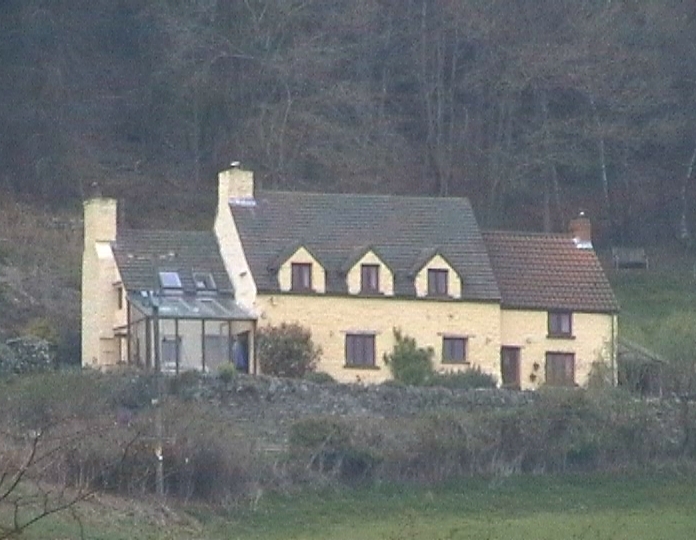
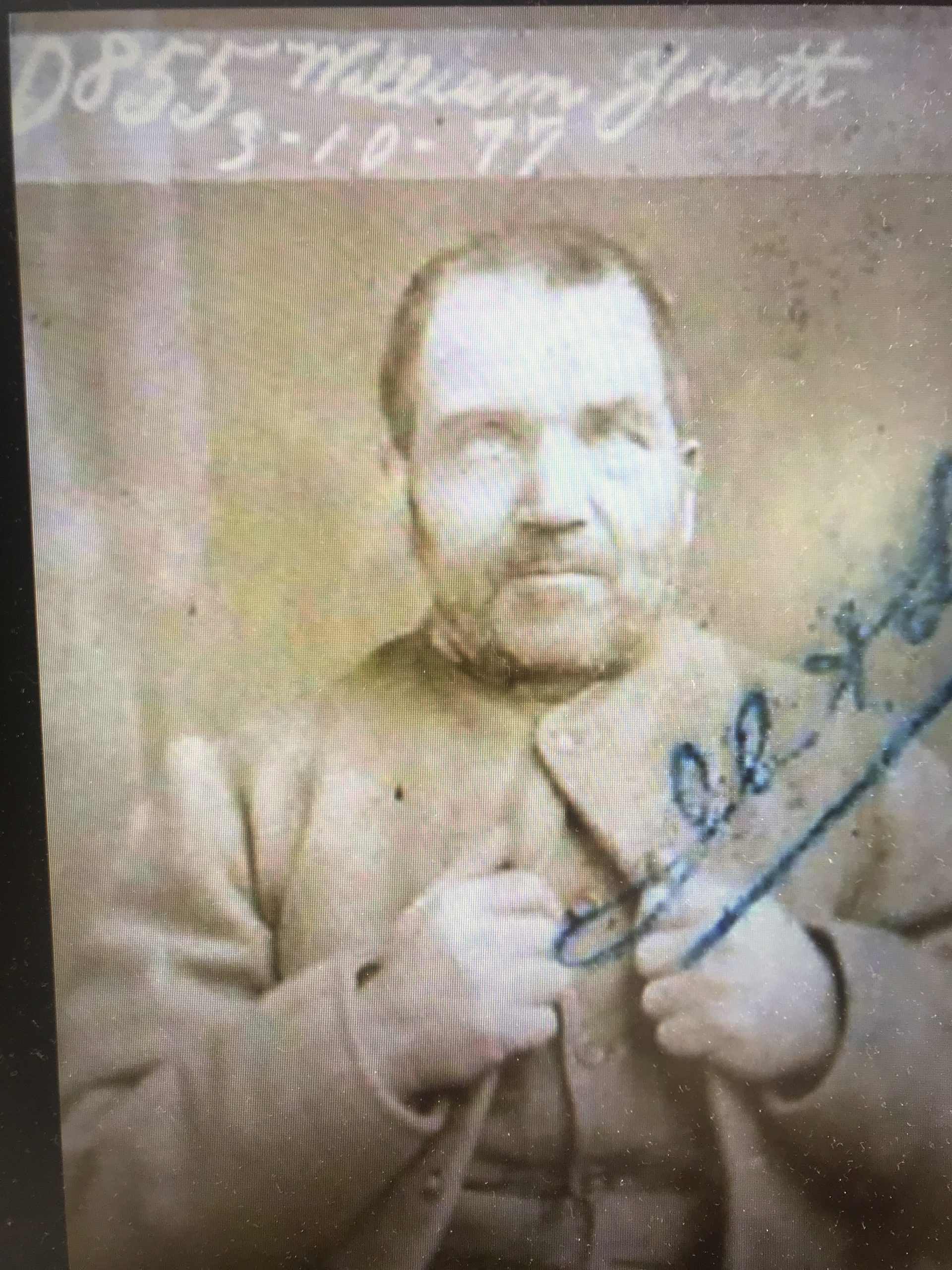
There is a baptism at St Peter’s church on 12 April 1819 for Thomas, the son of James and Mary Lewis, Ty’r Iwen, James’s occupation is given as farmer.

Jenkin Daniels is still being mentioned in 1826 when John Lewis is the constable for late Jenkin Daniels, Tyr Ewen.

On 1 June 1834, James Morgan of Tyr Ewen is buried at Goytre Church, he is 77 years old. The census of 1841 says Ann Morgan is 80, her son James is 30.

The tithe of 1841 says Ann Morgan in hand (owner,) the fields are Cae Gwyn, Cae Dan yr Alt, Cae Pin Bryn, Little Orchard, Little Meadow, Homestead and lane, Cae Pen yr Heol, Cae Cenol, Field under the Alt, totalling 14 acres 16 perches paying £1 17s 1d to the rector. The same year, overseer of the poor for Ty’r Ywen is Edward Lewis.

In 1850 Owen Davies becomes the occupier of Tyr Ewen, the owner is James Morgan Church. The census of 1851 says Owen Davies is 65, a farmer of 20 acres, born in Trevethin, Mary his wife is 55 born in Llantilio; living with them is William 23 born in Mamhilad as was Elizabeth 18, Eliza 13, John 9 both born in Llanover, and James Morgan 45 born in Lansoy..

The electoral register 1852 gives the Rev. Arthur Williams of Usk as the owner of freehold land Tyr Yewen. This had changed by 1859 when William Nicholas owner of Tyr Ewen signed a petition against paying taxes for the widening of Newport Bridge. The electoral register of 1870 says William Nicholas is still the owner.

The 1861 census is missing for part of the parish, this included Tyr Ewen.

Lewis Edmund the local builder wrote in his diary on the 13 December 1865 “at Usk with bill for £6 15s 8d to W D Nichols for work done at Ty Ewen Goytrey.” He wrote again on 24 December 1868 “at Owen Davies repairing the tiles.”

The census of 1871 says Owen Davies is now 83, a farmer, Mary is 75, their grandchildren are living with them, (they are the children of her daughter Louisa who is the heroine of the Vicar and the Well saga.) Mary Waite 7, William 6, James 3 and Elizabeth 1.

Mary Davies died in 1874 aged 77 followed by Owen Davies in 1877, they were both laid to rest at St Peter’s churchyard.

I cannot find anyone on the census of 1881 living at Tyr Ewen, shortly after this date William Harris is mentioned for house and land as tenant.

On the census of 1891 Merrick Jenkins and family are occupying the property (which the enumerator has called “Yew Tree,”) Merrick is 37, a wheelwright born in Clytha, his wife Mary Ann is 39 born in Goytre, their children are Mary Ann 15 born. in Llantrisant as was Elizabeth 14, and Edward 11 born in Usk.

An advert in the Free Press on July 15 1905 offers Tyr Ewen for sale, a desirable farm of 14 acres in occupation of Merrick Jenkins as yearly tenant paying £24 rent.

By 1910 William Lewis is the owner, the gross value for Tyr Ewen is £15 paying a rateable value of £13.

The 1911 census says Margaret Lewis is 46, born in Llanthewy, Percy Thomas  is 14, born in Llanover, staying with them is a nephew, Victor John Pinches born in Longhope, Ada Sharp 16 from Llanvair is a domestic servant and William Arnold 26 born in Bettws Newydd is a farm labourer.

Percy Thomas Lewis was killed on the 2nd July 1918 whilst serving with the South Wales Borderers, (a detailed history of Percy is in Tim Dowles book Goytre at War 1914-1918).

In 1921 William Lewis was farming at Tyr Ewen, he was 56, born in Llanover, Margaret his wife also 56 was born in Llanthewy Rhytherch, a servant Esther Thomas was 19 from Aberdare, living with them is Ernest and Gladys Booth from Ynysddu.

William Lewis remained at Tyr Ewen for many years until 1932 when, in September, a ‘for sale’ advert appeared in both the Free Press and the Western Mail, auction to be held the Greyhound Abergavenny by Straker and Chadwick on behalf of the owner/occupier William Lewis. Tyr Ewen was withdrawn from sale at £1358.

The electoral register for the years 1934-1938 show Frederick and Emily Florence Davies at Tyr Ewen, the next electoral register in 1945 shows a change of property name from Tyr Ewen to Highfields when Joseph T and Mahala Williams were in residence.

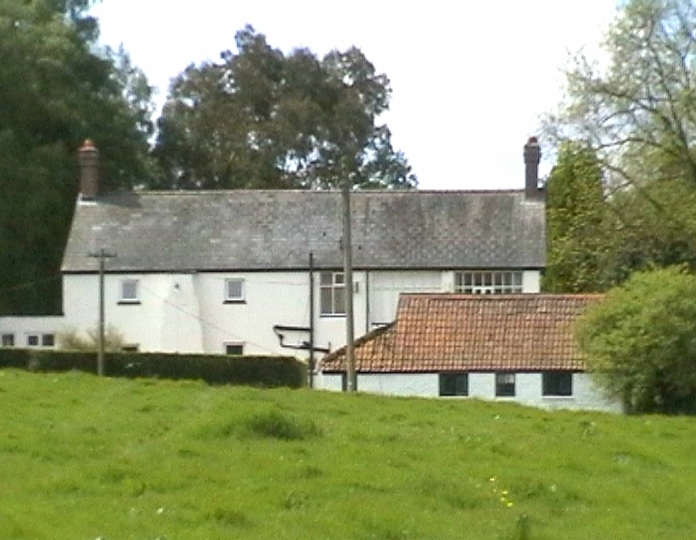
Penstair

(Note: I have used the various spelling of Pen-y-stair as it was written in the documents.)

A document in Abergavenny Museum dated 1658 says there is a marriage settlement between George William Mathew and Jane Thomas, the daughter of Susan Lewis by a former husband.

The will of Mathew William Mathew dated 1700 says Mary his wife and  son William are to inherit everything, £5 to Philip, David, John and Catherine, witness to the will was Oliver Morgan.

Mary died in 1711, she was buried at Mamhilad church.

An indenture dated1712 between William Mathew, (the son and heir of the late William Mathew) and John and Catherine Morgan. John and Catherine Morgan had inherited property in Goytre from his brother Samuel Morgan.  

In 1739 William Mathew died, he was also buried at Mamhilad.

William Morgan (aged about 33) then held the lease from 1742, on the lives of his son John aged 9, and his brother John aged 27.

In 1744 another death occurred in the Mathews family, Grace the daughter of William Mathew died and was buried at St Iltyd’s, Mamhilad.

Catherine Morgan, the wife of William died in 1753 she was also buried at Mamhilad church.

William Morgan of Penstair and Martha Jones of Cwmyoy were married on 30th March 1764. William Morgan’s name appeared in the overseer’s accounts as being the constable for Penstair in the years 1765-1770.

William Morgan of Penstair, yeoman, leased land which mentions his wife Martha, 30, sons William 3 and John 1. On the 17th August 1770 Catherine, the daughter of William Morgan died and was buried at St Peter’s church Goytre.

In 1771 William Morgan took a lease from the Earl of Abergavenny for Craig-yr-Alt; the same year his son William died, the following year, 1772 a son William was baptised, but he died shortly afterwards, then in 1774 Martha, William’s wife died. In the following years William became an overseer of the poor for the parish also holding the position of surveyor of the highways.

In 1788 William Morgan leased more land in which it is mentioned he has only one surviving son, John. In 1793 William Morgan was executor and witness of the will of Mary Andrews of Goytre, and in August 1794 John Morgan, son of William married Sarah James at Trevethin church.

William Morgan remained surveyor of the highways for the parish, also collecting the tithes for the property. This changed in 1802 when Thomas Jenkins (the son of William and Elizabeth Charles, baptised 27 May 1780 at St Peter’s church Goytre) became the tenant. Thomas had married Elizabeth Jones of Ivy Cottage the previous year, Thomas also had the use of Elizabeth Jones’s mother’s land for which he was paying land tax.

In 1809 Thomas Jenkins became the overseer of the poor for Pen y stare, paying land tithes as occupier during the years until 1827 when he died, this was then paid by his wife Elizabeth.

In 1831 Oliver Jenkins, son of Thomas and Elizabeth died aged 19, he was buried at St Peter’s church, his mother Elizabeth died in 1833, also being buried at St Peter’s.

John Jenkins, nephew and heir of Philip Jenkins, baptised in 1803, and grandson of Thomas and Elizabeth, took a mortgage for 50 years on the leasehold property, John becoming both overseer of the poor and surveyor of the highways.

The tithe of 1841 gives Pen y stare as having 29 acres 1 rood 3 perches paying £4 14s 9d to the rector, the census of the same year says John Jenkins is 35, a farmer, Elizabeth his wife is 40. Lewis Edmunds wrote in his diary on the 21st July 1849 he was at Penystair whitening for Elizabeth Jenkins.

By the census of 1851 The Jenkins family had left and Richard Jones and family had taken residence, Richard was 50, farming 40 acres, born in Clytha, Maria his wife, aged 36 was born in Llangovan, (they were married in 1837) their children, born in various parts of Monmouthshire were, William 13, Ann, Elizabeth 9, Maria 7, Thomas 4 and John 1.

Lewis Edmunds wrote in his diary in October 1852 that he was at Richard Jones Penystair repairing the barn.

Richard and Maria had another child born in 1853, a son James.

The overseer of the poor in 1854 was Thomas Roberts. In 1860 Richard Jones voted for William Harris to become surveyor of the highways for the parish but they lost the vote. (Richard Jones died in 1863 being buried at Bryngwyn church.)

A document from the National Library of Wales dated 1861 states that the Morgan family sold Penystair and Pantascawn to Col Henry Bird for £2000.

The 1861 census shows a new family at Penystair, Edward Llewellyn, a carpenter and joiner with his wife Elizabeth, both aged 52, living with them are their children, Edmund 20 also a carpenter and joiner, 19 year old twins William and Charles both masons, Margaret and Harriet, all born in Trevethin.

In December 1864 Margaret, the wife of Edward Llewellyn died aged 56, she was buried at Mamhilad church., The following year, 1865, their son William , 23 died, he was also buried at Mamhilad church. (By 1871 the Llewellyn family had returned to live in Trevethin.)

William Yorath of Llanvair Kilgeddin had moved into Penystair by the census of 1871, he was 50 years old, the son of William Yorath and Elizabeth Jones. he was living on his own  farming 50 acres. On 3 June 1876 he was fined 25 shillings for keeping a dog without a licence, the same year he is listed on the electoral register as tenant of a house and land.
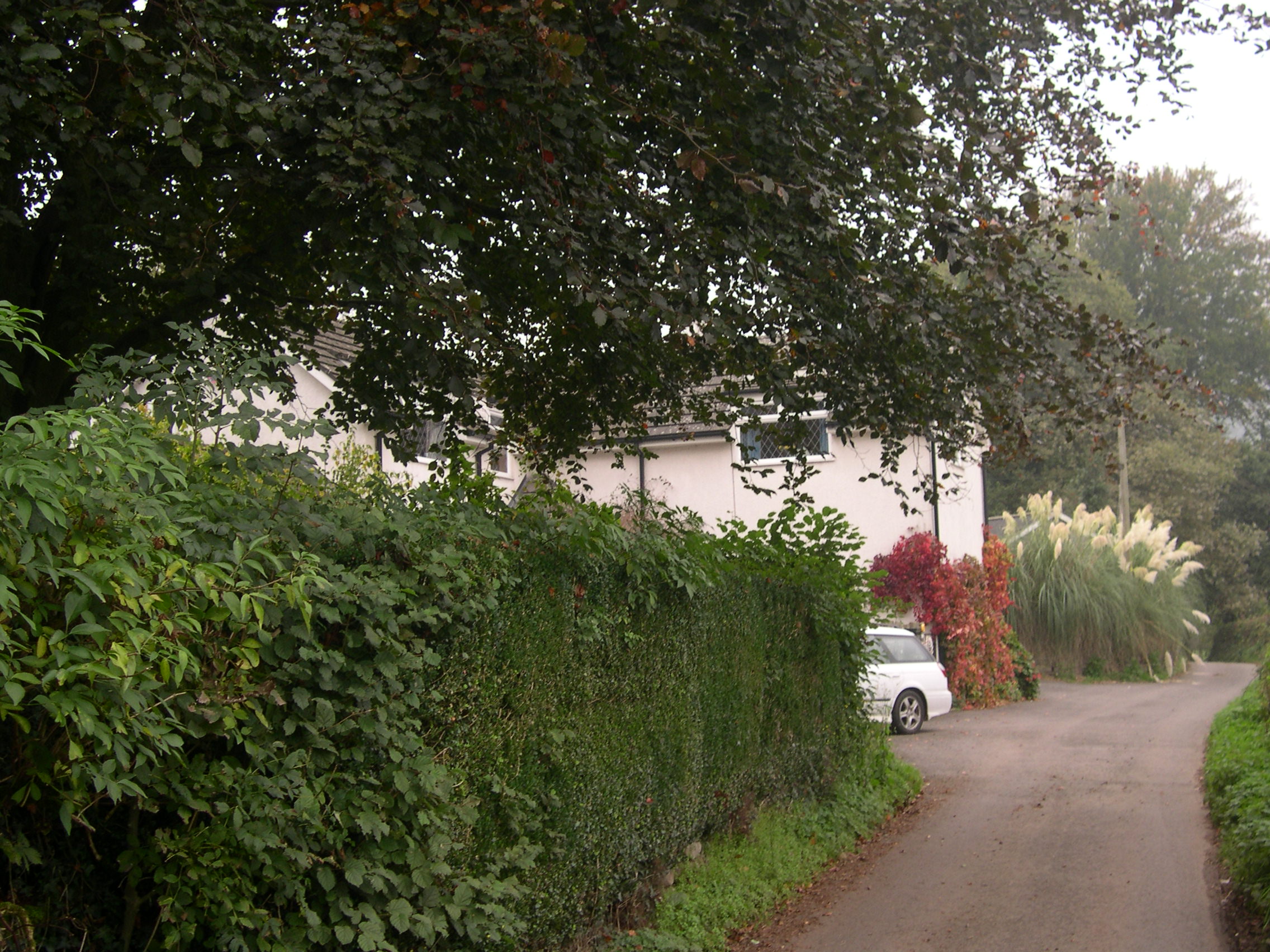
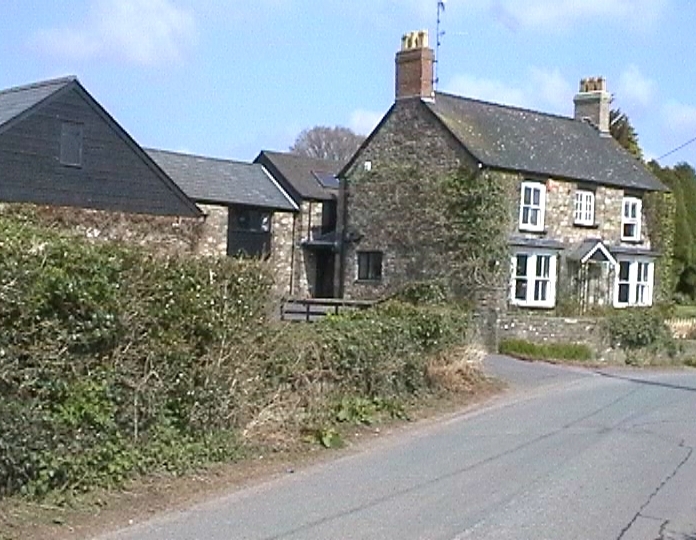
In 1877 William Yorath stole 20 sheep, belonging to Benjamin James of Upper Llanover and his brother John James of Goytre  for which he was given 5 years penal servitude, from Usk prison in July 1877 he was sent to Pentonville prison then to Portland prison finally ending up at Woking prison, from where he was discharged in June 1881.

The new occupier in 1881 was Thomas Roberts 49, farming 35 acres born in Mitchel Troy, Martha his wife also 35 was born in Goytre, their children are Thomas 20, David 17, Martha 14, James 12, George 10 and William 11, all born in Goytre.

An inquest was held on the illegitimate child of Elizabeth Parry of Penystair farm on the 1st February 1882 

 The school log dated 14 November 1882 gives the names of George, William and Joseph Roberts on the list for not attending school.

The Roberts family did stay long at Penystair, by 1891 John Jones 68 born Llanhowell and his wife Emma 62 born in Llandenny were in residence, followed in 1896 by Edward Humphries taking a Michaelmas tenancy at a rent of £35 per annum for 42 acres 2 rood 20 perches. Edward Humphries married Josepha Ivey at St Iltyd’s Mamhilad on October 16 1873. Before moving to Penystair the family were living at Glebe Cottage Mamhilad, prior to that at the Cider Mill Goytre.

In the evening of April 23 1897 William Humphries was walking back home from visiting the Carpenters Arms and decided to call at the house of Enoch Waters (High House) receiving no answer continued on his merry way singing when Enoch Waters took a shot at him, missing him closely.

Maria Ellen Humphries took an affiliation against Arthur Williams of Cefn Mynog, in 1897, Arthur was a labourer born in Goytre, he was summoned to pay for the child. Maria had been a servant for the Rev. Cook at the rectory in Mamhilad.

The census of 1901 says Edward Humphries is 49 born in Hereford, Josepha his wife is 39 born in Cambourne Cornwall, sons Frederick  18, a labourer,  Ernest 8, Kenneth 4 and daughter is Edith 15.

Mrs Humphries placed an advert in the Free Press in May 1902 saying she had found a purse and the owner was to apply to her at Penystair Farm.

Edward Humphries was fined 5s in September 1907 for allowing his cattle to stray onto the highway, the following year he was advertising straw suitable for thatching.

In May 1908 the trustees of the late Col. Henry Byrde sold Penystair to Robert Mellor, a glass and china dealer of Commercial Street Pontypool.

The census of 1911 says Edward Humphries is now 60, Jessie is 57, Edith 25, Ernest 19 is a GPO rural postman, Kenneth 14 is assisting on the farm.

Edward Humphries died in April 1918 aged 68, he was buried at St Iltyd’s Mamhilad. probate of £89 2s is given to his son Edward Henry. After his death his wife Josepha moved to Penarth where she died aged 66 in May 1920 she was brought back to Goytre to be buried at Saron Chapel. Where she was baptised into the church in 1873.

The new occupiers in 1921 was William Henry Williams, 40 from Llanbadoc, his wife Beatrice 36 born in Glascoed, their 12 year old daughter Beatrice born in Crumlin, and son William 9 also born in Crumlin. Living with them as boarders are Iltyd Gwatkin 31 who is out of work, Elizabeth his wife born in Glascoed, and their daughter Doris 5 born in Abersychan.

The following names are taken from the electoral register:

1925-1930 Herbert James, Richard and Elizabeth Arnold

1935 – Albert Austin and Vera Alexander who later moved to no. 2 Saron Cottages. Albert Austin died at 1 Nantyderry in 1972 leaving the sum of £1075.

1939 Register Percy, Tom and Gladys Roberts.

Yew Tree Cottage

No. 66 on the 1841 Goytre Tithe Map.

Yew Tree Cottage, Rhydloyfan is now in the parish of Llanover, but on the 1821 Earl of Abergavenny survey for the parish of Goytre living here  as his tenant is Edward James, this changes by the 1841 census and tithe to Francis William 70 and Susan Williams 20.

By 1851 William Williams had taken up residence, William is a 51 year old labourer born in Goytre, his wife Hannah is 29 born in Llanfrechfa, their children are William 6 and Morgan 3, visiting them on the night of the census is Benjamin James a 49 year old butcher born in Llanover.

William Williams remains at Yew Tree Cottage for over 20 years, his family increasing with two sons being born, John and Charles.

On the census of 1881 there is a change when George Watkins a labourer from Herefordshire and his family are in occupation, his wife is Mary born in Llanover, their children Sarah 9 and John 7 both being born in Goytre.

In 1890 George Watkins is now holding the lease for Yew Tree Cottage of 1 rood 13 perches in Rhydloyfan, previously in occupation of William Williams, rent 5s.

The census of 1891 says George Watkins is a mason aged 53 and was born in Michaelstone,Herefordshire, his wife Mary is 43 born in Upper Llanover, their children are Lewis 10, Hannah 8, Caroline 6 and three year old Mary Ann.

Within the ten year gap of the next census Mary Watkins had died, I am unable to find a burial for her, on the census of 1901 George Watkins is a widower aged 67, he says he is a mason and gardener, living with him are his daughter Mary Ann who is now 13. George was still in residence on the 1911 census, living on his own saying he was formerly a stone mason.

In 1921 Hester Bell, 78 from Hawkesbury Upton was in occupation of the cottage.

Woodland Cottage

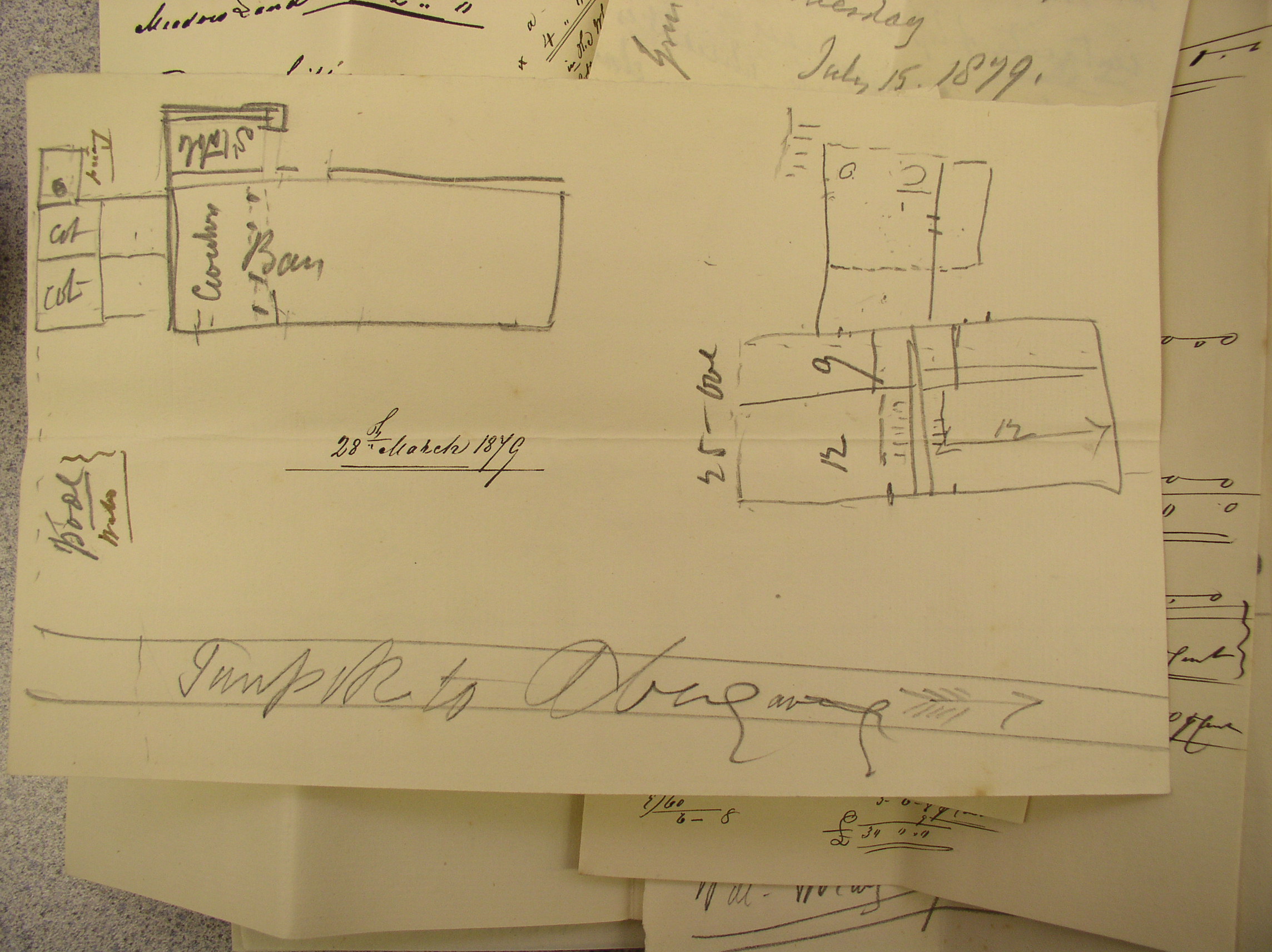
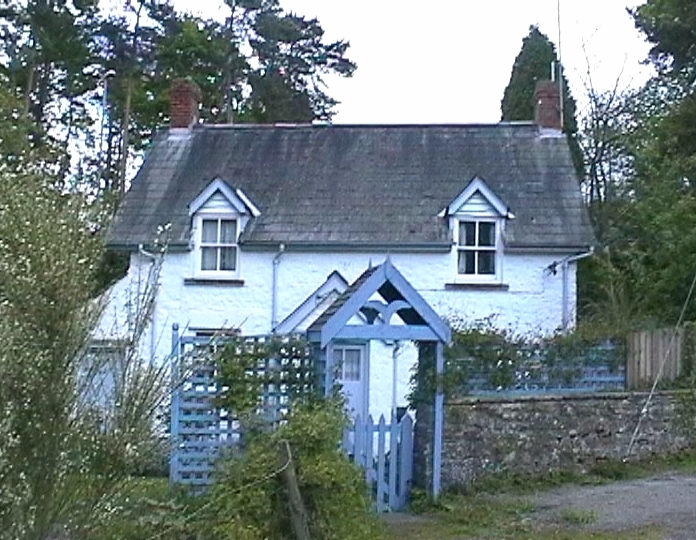
In 1855 Richard Pruett purchased a piece of land belonging to Pengroesoped Farm from widow Ann Morgan of Llanarth upon which he built a rather large stone built property of two houses and substantial outbuildings, all attached.
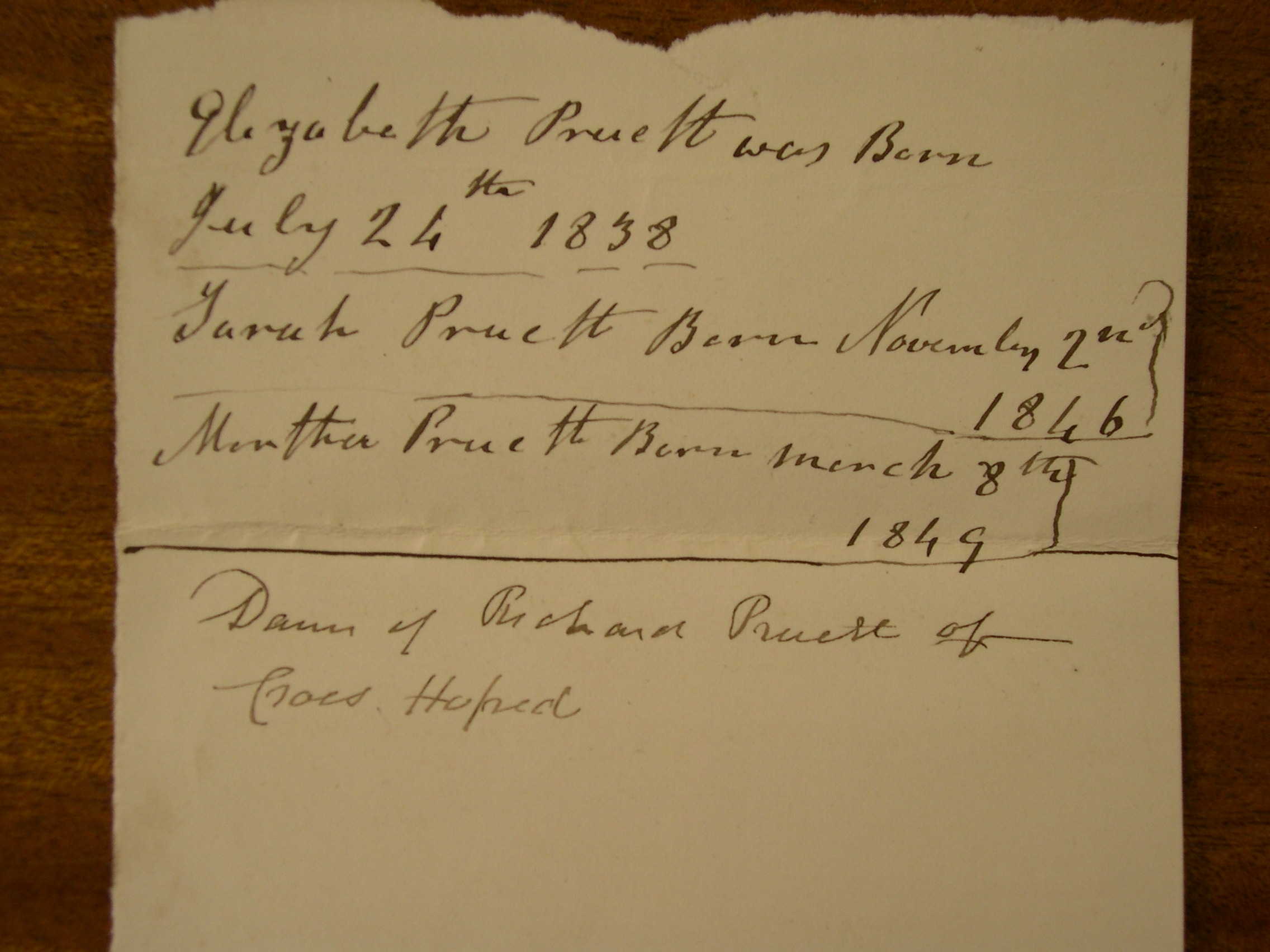
Richard Pruett was a stone mason, born in 1805 in Llanelli to Richard and Mary (Spooner,) he married Martha Hall in February 1830, they had three daughters, Elizabeth 1838, Sarah 1846 and Martha 1849.

In 1856 Richard built Woodland Cottage; in 1858 he gave all the Sunday school and school pupils (attending Nantyderry school) a treat; he also signed against paying taxes for the widening of Newport Bridge; and he also built a machine house at Goytre Wharf.

On the census of 1861 Richard and Martha Pruett are both 56, Elizabeth is 22, Sarah 14 and Martha 12.

In 1862 daughter Elizabeth married Richard Harris in Cardiff, their two daughters were staying with Richard and Martha on the census of 1871, Ceinwen was 8 and Elizabeth 4. Also in 1871 Martha Pruett married Daniel Buckley at Hockley, Birmingham.

In 1879 Lady Llanover purchased Woodland Cottage from Richard Pruett after many letters and disputes over the purchase price, Richard saying he had been offered £800 by Mr Nicole, Lady Llanover saying “times are hard”. It appears a final sum of £645 was agreed upon. Richard Pruett then moved to Hanover Cottage, Llanover where he died in 1885, being buried at Goytre Church.

In September of 1897 Caroline Lewis of the Woodlands died, she was buried at Llanover church, Daniel Lewis her husband in 1910 was a 77 year old house steward, living with him is his daughter Mary, 48, a house keeper at Llanover. Daniel Lewis died aged 87 in 1920, he was also buried at Llanover Church.

Well Cottage

Well Cottage (number 272 on the 1841 Goytre Tithe Map) was owned by the Earl of Abergavenny, in 1788 James and Susannah Morgan were in occupation, two of their children were baptised at Llanover Church whilst living there, son James and daughter Ann.
In 1800 William Proger obtained the lease from the Earl of Abergavenny for Well Cottage, the Earl’s survey of the parish of Goytre shows Well Cottage being occupied by Ann Prosser.

The tithe of 1841 says Ebenezer Morgan is holding the lease containing a cottage and 21 perches, living at the property on the census is Susannah Morgan 30, a dressmaker and Harry Barton 25, a gardener.

Early in 1847 Susannah Morgan married John Evans and left Well Cottage.

By 1861 a new family were living at Well Cottage, Thomas Evans a 53 year old cowman born in St Mellons, his wife Mary 45, a dairymaid, married daughter Ann Merchant, sons Thomas 24, an ag. lab., William 16, an under-keeper,  David 5 and daughters Margaret 18 a charwoman, Elizabeth 11 and Hannah 7, both scholars.

A different family were in occupation by 1871, Ann Jarret, 44 from Glamorgan with her sons John a 21 year old labourer, Abraham and William, daughters Catherine and Martha were all scholars born in Monmouthshire.

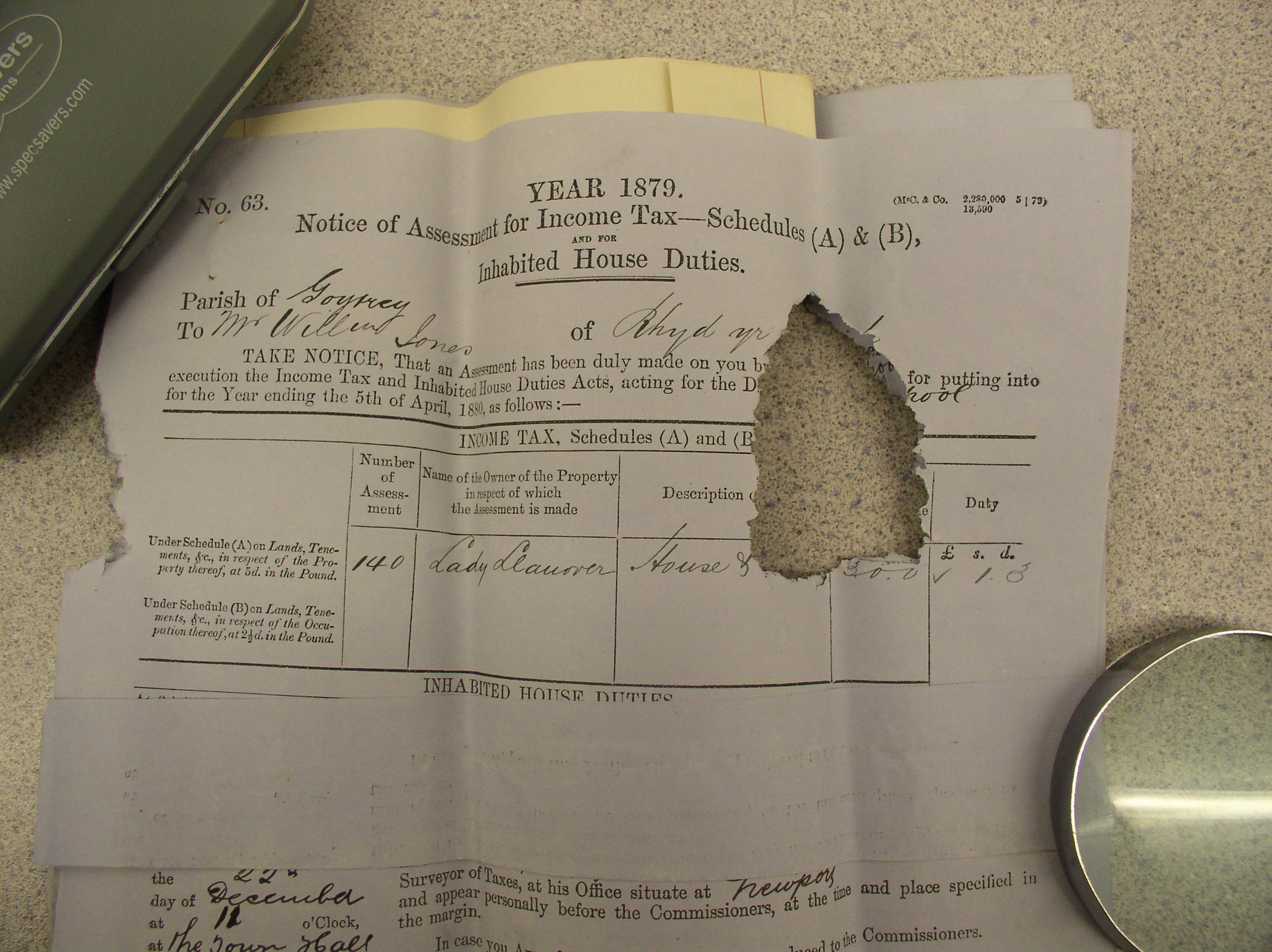
In 1872 the lease granted to William Rogers had expired and the Earl of Abergavenny sells Well Cottage to Lady Llanover, by 1879 William Jones is in residence, he paid income tax on the 10th of December for the cottage.

 On the census of 1881 Joseph Morgan and his family are in occupation, Joseph is 49, an agricultural labourer born in Upper Llanover, Mary his wife is 40, born in Raglan, their children, all born in Llanover are Abraham 19, a cow herd, Joseph 12, Philip 10, Mary Ann 8, David 6, Laura and Mary Jane 4 and Ada 3 months.

Joseph Morgan remained at Well Cottage, in 1901 he is 70, Mary is 61, living with them are two daughters, Elizabeth 29 and Margaret 22.

(Their son Philip Morgan remained at Llanover, living on the High Street, married to Charlotte, they had 5 children.)

The census of 1911 says Joseph Morgan is still in occupation of Well Cottage, he is now 80, an old aged pensioner, can speak both English and Welsh, Joseph died in 1920.

Pen-yr-heol

Pen-yr-heol, 217 on the 1841 Tithe Map is now in the parish of Llanover.

In 1800 the Earl of Abergavenny leased Pen-yr-heol to William Rogers aged 38, for the lives of his son William 8 and daughter Mary 3.

In 1821 the Earl of Abergavenny converted Pen-yr-heol into two cottages, on the survey of the same year it is Thomas Evans who is renting a house, garden and plock.

In April 1827 the Earl of Abergavenny transferred the assignment of lease  of Thomas Evans and John Morgan to Benjamin Hall. The same year Elizabeth Lewis, spinster of Abergavenny took a lease for one of the properties from Benjamin Hall of Abercarn.

By 1830 Thomas White was renting a cottage and garden from Mr Hall, Thomas and his wife Elizabeth had a son Thomas who was baptised at Llanover church.

The tithe of 1841 says Benjamin Hall is the lease holder, occupying the cottages are Thomas White and Walter Watkins, although the census of 1841 shows only Thomas White 45, his wife Elizabeth also 45 and their children William 15, John 14, Thomas 11, Henry 7 and Mary 4 living at the property.

The White family remained at Pen-yr-heol through to the census of 1851 where Thomas is now 55, a woodcutter, the garden belonging is said to be 1 rood 13 perches.

Pen-yr-heol is missing off the 1861 census as are many of the properties so forward to 1871 when William Jones 42, a labourer from Carmarthen, his wife Jane 41, children John 16, Mary 13, Margaret 10 and William 6 are in residence.

In 1873 the Earl of Abergavenny finally sold the property to Lady Llanover, a document dated December1879 shows William Walters paying income tax for Pen-yr-heol.

William Walters, 58, under gardener, and Elizabeth 52 are in occupation on the 1881 census, William was born in Mamhilad, Elizabeth in Llanellen, living with them is his step-mother Elizabeth Jones.

William Walters appeared as a witness on behalf of the welsh speaking inhabitants of Goytre for a welsh speaking vicar. He was paying £5 rent to Lady Llanover, the Walters family remained at Pen-yr-heol until the late 1890’s when the electoral register shows John Evans in occupation.

The census of 1901 says John Evans is 53, head gardener born in Cardigan, Rachel, his wife is 45, a school mistress born in Glamorgan. Rachel died at Pen-yr-heol, Goytre in 1907 aged 47 and was buried in Llanover churchyard.

In 1911 the census  says John Evans is 62, a retired gardener from Llandyssil, his son Aneurin is 23, an engine fitter in a blast furnace, and daughter Lilian 26 are still in occupation at Pen-yr-heol.

In 1944 Mrs M A Davies is mentioned on the land tax, the owner being Llanover estate.

Wern Farm

Wern Farm was 517 on the 1841 Tithe Map, previously called Duffryn-y-Gwartheg. The field names were Cae Austin, Cae Bach, The Meadow, Cae ffynon, Lower orchard, House, garden and pasture, Cae Scybor Lower Will Gutta field, Upper Will Gutta field, Little orchard.

in 1762 William Lewis of the Wern married Susannah Nicholas at St Iltyd’s Mamhilad, they had a son David who died also in 1762.

They had one daughter Martha who was baptised at St Peter’s church in October 1779. (Martha married Abraham Jarrett at St Peter’s church in May 1813.)

William Lewis died, probate granted on the 1st of May 1781,  leaving his property called Dyffryn-y-Gwartheg to his wife Susanna and then to his daughter Martha.

In September 1781 William Lewis’s widow Susanna married James Lewis at St Peter’s church.

The overseers of the poor records in 1794 say David Jones is renting the Wern, the owner is now James Lewis who is paying the land tax for the property whilst living at Goytrey Lodge.

In 1823 a license was granted to James Lewis for a protestant meeting house called Duffryn Gwerllog, this is the same time that land belonging to the Wern was given for the building of Saron Chapel.

On the land tax of 1831 the occupier of the Wern was Vaughan Williams, the owner being James Lewis, the overseers accounts dated 1833 say Vaughan Williams is running a beer shop, he was paid by the overseers £1 10s for supporting a travelling passenger who took ill.

The 1841 tithe map says the lease holder is now Noah Price, the occupier is Vaughan Williams. The Farm consists of 29 acres 2 rood 38 perches, paying £3 0s 6d to the rector.

The census of 1841 says Vaughan Williams is 45, a farmer, Mary his wife is also 45, their children are Mary 14,  William 11, Thomas 6 and John who is one year old. Vaughan Williams is mentioned in the parish overseers book in 1844 as being the overseer of the poor.

On the census of 1851 Vaughan Williams is a 58 year old farmer from Radnorshire, Mary his wife is now 56, daughter Mary is 23, William 20, Thomas 15 and John 11, Mary and  the children were born in Goytre.

Vaughan William’s’ wife Mary died in July 1852, she was buried at Saron Chapel.

The local builder Lewis Edmunds wrote in his diary in November 1859 that he was at the Wern Goytrey for William Nichols.

 William Price  is the new holder of the lease for the Wern, the electoral register from 1852-1870 says William Price of Abergavenny holds the freehold land.

In 1867 Ann Price, 40 a farmer daughter is admitted to Abergavenny Asylum she remains there until August 1876 in  mania and feeble condition.

An advert appeared in the Usk Observer October 1869 for the sale of the upper part of the Wern wood, 15 acres and the lower part of 9 acres.

The census of 1871 gives William Morgan and his family at the Wern. William is 42, farming 36 acres, Martha his wife is also 42, their children are Thomas 17, Henry 15, John 13, Jeremiah 11. Azariah 9, Elias 7, Lewis 5, Decimus 4 and David 2.

William Morgan was born in Llanbadoc in 1828, the son of William and Mary, Morgan, nee Jeremiah. Martha his wife was also born in 1828, in Mamhilad, the daughter of Thomas and Martha Jenkins, nee Davies. They were married in May 1850 at Penygarn Baptist Church. Before coming to live at the Wern they lived in Llanfrechfa and Glascoed.

They Had 13 children, William (1851-1939) Thomas (1853-1939) Martha (1854-1854) Henry (1855-1879) John (1857-1909) William Jeremiah (1860-1941) Azariah (1861-1937) David Elias (1868-1935) Louis (1865-1950) Decimus (1867-1937) David Hugh (1869-1946) Benjamin (1871-1874) Mary (1873-1873.)

Three of the sons emigrated to America, Azariah, David Elias and William J.

 In 1877 22 year old Henry Morgan was sent to Abergavenny Asylum by the Rector, Thomas Evans, suffering from mania and epilepsy, Henry died two years later and was buried at Saron Chapel.

Azariah was fined 25s in 1877 for not having a dog license. Clifford Louis served in the army from the age of 17 later joining the navy.

William Morgan died in September 1892 leaving £81 to his widow Martha.

David Hugh Morgan then took over the farming, the owner of the Wern being the trustees of A Lewis Glyn Vach Llanthoney, the property having 23 acres.

Martha Morgan died in 1913 aged 84, she was buried at Saron Chapel along with William and her children. In 1920 David Hugh Morgan retired from farming at the Wern, after purchasing it for £350 from the Marquis of Abergavenny’s sale in 1920. He then let the property  to Evan Davies and his wife Elizabeth, Evan remained at the Wern until his death 11 years later in 1933 he was 74 years old.

The 1939 register shows Rees Meyrick a retired cemetery superintendent with his wife Mary and son Wilfred living at the Wern.

Bwrgwm Bach

An indenture dated 1782 for a cottage and quarter of a cover is in the name of Ann Harry 74, grand daughter Ann 23, Martha 10, the children of Thomas Millwright, now in the name of Thomas Watkins.

This had changed by the tithe of 1841,  the lease holder is now John Walters, subletting to John Jenkins (of Penystair) of 17 acres 3 rood and 30 perches paying £1 14s 4d tithe to the rector. Living in Bwrgwm Bach on the census of 1841 is John Anthony and Mary his wife, both aged 65.

From this date it has been very difficult to confirm who was in occupation until 1881 when Walter Jenkins a 42 year old gamekeeper born in Goytre was living there with his family, Ann his wife is 44, their children are Annie 12, William 10, Maria 8, Rachel 6, and one year old twins Martha and Mary. The older children were attending Goytre school.

In 1888 the new owner was Josiah Lewis the vicar of Llanbaddoc, this had changed by 1905 to the Rev. David Davies of Hanover house and again in 1910 to Edmund Williams of Newport, the gross value being £3 10s.

The census of 1921 says Leonard Rowley, 39, born in Llanover and his family are living at Bwrgwm Bach. Leonard is an out of work  tinker man at Blaenavon colliery, his wife Margaret is 39 and born in Swansea, their children are Muriel Elsie 16, and Evan James 14, both born in Llanover, with Herbert Charles 7 being born in Goytre.