The history of Pengroesoped Shop, later widely known as the Goitre Shop, 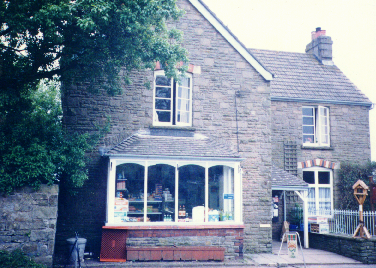
The site originated from a lease granted by Thomas Roberts of Mount St Albans, Christchurch. On 30 May 1874, Thomas Roberts agreed to lease a plot of land measuring 394 square yards to John Harris Conway the younger of Abergavenny, then a commercial traveller. The lease, which commenced on 1 November 1873, was for a term of ninety-nine years and included a frontage of fifty feet onto the main road.
To finance the development, a mortgage of £360 was arranged through the Equitable Building Society. This mortgage involved John Harris Conway, by then described as a general merchant, together with his father, a tinplate manufacturer. These arrangements suggest that the intention from the outset was to establish a substantial commercial premises on the site.
The new building appears in an auction catalogue of 29 April 1876. Described as a newly erected dwelling house, shop, offices, yard and premises, it occupied the full 394 square-yard plot and stood prominently beside the turnpike road. The property was then known as the Goitre Shop and was occupied by Jones and Jones or their under-tenants. It was offered for sale subject to an existing mortgage and an annual ground rent of £3 6s.
The 1881 census provides a glimpse of the family operating the business. David Brunt Jones, aged 67, and his wife Sarah Jones, aged 66, were living at the shop and described themselves as grocers. Both had originally come from Herefordshire, demonstrating the movement of families across the border into Monmouthshire during the nineteenth century.
Ownership of the property continued to change through a series of mortgages and transfers. In 1889, transactions involving Thomas Price, Henry Edward Pope, and later Thomas Morgan and Elizabeth Morgan indicate that the premises retained a significant value, with sums of £350 and £250 involved in the transactions.
By 1900, ownership interests had passed to John Prys, a Presbyterian minister of Llanover, following an assignment by Elizabeth Morgan. The property continued to function as an important commercial centre serving the local community.
The 1901 census records John George in residence. School records show that his son Trevor George, and later another son, Emrys George, attended Llanover School.
One of the most tragic episodes associated with the shop occurred shortly before 1910. Samuel Deverell, a former Mayor of Abergavenny who had taken over the premises, died after hanging himself in one of the outbuildings. The incident was widely reported in the local press and illustrates the personal tragedies that sometimes lie behind the history of familiar local buildings.
Free Press dated 5th August 1910.
By the 1911 census, the occupier was Thomas Woodward, a 39-year-old resident originally from Stroud. He lived there with his wife Pattie Woodward, from Doncaster, and their daughter, also named Pattie. The family had been married for fifteen years, showing that the premises continued to combine residential and commercial use.
During the First World War period, Jane Jenkins served as shopkeeper. Her sons, John Jenkins and Denis Jenkins, were pupils at Llanover School in 1916.
By 1921 the shop was occupied by Morgan Jones, a grocer and provision merchant originally from Llanddeusant, Carmarthenshire. Living with him were his wife Mary Elizabeth Jones, his sister Catherine Jenkins, and her children, including John Rees, a sailor employed by the Canadian Pacific Steamship Company. The household reflects the increasingly diverse occupations and wider connections of rural Welsh families in the early twentieth century.
From its beginnings as a speculative roadside development in the 1870s to its long service as a village grocery and provision store, Pengroesoped Shop played an important role in the daily life of Goytre. Generations of shopkeepers, merchants and their families lived and worked there, serving the surrounding community while leaving behind a rich documentary record of local commercial life.